Why are people so excited about Swatch’s Royal Pop watch?
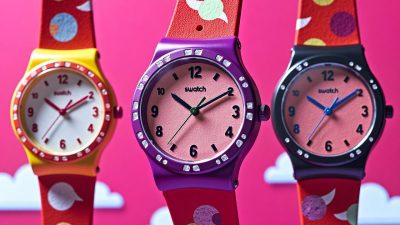
Why are people so excited about Swatch’s Royal Pop watch?
Constantvpn.com – The recent unveiling of the Royal Pop watch has ignited a global phenomenon, prompting store closures and drawing in crowds so large that security forces were needed to manage the chaos. This limited-edition collection, a joint venture between Swatch and the esteemed Audemars Piguet (AP) brand, launched simultaneously in select outlets worldwide, creating a surge in demand that exceeded expectations. While the initial release was designed to be exclusive, the frenzy surrounding the product extended beyond physical stores, with online campaigns intensifying the hype for months.
A Collision of Brands and Expectations
Known for its vibrant, affordable designs from the 1980s, Swatch has long been a symbol of accessible fashion. The Royal Pop collection, however, marks a shift toward luxury, positioning itself as a “disruptive collaboration between two icons of Swiss watchmaking,” according to AP Swatch. The collection features eight distinct models, each crafted to appeal to a younger demographic drawn to exclusivity and novelty. Despite the brand’s reputation for affordability, the Royal Pop watches are priced at £335, a significant step up from typical Swatch offerings. This pricing strategy, paired with limited availability, has fueled both admiration and frustration among consumers.
Queues formed hours before the launch, with some fans waiting for days to secure a piece of the collection. In cities like London, Manchester, and Edinburgh, Swatch stores became battlegrounds as shoppers clashed over the chance to own a rare watch. The situation escalated to the point where authorities had to intervene, with reports of scuffles, aggressive behavior, and at least one arrest. Similar scenes unfolded in Amsterdam, Milan, and other global locations, where the excitement turned into chaos. In Paris, tear gas was reportedly used to control a crowd of over 300 outside a Swatch outlet, while in Lille, northern France, four individuals were said to have been punched during the rush.
Opinions Divided on the Marketing Strategy
The response to the Royal Pop collection has sparked debate about its marketing approach. Retail analyst Catherine Shuttleworth praised the campaign, noting that Swatch masterfully leveraged the appeal of collaborations, exclusivity, and the novelty of limited-time products. “The hype has worked,” she told the BBC, emphasizing that the watches are seen as aspirational items, offering customers a chance to own a luxury timepiece at a fraction of its usual cost. However, others argue that the company could have prioritized digital sales over physical store exclusivity, potentially avoiding the need for police assistance.
Watch reviewer and podcaster Britt Pearce echoed this sentiment, calling the collaboration “a very exciting flash in the pan.” While she acknowledged the short-lived nature of such limited-edition releases, she praised their ability to generate buzz. “It’s a bold move, but it’s also a smart one,” she said, highlighting how the Royal Pop collection taps into the desire for unique, collectible items. Yet, the aggressive tactics to control crowds have drawn criticism. Some shoppers, including Britt, witnessed security personnel struggling to maintain order as the event unfolded. In one instance, she noted that customers exiting the store were approached by individuals offering to pay double the purchase price, raising concerns about the secondary market’s impact on the brand’s image.
Reselling and the Secondary Market
Amid the frenzy, a secondary market has emerged, with Royal Pop watches fetching prices far above their original retail value. On eBay, listings have reached as high as £5,000, while some buyers reported selling their units for over £1,000 in profit. This surge in secondary sales has led to accusations of speculative behavior, with reports of people purchasing multiple watches to resell them later. “I’m coming back to buy more,” said one buyer, Jaylen, who had enlisted friends to obtain additional units from other stores. “It’s one per person, but I’ve got a network to help me out.”
While the secondary market has thrived, the UK watch business magazine WatchPro warned that some of these watches might be counterfeit. This raises questions about the authenticity of the products being sold at inflated prices. Despite the controversy, Swatch defended its approach, comparing the Royal Pop launch to that of the MoonSwatch—a 2022 collaboration with Omega—which also generated significant crowds. “The response to the Royal Pop collection has been phenomenal worldwide,” the company stated in a recent social media post, adding that only 20 out of 220 stores faced issues during the launch. “The situation has now normalized somewhat after the launch day, especially following our communication that the Royal Pop Collection will be available for several months.”
Swatch’s decision to close stores in several UK cities, citing safety concerns, has been met with mixed reactions. While some view this as a necessary measure to prevent stampedes and disorder, others argue that the company could have anticipated the demand and offered online access. “They should have made the watches available on their website,” said one critic, pointing out that the physical exclusivity may have been a deliberate strategy to drive up prices. Meanwhile, Britt Pearce suggested that Swatch’s approach was calculated, aiming to create an environment where collectors would pay premium prices for limited stock. “I think they know exactly what they’re doing,” she added, noting that the brand has consistently used scarcity to boost sales.
The Royal Pop collection’s success highlights the power of limited-edition products in generating consumer enthusiasm. By merging Swatch’s approachable design ethos with AP’s luxury craftsmanship, the collaboration has captured the imagination of watch enthusiasts and casual buyers alike. However, the scale of the event has also exposed challenges in balancing hype with practicality. As the watches continue to sell, the debate over their value and the role of marketing in driving demand will likely persist. Whether this frenzy is a testament to the brand’s innovation or a sign of overhyped consumerism remains a question that only time will answer.
In the meantime, the Royal Pop collection serves as a case study in the modern era of product launches. It demonstrates how brands can harness the excitement of exclusivity and collaboration to create a global spectacle, even if it means temporary disruptions. For Swatch, the challenge lies in maintaining the momentum while addressing the logistical and ethical concerns raised by its marketing tactics. As the secondary market continues to evolve, the true impact of the Royal Pop watches—both on the brand and on the broader watch industry—will become clearer in the weeks to come.
