What news reports from 1600s tell us about life in Mughal India
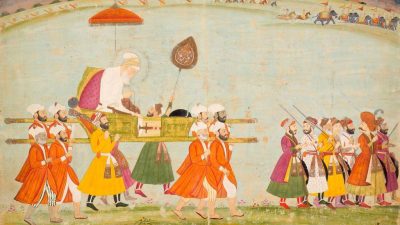
Uncovering the World of Mughal India Through 17th-Century News Reports
Constantvpn.com – In the 17th century, Mughal India maintained a vibrant information system that rivaled the emerging newspapers of Europe. Long before the printing press became a cornerstone of modern communication, the Mughal court relied on a network of scribes, envoys, and officials to compile and distribute akhbarat—brief, handwritten summaries of events. These reports, written in Persian on fragile parchment, covered a wide range of topics, from military strategies and political intrigue to personal anecdotes and financial records. They served as a crucial tool for governance, allowing the imperial administration to stay informed about the empire’s vast territories, which at their height stretched across much of the Indian subcontinent and encompassed nearly a quarter of the world’s population.
The akhbarat system functioned as a hybrid of intelligence briefs, official bulletins, and informal correspondence. Officials and courtiers used these documents to share updates between the imperial court and regional governors, creating a dynamic flow of information that helped sustain the empire’s operations. Unlike Europe’s mass-produced newspapers, which emerged in the late 16th century, the Mughal network was more personalized, with reports tailored to specific audiences. These texts were often read aloud to assembled officials, ensuring that even remote provinces remained connected to the central authority. This practice not only reinforced the emperor’s authority but also provided a window into the daily rhythms of a complex and expansive administration.
The Legacy of Aurangzeb in Historical Records
Aurangzeb, the Mughal emperor who ruled from 1658 to 1707, remains a pivotal figure in Indian history. His reign is often scrutinized for its religious policies and military campaigns, which reshaped the empire’s cultural and political landscape. A 1775 painting depicts him seated in a palanquin, symbolizing his elevated status and the grandeur of his court. However, beyond his public image, the akhbarat offers a more nuanced view of his rule. For decades, these reports, along with other administrative records, have been stored in archives across India and Britain, waiting to be rediscovered. Historians, though aware of their existence, have rarely delved deeply into their contents until recently.
Munis D Faruqui, a historian at the University of California, Berkeley, has dedicated nearly two decades to exploring these documents. His work has uncovered a rich tapestry of information about Aurangzeb’s late 17th-century empire, revealing how the Mughal administration functioned in its final great expansionist phase. By analyzing over 6,500 pages from Kolkata’s National Library, Faruqui has traced the movements of princes, generals, courtiers, and even imperial eunuchs through tens of thousands of entries. This meticulous study has led to a forthcoming history that not only reimagines Aurangzeb’s rule but also sheds light on the mechanisms of power in one of the world’s earliest modern empires.
The akhbarat’s survival is attributed to several collections, including those in London, Bikaner, Sitamau, and Kolkata. While these are the most well-known, historians suspect more caches may exist in private collections. One such collection, preserved in the cool, dry basement of Jaipur Fort, was borrowed by James Tod, an East India Company official and scholar, in the early 19th century. Tod, who never returned the reports upon his departure to Britain in 1823, eventually donated the bundle to the Royal Asiatic Society’s library. These documents, often bundled in groups, provide a unique insight into the Mughal world, particularly during Aurangzeb’s tenure.
Kolkata’s National Library holds the most extensive cache of these reports, featuring 21 volumes dedicated to Aurangzeb’s reign. These volumes were once part of the personal library of Sir Jadunath Sarkar, a pioneering historian and the emperor’s most influential biographer. At first glance, the reports may seem unremarkable, detailing routine tasks like appointments, disputes, and military logistics. Yet, when viewed collectively, they form a continuous record of the empire’s self-awareness, as Faruqui describes. The density of information in these texts suggests a sophisticated system of knowledge exchange that was remarkably advanced for its time.
Archival coverage of Aurangzeb’s early years is sparse, but the survival of records from the 1680s onward is astonishing. These documents offer a near-daily account of the emperor’s activities, illuminating roughly a third of his nearly half-century rule. Faruqui’s research highlights the transition of the Mughal empire from its zenith to a period of gradual decline, a shift that would eventually pave the way for British dominance. The akhbarat’s detailed nature allows historians to reconstruct the political and social fabric of the time, revealing the interplay between central authority and regional governance.
A New Lens on Mughal Governance
For Faruqui, the akhbarat provided a fresh perspective on the late Mughal world. “My entire experience with these reports has been a series of revelations,” he remarked. “The level of detail in the informational ecosystem during that era is nothing short of remarkable.” This sentiment underscores the significance of the akhbarat as a tool for understanding the empire’s internal workings. Unlike modern media, which often emphasizes sensationalism, these reports focused on the minutiae of administration, offering a pragmatic view of governance.
The reports were not limited to the imperial court. Faruqui’s findings indicate that hundreds of nobles, princes, and officials across the empire received similar updates from agents stationed in various regions. This decentralized system of communication suggests a high degree of coordination and a shared understanding of the empire’s needs. The Mughal akhbarat, therefore, represents one of the earliest examples of a modern information network, predating the printing press by nearly a century.
Faruqui’s work has also uncovered the personal dimensions of the Mughal court. Among the entries are details about royal women, imperial eunuchs, and the quiet dramas of court life. These records reveal how the emperor’s decisions were influenced by a network of trusted advisors and how the empire’s stability depended on the seamless transfer of information. The reports often contain anecdotes that humanize the rulers and officials, showing them not as distant figures but as participants in a vast, interconnected system.
The study of these documents is not without challenges. The brittle parchment and hurried handwriting require careful preservation and interpretation. Faruqui’s dedication to this task has uncovered layers of meaning that were previously overlooked. “The sheer volume of information is mind-boggling,” he said. “It’s as if the empire had its own nervous system, constantly monitoring its own pulse.” This metaphor captures the essence of the akhbarat’s role in maintaining the Mughal empire’s cohesion and adaptability.
As the Mughal empire declined, the akhbarat system continued to function, albeit in a diminished form. These reports, which once flowed freely between courts, now serve as historical artifacts, preserving the voices of those who shaped the empire’s destiny. Faruqui’s research has not only revived interest in these documents but also demonstrated how they can illuminate the intricacies of a civilization that spanned continents. The akhbarat, in their fragile state, remain a testament to the power of information in shaping history and understanding the world as it was centuries ago.
The Enduring Value of Mughal Archives
While the akhbarat system may have faded with the decline of Mughal rule, its legacy endures in the archives that house these precious records. Faruqui’s work has highlighted the importance of these collections, which continue to provide valuable insights into the empire’s past. The reports offer a rare opportunity to study how information was curated, transmitted, and used to maintain control over an empire of immense complexity. As Faruqui notes, “The akhbarat were more than just reports—they were the lifeblood of the Mughal administrative system.” This perspective reframes the documents as essential tools for governance, rather than mere historical footnotes.
The Mughal news reports, once the silent witnesses of imperial affairs, now speak volumes about the empire’s structure and resilience. They reveal the balance between centralized authority and local autonomy, the challenges of maintaining a multi-ethnic population, and the intricate web of relationships that defined the Mughal court. For historians and scholars, these records are a treasure trove of knowledge,
