What is Iran’s Pickaxe Mountain and why does Trump say he wants to bomb it?
Trump’s Growing Threats Against Iran’s Underground Nuclear Facility
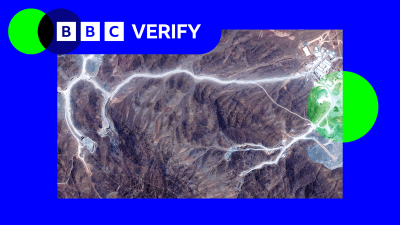
Constantvpn.com – President Donald Trump has intensified his warnings regarding a suspected underground nuclear installation in Iran, commonly referred to as Pickaxe Mountain. Recent satellite photographs reveal ongoing construction activities at this location, which remains one of the few Iranian nuclear-related sites that has escaped both American and Israeli military strikes. Unverified reports suggest that portions of Iran’s highly enriched uranium reserves might be stored within this mountain complex, where the material could potentially undergo additional enrichment for weapons purposes.
“We’ll be hitting that area pretty soon, and very heavily,” Trump declared to journalists on July 21.
Just one week later, on July 28, the American president added: “I know exactly what’s going on at Pickaxe. It’s not a big problem – we took out their nuclear sites, and we’ll have to take out Pickaxe if we don’t make a deal.”
Geographic Position and Historical Background
Kuh-e Kolang, which translates directly to Pickaxe Mountain, sits immediately to the south of Natanz, Iran’s premier uranium enrichment installation. This critical facility has already experienced bombardment from both the United States and Israel during 2025 and 2026. The underground nature of Pickaxe Mountain’s operations remains largely mysterious, with speculation surrounding its precise function.
Iranian authorities have previously suggested that this mountain complex might serve as a replacement for a Natanz building housing advanced centrifuge assembly equipment. That structure sustained damage following a suspected sabotage incident in July 2020. Ali Akbar Salehi, who formerly led Iran’s Atomic Energy Organisation, mentioned in September 2020 that “a more modern, spacious, and comprehensive facility” would be constructed in the mountains near Natanz, though he did not specifically name Pickaxe Mountain.
Satellite Evidence and Construction Activity
Centrifuges play a crucial role in producing enriched uranium, which serves dual purposes: civilian reactor fuel and, when enriched to approximately 90% purity or above, nuclear weapons material. The Pickaxe Mountain installation features four tunnel entrances—two positioned on the eastern side and two on the western end.
Analysis of satellite imagery reveals that a substantial perimeter fence has been erected around the site following the twelve-day conflict between Israel and Iran in June 2025. Photographs taken on June 30, 2026, captured multiple construction vehicles operating near one of the western entrances. Over recent months, satellite data has indicated persistent work on access roads and tunnel entrances throughout the Pickaxe Mountain area.
According to Spencer Faragasso from the US-based Institute for Science and International Security (ISIS): “In the last year, we have observed fairly steady construction activity at the site.” He further explained that “Iran’s work there has likely centred around continued internal excavation and hardening of the facility that would provide further protection against aerial attacks.” Additionally, ISIS analysis indicates that Iran has partially filled the two eastern tunnels to restrict ground-level access.
Strategic Depth and Bombing Capabilities
Analysts estimate that the core of Pickaxe Mountain’s facility could lie approximately 100 meters (328 feet) underground, a depth chosen specifically to shield it from air strikes. This positioning places it deeper than Iran’s two primary nuclear enrichment complexes at Fordo and Natanz, which the United States targeted last year using bunker buster bombs—the only weapons currently known to potentially reach such concealed locations.
The American GBU-57 bomb weighs roughly 13,000 kilograms (30,000 pounds) and is reported capable of penetrating 18 meters (60 feet) of concrete or 61 meters (200 feet) of earth before detonating.
“Obliterating every underground chamber would be extremely difficult because of the facility’s depth and uncertain layout,” noted Arman Mahmoudian, a research fellow specializing in Iran at the University of South Florida.
However, Mahmoudian added that the United States could effectively target tunnel entrances, communications systems, access roads, and other supporting infrastructure, which “could paralyse the facility’s operations even if some of its deepest underground sections survived.”
Iran’s foreign ministry spokesperson Esmail Baghaei responded to the threats on July 22, stating that “no nuclear activity is taking place” at Pickaxe Mountain. He characterized the American warnings as “a fabricated pretext for aggression, destruction, and sabotage.” BBC Verify and BBC Persian have consulted with experts and examined satellite imagery to compile comprehensive information about this strategic site and the potential consequences of any military action against it.
Related Reading
Frequently Asked Questions
What is What is Iran s Pickaxe Mountain?
What is Iran s Pickaxe Mountain is the main topic of this guide. The article explains the context, practical details, and next steps readers should understand.
Why does What is Iran s Pickaxe Mountain matter?
What is Iran s Pickaxe Mountain matters because readers are looking for a useful answer, not just a short summary. Good content should match search intent and help them decide what to do next.
