
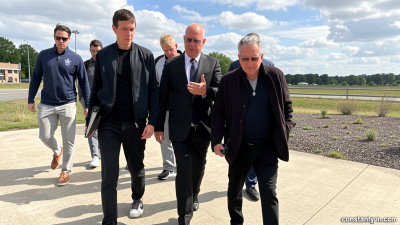
Trump’s Peace Envoys Step Into Moscow’s Kremlin for a Three-Hour Session with Putin
Constantvpn.com – The weekend marked a sharp acceleration in the diplomatic push to halt the war in Ukraine, as President Donald Trump’s two principal negotiators — Steve Witkoff and Jared Kushner — sat down across the table from Russian President Vladimir Putin inside the Kremlin’s official residence. Kremlin-released video captured the moment of greeting, with Putin acknowledging the gravity of the moment by describing the present situation as “not so easy” and promising that Moscow would lay out its own reading of the battlefield and political landscape.
The three-hour session, confirmed by Russian state broadcasters, represented the latest chapter in a series of American-brokered overtures that have, up to this point, failed to produce a lasting ceasefire or comprehensive settlement. Yet the tone of the encounter carried a notable shift: Witkoff expressed gratitude to Putin for Moscow’s agreement to suspend strikes on each other’s capitals for a three-day window, a gesture designed to create a corridor of relative calm through which the envoys could complete their itinerary.
What the Leaders Said
“In any case, wantever happens, such contacts are undoubtedly always useful.” — Vladimir Putin
Putin extended what amounted to a diplomatic courtesy toward Trump, thanking the American president for his peacemaking initiative. Witkoff, in turn, framed the capital-strike pause as a concrete step toward de-escalation. No official transcript or briefing note was released by either Washington or the Kremlin detailing the substance of the three-hour conversation, leaving observers to read between the lines of the Kremlin’s brief video clips and the subsequent statements from Kyiv.
The Kyiv Leg: Airspace, Logistics, and a Three-Day Truce
On Sunday, the same two envoys were scheduled to cross into Ukraine — a first for this particular diplomatic pairing, which had made multiple prior trips to Moscow but had not yet set foot in Kyiv. The logistics of that crossing remained publicly unclear. Ukrainian airspace has remained effectively closed since Russia launched its full-scale invasion in February 2022, meaning any overland or overwater transit would require careful coordination with both militaries.
Zelensky addressed the situation directly on Saturday, confirming he had already spoken with the American team and that they had “already begun working with the Russian side today.” He outlined the next steps with unusual specificity:
“The plan for tomorrow’s diplomatic engagements in Kyiv, involving the US team, has been approved. We are waiting for Steve Witkoff and Jared Kushner and are ready for a substantive conversation.”
The Ukrainian president also formalized the reciprocal strike pause:
“From now through the end of Saturday, as well as on Sunday and Monday, Ukraine is ready to refrain from strikes on Moscow, and we expect the Russians to do the same regarding Kyiv.”
Russian state media confirmed that Putin had ordered a matching halt on strikes against Kyiv for the same three-day period, tying the ceasefire window explicitly to the American visit.
Airport Strikes and the Question of Safe Passage
The diplomatic window opened under shadow. Zelensky accused Moscow of launching what he called “demonstrative” overnight strikes on airports in Kyiv and Boryspil just before the envoys’ planned arrival, interpreting the bombardment as a signal about how Russia views the possibility of American officials flying into Ukrainian territory.
“Clearly, these Russian strikes on the airports are a reaction to the discussions and preparations for the possibility of the US side using an aircraft to travel to Ukraine and land at Kyiv Airport or Boryspil Airport.”
Zelensky stated on Friday that Ukraine would guarantee the safety of Russian airspace during the envoys’ transit and called on Moscow to extend the same assurance in reverse. The overnight strikes also carried a human cost: a Russian attack on a civilian building in the Dnipro region killed four people and wounded five more, a reminder that the war’s violence does not pause for diplomatic calendars.
Where This Fits in the Broader Diplomatic Landscape
The Moscow-Kyiv weekend did not arrive in isolation. Just over a week earlier, CIA Director John Ratcliffe made a rare visit to the Russian capital, a trip Trump himself characterized as “semi-routine” — language that downplayed what was, in practice, an unusual high-level contact between the two intelligence chiefs. The juxtaposition of Ratcliffe’s visit and the Witkoff-Kushner trip suggests a layered American approach: intelligence channels running parallel to political ones.
The current round follows a turbulent year of near-misses. Last year, all three parties — Washington, Kyiv, and Moscow — separately signaled that a settlement was drawing closer after a burst of American-brokered conversations. European allies convened their own talks in Paris, but those sessions concluded without a breakthrough. The core sticking points remain stubbornly unresolved: the question of territorial control, the scope and duration of security guarantees for Ukraine, and the architecture of any post-war deterrence arrangement.
On the ground, both sides have intensified aerial campaigns in recent months. Ukraine has described difficulties repelling ballistic missile salvos, citing a shortfall of interceptor missiles, while Kyiv has concentrated its own long-range strikes on Russian economic infrastructure — refineries, logistics hubs, and energy nodes — in an effort to pressure Moscow’s war economy.
What Comes Next
The weekend’s outcome will be judged not by the length of the Kremlin session but by whether the Sunday talks in Kyiv produce a framework both capitals can defend domestically. Trump told the American public on Friday that his envoys were “bringing with them a proposal to end the war,” a framing that places the burden of success — or failure — squarely on the American team. If the three-day capital-strike pause holds and the Kyiv meeting yields even a partial roadmap, the diplomatic tempo that has stalled since the Paris talks may finally find momentum. If it does not, the next cycle of intensified strikes will resume within days, and the question of whether a negotiated end remains achievable will grow harder to answer.
Related Reading
Frequently Asked Questions
What is US envoys meet Putin in Moscow?
US envoys meet Putin in Moscow is the main topic of this guide. The article explains the context, practical details, and next steps readers should understand.
Why does US envoys meet Putin in Moscow matter?
US envoys meet Putin in Moscow matters because readers are looking for a useful answer, not just a short summary. Good content should match search intent and help them decide what to do next.