
Salmonella Outbreak Prompts Urgent Dietary Warnings for Vulnerable Diners
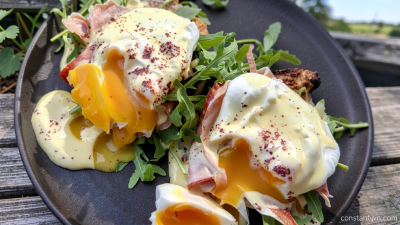
Constantvpn.com – A rapidly escalating salmonella outbreak across Britain has prompted food regulators to issue an explicit warning: young children under five, adults over sixty-five, expectant mothers, and individuals with compromised immune systems should steer clear of under-cooked or runny eggs when dining at restaurants, cafés, or takeaways. The guidance, issued by the Food Standards Agency (FSA), extends beyond whole eggs to freshly prepared dishes that incorporate raw or lightly cooked egg components, including homemade mayonnaise, soufflés, and hollandaise sauce. Fully cooked eggs served in commercial kitchens remain perfectly safe, the agency stressed.
A National Outbreak Declared
The advisory follows a formal national outbreak declaration by the UK Health Security Agency, which confirmed that at least one person has died and several hundred more have fallen ill. More than two hundred confirmed cases have been linked to this particular strain, with the majority concentrated across England. Genetic sequencing of the bacteria isolated from patients indicates that all identified infections belong to a single transmission event, and the pattern closely mirrors earlier outbreaks traced to imported eggs. Investigators examining individual cases have found that the affected eateries were sourcing their eggs from overseas suppliers rather than domestic producers.
What the Science Adviser Said
Ian Young, the FSA’s chief scientific adviser, framed the situation with unusual directness. Speaking about diners who might encounter egg-based dishes in commercial settings, he stated:
“If people are eating out or consuming eggs or egg-containing products from cafes and restaurants then for those people in particular who are young, elderly, pregnant or vulnerable, it’s important to make sure that any eggs or egg products that you consume in those settings have been very well cooked.”
Young characterised the current episode as “unusually large and rapidly increasing” and urged the public to exercise caution. At the same time, he was careful to draw a clear line between imported eggs and domestically produced ones. British laying hens are vaccinated against the most prevalent salmonella strains, and he confirmed there is no epidemiological link between supermarket-bought British eggs and the present outbreak.
The Domestic Egg Industry Responds
Mark Williams, chief executive of the British Egg Industry Council, reinforced that distinction. He stated that eggs produced in Britain are safe to consume even when runny, including for those in vulnerable categories, and noted that such eggs are widely available in restaurants and cafés throughout the country. His practical advice to diners was straightforward:
“Customers who want to enjoy a runny egg should simply ask whether British Lion eggs are being used.”
The British Lion mark identifies eggs that have passed the country’s stringent food-safety inspection regime. For diners uncertain about sourcing, a simple question at the counter or table can resolve the ambiguity without needing to forgo the dish entirely.
Understanding Salmonella and Its Risks
Salmonella comprises a family of bacteria that reside naturally in the gastrointestinal tracts of many animals, including cattle, pigs, and chickens. This normal microbial presence is precisely why eggs and poultry products have long been associated with the infection. Transmission to humans typically occurs through consumption of contaminated food that has not been heated sufficiently to kill the organisms, through cross-contamination in kitchens where raw and cooked foods share surfaces or utensils, or through direct contact with infected animals.
Once ingested, the bacteria can trigger abdominal cramping, watery diarrhoea, vomiting, and fever. For most healthy adults, symptoms resolve within a week without medical intervention. However, the risk of progression to severe dehydration, bacteraemia, or other complications rises sharply in infants, older adults, pregnant women, and immunocompromised patients. In those higher-risk groups, hospital admission for intravenous fluid replacement and, where indicated, antibiotic therapy may be necessary.
Practical Steps for Readers
For the general population, the outbreak does not alter everyday egg preparation at home. The specific concern centres on eggs of unknown origin entering the commercial food chain. Diners who wish to minimise exposure can take several low-effort steps: choose dishes where eggs are clearly well set or fully cooked; ask staff about the provenance of egg-based sauces and toppings; and, if symptoms develop after eating out, contact a general practitioner or the out-of-hours medical service promptly rather than waiting for symptoms to resolve on their own.
The FSA and UKHSA continue to monitor case numbers, trace supply chains, and coordinate with local authorities. Until the outbreak is formally closed, the precautionary guidance for vulnerable groups remains in force. The message is not that eggs are dangerous, but that in this particular window of elevated risk, the margin of safety for the most susceptible diners narrows when the egg’s origin cannot be verified.
Related Reading
Frequently Asked Questions
What is Under fives and pregnant women told?
Under fives and pregnant women told is the main topic of this guide. The article explains the context, practical details, and next steps readers should understand.
Why does Under fives and pregnant women told matter?
Under fives and pregnant women told matters because readers are looking for a useful answer, not just a short summary. Good content should match search intent and help them decide what to do next.