
Pacific Ocean Temperatures Signal a Historic El Niño as Global Preparedness Ramps Up
Constantvpn.com – The Panama Canal will cut the number of vessels transiting its locks by more than 10 percent this Thursday, a precaution tied directly to forecast drops in rainfall that could lower the waterway’s operating depth. Roughly 14,000 ships rely on the canal each year, making it both a linchpin of international commerce and a vital revenue stream for Panama. The reduction is one of the earliest tangible consequences of what forecasters now describe as the most powerful El Niño event recorded since at least 1950 — and possibly by a wide margin.
The World Meteorological Organization, the UN body responsible for atmospheric monitoring, has published updated data indicating the current episode could persist until February 2027 at the earliest. Monthly sea-surface readings in the central and eastern tropical Pacific are trending toward four degrees Celsius above the long-term mean, a threshold that would place this event far beyond the “very strong” category already in view. Beneath the surface, anomalies are even more extreme, with subsurface readings exceeding eight degrees above normal in certain zones of the Pacific basin.
What El Niño Actually Does
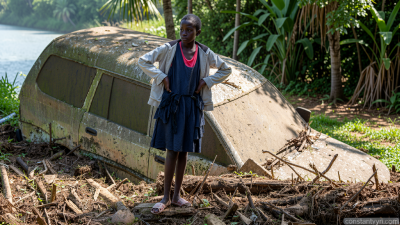
El Niño is a recurring oscillation in the Pacific Ocean tied to shifts in trade-wind patterns. When the winds weaken, warm surface water that normally pools in the western Pacific drifts eastward, dumping enormous quantities of heat into the atmosphere. That heat reshapes atmospheric circulation globally: regions that typically receive monsoon moisture can fall into prolonged drought, while tropical basins elsewhere see intensified cyclone activity and heavier downpours. East African nations such as Kenya endured devastating rainfall during the previous El Niño cycle, illustrating how quickly the phenomenon can overwhelm infrastructure built for normal climatic variability.
Compounding the natural signal is the backdrop of anthropogenic warming. Forecasters stress that El Niño’s temperature boost will land on top of an already-rising global baseline, meaning peak heat events will exceed anything seen in prior decades.
The UN’s Alarm
UN Secretary-General António Guterres framed the situation in stark terms when addressing the latest WMO briefing:
“El Niño is being supersized before our eyes. We are entering a danger zone of extreme weather. The science leaves no room for doubt: the planet is in uncharted waters, and those waters are heating up.”
The WMO has launched what it calls a “major mobilisation” to push its short-range extreme-weather forecasts into as many local communities as possible. Secretary-General Celeste Saulo underscored the stakes:
“El Niño has the potential to deliver a massive blow to communities and economies across the world.”
National governments and research institutions have responded by hardening early-warning networks and pre-positioning medical and humanitarian assets ahead of forecast impact windows. Yet the sheer magnitude of this particular episode has raised alarms among climate scientists and disaster-planning bodies, particularly regarding populations already stretched thin by poverty, conflict, or prior climate shocks.
Australia’s Marine Front
For Australia, the oceanic dimension of El Niño carries a distinct and immediate threat. The country has been battered by successive marine heatwaves in recent years — events driven by the broader warming trend — which have triggered mass coral bleaching, explosive algae blooms, and what officials have termed “unprecedented damage” to coastal ecosystems.
Dr Alistair Hobday, chief researcher at Australia’s national science agency, explained that El Niño, while a natural oscillation, tends to amplify precisely the kind of extreme oceanic heating that fuels those disasters. This year’s marine-heatwave outlook suggests the Great Barrier Reef will escape the worst conditions, affording its coral colonies additional time to recover from prior bleaching episodes. The southern states, however, face a far less forgiving forecast.
“Southern Australia is getting slammed. It had an algal bloom last year, it’s got bird flu now, and it looks like marine heatwaves will be stronger there this summer.”
The previous southern marine heatwave left starving penguin colonies, mass fish kills, suffocating algal mats, and jellyfish invasions along the coasts of South Australia and Tasmania. In response, Australia has rolled out early-warning protocols for marine crises, giving fisheries time to access financial relief, allowing managers to relocate sensitive species, and increasing the frequency of coral-health monitoring. Even so, Hobday acknowledged privately that the scale of the current event unsettles him.
Rainfall Shifts and Downstream Risks
While the full atmospheric footprint of this El Niño will unfold well into 2027, the WMO projects significant reorganisation of rainfall patterns within the coming months. Broad swathes of South East Asia, Central America, and northern South America are forecast to experience below-normal precipitation, elevating the probability of agricultural drought and wildfire seasons of unusual severity. The Panama Canal adjustment described above is a microcosm of that risk: when rainfall feeding the Gatun Lake basin falls, the canal’s draft shrinks, and operators must throttle traffic to prevent groundings.
Above-normal sea temperatures are also anticipated across the Indian Ocean, the tropical Atlantic, and sections of the Australian coastline, meaning the El Niño signal will not be confined to the Pacific. For island nations, smallholder farmers, and coastal communities across those basins, the coming months will test whether the strengthened warning systems and pre-positioned aid stocks are sufficient to blunt what the WMO and national meteorological services now describe as a once-in-a-generation compound hazard.
Related Reading
Frequently Asked Questions
What is UN warns of supersized El Niño?
UN warns of supersized El Niño is the main topic of this guide. The article explains the context, practical details, and next steps readers should understand.
Why does UN warns of supersized El Niño matter?
UN warns of supersized El Niño matters because readers are looking for a useful answer, not just a short summary. Good content should match search intent and help them decide what to do next.