Ukraine to get licence to produce Patriot missiles, Trump says
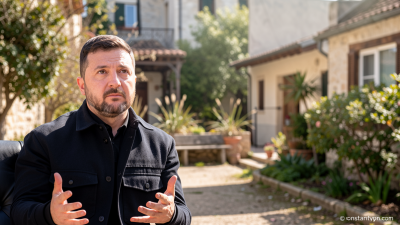
Trump Announces Patriot Missile Production License for Ukraine
Constantvpn.com – U.S. President Donald Trump has pledged to grant Ukraine authorization to manufacture Patriot interceptor missiles domestically, a move that could significantly bolster Kyiv’s capabilities against Russian ballistic missile assaults. The announcement came during Wednesday’s NATO summit held in Ankara, Turkey, where Trump addressed Ukrainian President Volodymyr Zelensky directly.
“We are gonna give you a licence to make Patriots,” Trump declared to Zelensky. “I think they can produce them very quickly once we explain it.”
The president noted that while he had not yet communicated his decision to defense contractors Lockheed Martin and Raytheon, he expressed confidence that arrangements would be made smoothly. The Patriot system stands as one of the globe’s premier air defense platforms, renowned for its ability to detect and intercept incoming missiles. However, it carries a substantial price tag—a single battery equipped with missiles commands approximately $1 billion, or £740 million.
Production Challenges and Strategic Concerns
Manufacturing timelines for the Patriot system are notably lengthy, with the U.S. Department of Defence reporting an annual output of only 600 missiles. This limited production capacity has made the United States hesitant to release additional units, particularly given that Washington expended more than half of its existing stockpile during its recent conflict with Iran earlier this year. According to the Center for Strategic and International Studies, a Washington-based think tank, this depletion has left the U.S. with limited reserves.
“We have Patriots, but we don’t have that many. We need them for ourselves too,” Trump explained during the summit.
Ukraine’s need for these systems has grown increasingly urgent. Over recent months, Moscow has escalated its ballistic missile campaign against Ukrainian territory, resulting in dozens of fatalities in Kyiv alone within the past week. One particularly devastating attack on a Sunday night saw all 23 Russian ballistic missiles go undetected due to what the Ukraine Air Force described as a “serious shortage” of interceptor missiles. More than 20 civilians perished in that strike.
Skepticism About Domestic Production
While Trump’s announcement generated optimism in Kyiv, military experts expressed caution regarding the feasibility of producing such sophisticated equipment on Ukrainian soil. Ivan Stupak, a former security service officer and military analyst, told the BBC that despite the critical importance of Patriots to Ukraine’s defense strategy, the country currently lacks the infrastructure to manufacture these advanced munitions.
“Unfortunately, Ukraine is not able to produce such kinds of advanced munition, because it’s really sophisticated, cutting-edge equipment,” Stupak stated. “Technically and legally, I think this will be deployed to European soil instead – and supervised.”
The expert emphasized that the entire process could span many months, citing security concerns as a primary obstacle. “It’s a matter of security. We have no safe place on the entire Ukrainian territory,” he added, noting that ongoing Russian strikes make domestic production challenging.
Diplomatic Developments and Future Prospects
During the same news conference, Trump acknowledged Ukraine’s recent successes in conducting long-range strikes against Russian targets situated thousands of kilometers from the front line. He characterized these operations as both an escalation and a potential pathway toward peace.
U.S. Secretary of State Marco Rubio, seated beside Trump, reinforced this perspective by stating that Ukraine’s attacks on Russian refineries demonstrated how challenging it remains for Moscow to protect its airspace. Rubio suggested these strikes could pressure the Kremlin into concluding the conflict.
Trump also claimed that Russian President Vladimir Putin, with whom he maintains regular communication, desires to negotiate a settlement to end the war that began with Russia’s full-scale invasion in 2022. While the U.S. president has made similar assertions previously, his diplomatic initiatives have yet to produce concrete results.
Notably, Trump revived the possibility of a direct meeting between Zelensky and Putin to discuss ending hostilities. Although Putin has indicated willingness to meet, he has consistently insisted such discussions occur in Moscow. When asked by Trump if he would consider traveling to the Russian capital, Zelensky responded with characteristic wit, noting the presence of numerous Ukrainian drones in the city.
Trump emphasized that the production license would prevent Ukraine from “complaining that we’re not giving them enough” missiles, addressing a concern that has persisted throughout the conflict. As the war enters its fifth year, with front-line fighting largely stalled and the Black Sea experiencing a standstill, Ukraine continues to adapt to Russia’s nightly drone campaigns while grappling with the more challenging threat posed by high-velocity ballistic missiles.
