
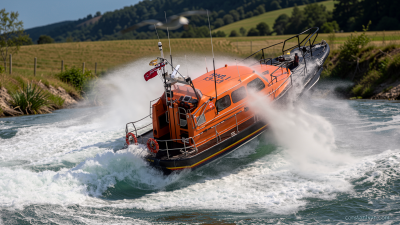
Search Intensifies After French Fishing Vessel Goes Down Near Plymouth
Constantvpn.com – Two members of a French fishing crew remain unaccounted for after their vessel sank in the English Channel on Saturday evening, prompting one of the most sustained multi-agency rescue operations in recent memory along Devon’s south coast. The Maritime and Coastguard Agency confirmed that searches for the two missing sailors are ongoing, with assets deployed across a wide sector of water south-west of Eddystone Lighthouse, a landmark situated roughly 12 miles west of Plymouth harbour.
The incident unfolded quickly. At 18:00 BST on Saturday, the crew transmitted a distress signal indicating the vessel was in trouble. Within minutes, a coastguard rescue helicopter, a fixed-wing aircraft, and two Royal National Lifeboat Institution (RNLI) lifeboats converged on the reported position. Three crew members were pulled from the water and transported to hospital. The remaining two have not yet been located, and the operation has shifted into its second full day.
A Round-the-Clock Effort
HM Coastguard in Falmouth, which coordinates maritime search-and-rescue across the western approaches, confirmed that the intensive search continued uninterrupted through the night. Personnel from the Plymouth and Falmouth RNLI stations worked through the darkest hours before handing over to crews based at Newlyn and Salcombe, who assumed responsibility for the morning sweep.
“It is continuing today with multiple assets sent to help,” an HM Coastguard spokesperson stated.
Civilian vessels operating in the area were also called upon to assist. A significant number of local fishing boats, pleasure craft, and commercial operators joined the grid, extending the area covered by the official search pattern. The combination of aerial surveillance, surface lifeboat patrols, and volunteer maritime traffic represents the standard layered approach used when a vessel sinks in open water and survivors may be in the water or clinging to debris.
Why the Channel Remains a Hazard Zone
The English Channel is among the busiest stretches of sea in Europe, carrying tens of thousands of commercial and recreational vessels each day. For fishing crews operating out of French ports such as Saint-Pol-de-Léon, Roscoff, and Concarneau, the waters west of Plymouth represent a productive groundfish and shellfish area, but also a region where weather can deteriorate rapidly, particularly in the autumn and winter months. Cold water temperatures, strong tidal streams running through the area around Eddystone, and limited visibility after dark all compound the risk for small vessels caught in sudden squalls or mechanical failure.
Eddystone Lighthouse itself, perched on a rocky headland south-west of Plymouth, has long served as a navigational reference point for vessels transiting between the English Channel and the Celtic Sea. Its position makes it a natural geographic marker for search-and-rescue coordinators defining sector boundaries. A sinking south-west of the light places the incident in relatively deep water, where currents can carry debris and survivors over considerable distances within hours.
The RNLI’s Role in Western Approaches
The Royal National Lifeboat Institution operates a network of volunteer and professional lifeboat stations along Britain’s coastline. Stations at Plymouth, Falmouth, Newlyn, and Salcombe collectively cover the western approaches and the inner Channel. Each station maintains at least one all-weather lifeboat capable of operating in heavy seas, supplemented by inshore boats for calmer conditions. When a multi-vessel incident occurs, as it did on Saturday, adjacent stations are tasked simultaneously to maximise coverage area and reduce response times.
The handover from Plymouth and Falmouth crews to Newlyn and Salcombe crews overnight reflects standard operational practice: after extended shifts in cold, wet conditions, fresh crews ensure sustained vigilance and physical capacity for continued surface searches. The transition is planned, not improvised, and ensures no gap in coverage.
What Happens Next
Search-and-rescue operations of this scale typically continue until either the missing persons are located or the probability of survival drops below a threshold set by international guidelines. Factors considered include water temperature, time elapsed since the vessel sank, tidal direction, and the last known position. Aerial assets provide the widest coverage per hour, while lifeboats can inspect smaller debris fields and conduct close-range sweeps that aircraft cannot replicate.
For the families of the two missing crew members, the coming hours will be defined by the outcome of each successive search sweep. HM Coastguard and the Maritime and Coastguard Agency have indicated that all available resources will remain committed until the operation concludes. Local harbourmasters in Plymouth, Newlyn, and Salcombe have been briefed and are monitoring for any civilian vessels that may spot debris or signs of survivors.
The French fishing vessel carried five people aboard at the time of the sinking. Three have been accounted for and are receiving medical treatment. The fate of the remaining two is the focus of every asset currently deployed in the sector, and the search will continue through the day and, if necessary, into the following night.
Related Reading
Frequently Asked Questions
What is Two missing as French fishing boat?
Two missing as French fishing boat is the main topic of this guide. The article explains the context, practical details, and next steps readers should understand.
Why does Two missing as French fishing boat matter?
Two missing as French fishing boat matters because readers are looking for a useful answer, not just a short summary. Good content should match search intent and help them decide what to do next.