Thousands of forgotten Punjabi WW1 soldiers recognised for first time
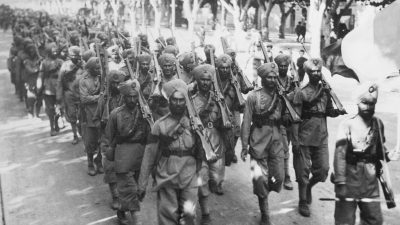
Thousands of Forgotten Punjabi WW1 Soldiers Recognised for First Time
Constantvpn.com – Historians and volunteers have made a groundbreaking discovery, adding the names of nearly 10,000 Punjabi soldiers who fought and died in World War One to the Commonwealth War Graves Commission (CWGC) database. This marks the largest revision to casualty records since the 1940s, bringing long-overlooked contributions of pre-partition India’s military to light. Over 1.4 million individuals from the Indian subcontinent—encompassing present-day India, Pakistan, and Bangladesh—served in the British Indian Army during the war, yet many of these soldiers have remained invisible in official commemorations until now.
A Legacy Unearthed
The project, spearheaded by the UK Punjab Heritage Association, began as an effort to digitize and analyze old records stored in the Lahore Museum, Pakistan. These volumes, once tucked away in fragile leather-bound folders, were compiled by officials in the Punjab region shortly after the war ended. Each book, embossed with the name of a village, contains handwritten accounts of soldiers from that area, offering a glimpse into their sacrifices. For years, researchers had scoured these documents, hoping to uncover missing names from the CWGC’s archives. Their persistence has now led to the formal inclusion of 9,909 individuals, many of whom were casualties who perished off the battlefield from injuries.
Connecting the Past to the Present
For Sunney Palahey, a dentist from Leicester, the recognition of his great-grandfather’s name in the updated records has been a deeply personal milestone. “The circle has closed. I feel much more complete,” he reflects. His great-grandfather, Kesar Singh, had vanished from history after enlisting in the British Indian Army, leaving Sunney to spend years searching for clues about his service. When researchers reached out to share the discovery, the news brought both pride and emotional resonance. “It’s been recognised by an authority, which it never was before. He is now an entry in the Commonwealth War Graves Commission. All the sacrifices seem to have been worth it,” Palahey says, emphasizing the global significance of the soldiers’ legacy.
“The circle has closed. I feel much more complete,” says Sunney Palahey, a dentist from Leicester.
Rediscovering Family Ties
Jasmin Basra, a PhD student at the University of Greenwich, played a key role in the research, uncovering connections that resonated deeply with her own heritage. “As a Punjabi myself, I feel really proud that I can do this part for the community,” she explains. During her work, Basra unexpectedly found the names of two relatives—her great-great-grandfather and his brother—who had also served in the war. This revelation, she says, was emotional, bridging a generational gap in her understanding of her roots. “There is almost a disconnect from Punjab as well as not being fully connected to British history, but this is a tangible link to all of it,” Basra adds, highlighting the project’s role in preserving familial and cultural ties.
Reviving a Forgotten Heritage
The effort to digitize the Punjab Registers has not only restored dignity to the soldiers but also highlighted the importance of their service in the broader narrative of World War One. The CWGC has praised the work, calling it a vital step in redefining the war’s global impact. “Commemoration should reflect the full global reality of that conflict,” the commission states, noting that the new entries challenge Euro-centric perspectives by acknowledging the diverse backgrounds of those who fought.
Among the newly recognized soldiers, approximately 25% are Sikhs, 25% Hindus, and 40% Muslims, underscoring the multicultural nature of the British Indian Army. The decision to grant these men war graves status overturns a historical oversight, as earlier rulings by the British Indian Government had excluded them from official memorials. This correction ensures their stories are no longer forgotten, aligning their contributions with the broader legacy of the war.
Preserving Names, Honoring Lives
Volunteers, including those from the UK Punjab Heritage Association, worked tirelessly to examine the Punjab Registers. Their dedication has been instrumental in identifying thousands of names that had slipped through the cracks of history. “The work done by volunteers has been gratefully received, and built on, by the CWGC,” says a commission spokesperson, emphasizing the collaborative effort between local researchers and international institutions. The inclusion of these soldiers not only adds to the official records but also serves as a tribute to their courage and resilience.
A New Chapter in Commemoration
As the project concludes, its impact extends beyond the archival realm. Families like Palahey’s now have a tangible link to their ancestors, while historians argue that this recognition enriches the historical record. The CWGC’s latest update, which includes 9,909 names, is a testament to the enduring value of these records. For communities in the UK and abroad, the discovery fosters a renewed sense of pride and connection to a shared history of sacrifice.
In addition to this milestone, a proposal for a Sikh war memorial statue in Southall, London, has gained traction. Advocates believe the statue will honor the forgotten Indian soldiers of Dunkirk, who played a crucial role in the Allied defense during the war. Their inclusion in the CWGC database serves as a catalyst for broader recognition, ensuring that their stories are told and their legacies preserved.
Global Recognition, Local Impact
The recognition of these soldiers has sparked discussions about the need to re-examine historical narratives. For many in the Punjabi diaspora, the updated records symbolize a deeper connection to both their ancestral homeland and their British heritage. “This is more than just a list of names; it’s a reminder that our ancestors fought for a cause that shaped the world we live in today,” Palahey says. As the CWGC continues its work, the hope is that future generations will carry forward this newfound awareness, ensuring that the sacrifices of these soldiers are never again overlooked.
