
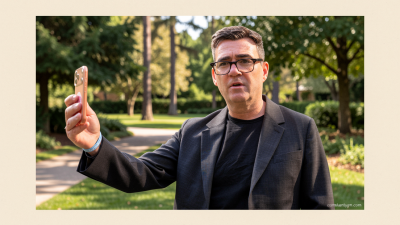
When the Feed Becomes the Front Page: UK Politics and the Social Media Tightrope
Constantvpn.com – In his opening weeks at the top of government, Andy Burnham has logged more than fifty Instagram posts, capturing everything from bilateral meetings with foreign heads of state to lighthearted moments ranking pub snacks alongside Chancellor John Healey during a business-rates announcement. A two-person social media unit attached to Number 10 now positions itself ahead of every ministerial announcement, cameras ready, to ensure no new arrival slips past the lens. The machinery of Westminster communication has shifted, almost overnight, from the formal press release beneath the government coat of arms to the algorithmic feed.
The question hanging over every party headquarters in Britain right now is simple and uncomfortable: how much of the leader’s personality should be broadcast, and does any of it actually move votes?
A Brief History of the Leader on Screen
Prime ministers have never been strangers to new media. Winston Churchill seized radio as a tool of mass persuasion while dismissing television as a “vulgar diversion.” Decades later, in the 1960s, Harold Wilson consciously modelled his television campaigning on the style of John F. Kennedy, understanding that the camera demanded a different register than the parliamentary floor. By the 1990s and 2000s, Tony Blair was as comfortable on a chatshow sofa as he was on the Today programme, normalising the idea that a head of government could appear in entertainment contexts without losing authority.
Each technological shift forced a recalibration. Radio demanded oratory. Television demanded image. Social media demands something harder to define: authenticity at scale, delivered in fragments, judged in real time by millions of strangers.
The Milifandom Experiment and Its Aftermath
The most vivid early-2010s illustration of online political mobilisation in Britain was the “Milifandom” phenomenon. In early 2015, young voters — predominantly female — began photoshopping flower crowns, petals, and hearts onto images of Labour leader Ed Miliband, posting them on Twitter under the hashtag #Milifandom. The movement was conceived by Abby Tomlinson, then a seventeen-year-old sixth-form student who referred to the Labour leader affectionately as “Milibae.” The campaign was a direct response to what participants saw as a distorted and unkind media portrayal of Miliband.
The hashtag trended. Then Labour lost the 2015 general election, and David Cameron, whose Conservatives had expanded their parliamentary majority, quipped:
“Britain and Twitter are not the same thing.”
Tomlinson later described how watching her hopes for “Milibae” in Number 10 evaporate turned her into a “political pessimist,” after she concluded that winning over voters online “doesn’t happen in a day, a week or even months, it’s going to take years.”
More than a decade later, Tomlinson occupies a seat in the press office at Number 12 Downing Street, serving as head of content for Andy Burnham. The government has spent recent weeks recruiting producers, videographers, and strategists, operating out of both Whitehall and the party’s Manchester base at No 10 North. The Milifandom teenager is now helping to engineer the very phenomenon that once felt like a protest stunt.
The Current Competitive Landscape
Every major party is now competing for attention in the same crowded digital space. Conservative leader Kemi Badenoch has generated viral clips dissecting the budget and mocking former prime minister Sir Keir Starmer. Reform UK’s Nigel Farage commands by far the largest online audience of any British party leader, with 7.6 million followers spread across Facebook, Instagram, X, TikTok, and YouTube. His platform of choice, X, is owned by Elon Musk, who has publicly endorsed the party — a fact that amplifies reach well beyond organic growth.
In Scotland, the SNP has spent years cultivating what insiders call its “online army,” deploying coordinated digital campaigns to sustain the independence case. The Liberal Democrats, campaigning across all of Britain, have seen leader Ed Davey achieve intermittent viral success through calculated campaign stunts. Restore Britain, founded by former Reform MP Rupert Lowe, enjoys its highest concentration of support among X users. Plaid Cymru, newly installed in government in Wales, is still calibrating its tone, mixing “fun” memes featuring First Minister Rhun Ap Iorweth with more sober interview excerpts. The Greens’ Zack Polanski has made a point of personally managing his own accounts — a strategy that, as recent weeks have shown, carries its own set of risks.
The Balance problem
Theresa May, who succeeded Cameron, was openly sceptical about social media’s electoral value. On taking office she rebuffed aides who urged her to begin tweeting, remarking:
“People don’t say ‘pass me the hashtag newspaper, or I’d like a hashtag coffee.'”
Her first cabinet reshuffle was announced through formal press statements. Burnham’s first reshuffle, by contrast, was announced through the lens of a smartphone held by a two-person digital team. The contrast encapsulates the entire shift.
Strategists now argue that platforms like Instagram and TikTok play to Burnham’s communication strengths and sense of humour, while podcasts offer longer-form, less combative opportunities to connect with voters. Social media, in their framing, delivers what one former adviser to Tony Blair, Peter Hyman, has described as a “quick hit of direct democratic dopamine.”
The tension remains unresolved. Being accessible, authentic, and approachable without tipping into cringe is a narrow corridor. One ill-judged post can define a leader’s brand for weeks. One collaboration gone wrong can become the defining clip of a campaign. The Milifandom generation learned, at seventeen, that online enthusiasm does not translate into parliamentary seats. The current generation of strategists in Whitehall and Manchester is learning, in real time, that the reverse is equally true: a polished feed does not guarantee a mandate. The algorithm rewards engagement, not conviction. And in an election year, that distinction may prove decisive.
Related Reading
Frequently Asked Questions
What is The dangers of politicians being too online?
The dangers of politicians being too online is the main topic of this guide. The article explains the context, practical details, and next steps readers should understand.
Why does The dangers of politicians being too online matter?
The dangers of politicians being too online matters because readers are looking for a useful answer, not just a short summary. Good content should match search intent and help them decide what to do next.