Ryanair warns of ‘queue chaos’ from new EU border system
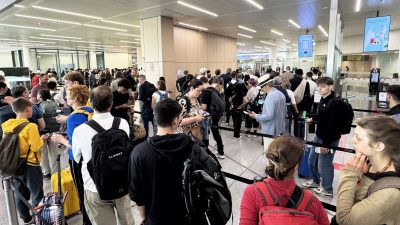
Ryanair and Berlin Airport Sound Alarm Over EU Border System’s Summer Impact
Constantvpn.com – The introduction of the European Union’s new digital border control system has sparked concerns among airlines and airport authorities about its potential to disrupt summer travel. Ryanair, one of Europe’s largest low-cost carriers, has joined forces with Berlin Airport’s leadership to highlight the challenges posed by the Entry-Exit System (EES), warning that the rollout could lead to severe delays and chaos at key transit hubs. With the peak travel season approaching, both parties are urging governments to delay the system’s full implementation until after the summer period to prevent widespread issues.
Queuing Delays and Missed Flights
According to Berlin Airport’s spokesperson, Aletta von Massenbach, non-EU nationals now face waiting times of up to two hours to complete border checks under the EES. This has raised alarms, as the system is expected to be a major factor in the summer travel experience. “The situation is not bearable over the summer,” she stated, emphasizing the strain on airport operations during high-traffic periods. Ryanair’s chief operations officer, Neal McMahon, echoed these concerns, describing the EES as a “half-baked passport control system” that risks causing long queues, missed flights, and unnecessary stress for travelers.
McMahon’s comments, delivered during a recent press briefing, highlighted the urgency of the situation. “Passengers and families should not be used as guinea pigs for a system that hasn’t fully matured,” he said. The airline cited specific airports—such as Tenerife South, Palma, Alicante, Malaga, Milan Bergamo, Krakow, and Paris Beauvais—as hotspots for disruption. These locations, which typically handle large volumes of international travelers, are now facing operational bottlenecks that could impact thousands of passengers.
Inconsistent Rollout and System Complexity
Despite the EES’s goal of modernizing border control and improving efficiency, its implementation has been uneven across EU member states. Von Massenbach pointed out that the system’s complexity stems from the varying technologies each country uses. “There are so many sub-systems for each and every member state,” she explained to the BBC. “This fragmentation doesn’t support smooth processing at the border.” The result, she argued, is a lack of standardization that leads to confusion and delays.
The European Commission has acknowledged these challenges and pledged to offer additional support to address them. However, industry leaders remain skeptical. The head of Europe’s airports trade body recently expressed worry that the EES’s inconsistencies are causing sleepless nights for executives. “The rollout has been inconsistent, and with peak summer travel approaching, we need the commission and member states to take this seriously,” he added, stressing the importance of contingency planning.
Technical Hiccups in Dover
Compounding the issues, technology problems have hindered the EES’s functionality at the UK’s Port of Dover. This site, which handles French border checks for travelers entering the UK, has not yet activated its 84 kiosks designed to record biometric data. The French authorities are responsible for ensuring the technology works, but progress has been slow. “Time is rapidly running out,” said Port of Dover chief executive Doug Bannister during a parliamentary session. “We are heading into the critical summer period and have yet to secure the assurances needed to avoid a challenging six weeks of delays.”
Bannister’s remarks underscore the broader concerns about the EES’s readiness. With summer travel just weeks away, the lack of a fully operational system at key entry points has left airlines and travelers in a precarious position. The Dover issue exemplifies how technical glitches can ripple across the entire network, creating a domino effect of disruptions.
Personal Experiences with the EES
For some travelers, the EES’s shortcomings are not just theoretical—they are deeply personal. Anne Robinson, a passenger from Dunbarton, shared her ordeal with the system during a recent trip to Rome. “I’m not going back to Europe this year,” she said, recounting how the EES made her journey stressful. Robinson and her 13-year-old son, Jack, missed their return flight after being stuck in a queue for over an hour at the airport.
“We ended up in a queue for about 90 minutes just to get into Rome,” Robinson described. “Everyone was kind of surprised and complaining because we couldn’t understand why it was taking so long.”
Upon their return to the UK, the family arrived at Rome airport three-and-a-half hours early to avoid delays. However, they were met with a different challenge: most of the EES kiosks were non-functional. “You could see a lot of machines just laying around, not working,” Robinson added. Her estimate of a 90-minute wait was not enough to prevent them from missing their flight. To resolve the issue, they had to pay £250 for a replacement flight, an expense not covered by travel insurance.
“That was too stressful,” Robinson concluded. “The EES has put me off returning to Europe this year.”
System Design and Traveler Impact
The EES is intended to streamline border checks by digitizing the process of recording biometric data for non-EU nationals. When travelers arrive in the Schengen area, their information is captured and linked to their passports. This data is then used to verify their identity during departure. However, the system’s design has proven challenging in practice, with reports of long waits, especially during peak travel times.
Industry representatives, including Airlines UK and Airlines for America, have criticized the rollout’s inconsistency. They argue that the EES’s current state is not yet ready for the high volume of summer travelers. “The system has been in operation since April, but it’s still not functioning as intended,” one executive noted. “This is a problem that needs immediate attention to avoid further complications.”
While the EES has worked smoothly in some regions, its implementation in others has been marred by logistical and technical hurdles. These issues have led to a situation where travelers are not only facing delays but also financial penalties. The case of Anne Robinson is a stark reminder of how the system’s flaws can directly affect individual journeys, turning what should be a stress-free experience into a costly one.
As the summer season approaches, the call for action grows louder. Airport and airline officials are urging the European Commission to expedite support and ensure that all member states are prepared. The EES, once hailed as a revolutionary step in border management, now appears to be a source of frustration for travelers. Its continued challenges highlight the importance of thorough testing and collaboration before full-scale adoption. With the holiday period looming, the need for a reliable system has never been more critical.
