Russian strikes kill 11 and set historic cathedral in Kyiv ablaze
Russian Strikes Kill 11 and Set Historic Cathedral in Kyiv Ablaze
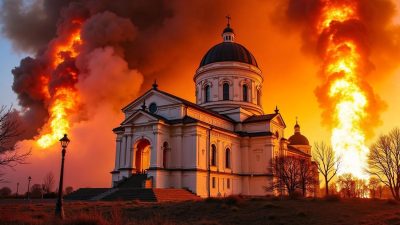
Constantvpn.com – President Volodymyr Zelensky has reported that at least 11 individuals were killed in a series of Russian missile attacks on Ukraine, which also led to a major religious site in Kyiv catching fire. The strikes targeted multiple areas, with four casualties in Kyiv and five rescue workers losing their lives while attempting to extinguish flames in Kharkiv. The 11th Century Dormition Cathedral, a cornerstone of Kyiv’s cultural heritage, was severely damaged in what Zelensky described as “one of the biggest Russian crimes against Christian culture today.”
The cathedral, located within the Kyiv-Pechersk Lavra—a UNESCO World Heritage Site—was partially consumed by flames, leaving a gaping hole in its structure and visible smoke from the roof. Russian officials have dismissed the claim, stating that the site was not intentionally targeted. Instead, they assert that the damage occurred due to a misfired Patriot air defense missile, though they have not provided evidence to substantiate this assertion. The Russian military characterized the attack as part of a “massive strike” aimed at Ukrainian military installations, emphasizing its strategic objectives.
Meanwhile, a Ukrainian drone attack in the Russian city of Tula caused three fatalities and injured three others, including a one-year-old child. This incident underscores the reciprocal nature of the conflict, as both sides continue to strike at each other’s cities. In Kyiv, the strikes left over 140,000 residents without electricity, according to the city’s mayor, Vitali Klitschko. The attacks also ignited fires in residential buildings and vehicles, intensifying the toll on civilians. Most of Ukraine was under air raid alerts on Monday morning, highlighting the ongoing threat posed by Russian military operations.
Zelensky’s statement emphasized the scale of the damage, noting that 70 missiles and 611 drones were launched overnight during the assault. The president stressed that the fire at the cathedral had been contained, but the broader impact on the population remains severe. He also revealed that at least 23 people were injured in Kyiv, with a total of 53 casualties reported across Ukraine. The focus on civilian targets has drawn widespread condemnation, with Zelensky urging international leaders to take decisive action at an upcoming G7 summit in France.
The G7 meeting, which will address the war in Ukraine, is a critical opportunity for global allies to respond to the escalating violence. Zelensky has called for “decisive and meaningful” measures, including increased pressure on Russia and enhanced support for Ukraine’s air defense capabilities, particularly anti-ballistic missile systems. Earlier in the week, he engaged in discussions with former U.S. President Donald Trump about strategies to end the prolonged conflict, though no immediate agreements were announced.
France’s President Emmanuel Macron joined Zelensky in denouncing the attacks, stating on X, “Nothing justifies this attack on our universal heritage.” EU foreign policy chief Kaja Kallas echoed this sentiment, labeling the strikes on the cathedral and Ukrainian civilians as “war crimes.” The UNESCO World Heritage Site’s destruction has sparked renewed calls for protection of cultural landmarks, with the agency itself condemning the attack as a blow to Ukraine’s spiritual and cultural identity.
The Kyiv-Pechersk Lavra, which includes the Dormition Cathedral, has been a recurring target in Russia’s full-scale invasion of Ukraine since 2022. In January, Russian attacks damaged several structures within the complex, according to Ukraine’s Ministry of Culture. The cathedral’s history dates back to the 11th century, and it has endured significant destruction throughout the centuries. During World War Two, the site was nearly entirely razed, with only its south-eastern tower surviving. This latest assault has reignited concerns about the site’s preservation, as its historical and symbolic value is once again at risk.
Zelensky’s remarks highlight the emotional weight of the strikes, particularly their impact on religious and cultural institutions. The president described the cathedral as a “testament to resilience,” noting its role in the community’s recovery and social cohesion. UNESCO has reiterated its stance, stating that damage to such sites deprives communities of essential resources for rebuilding and maintaining cultural continuity. The agency’s condemnation of the attack reinforces the global significance of the cathedral, which stands as a symbol of Ukraine’s enduring heritage.
As the conflict continues, the balance between military strategy and the protection of civilian and cultural infrastructure remains a contentious issue. Russia’s claim that the cathedral was struck by a Patriot missile adds complexity to the narrative, suggesting potential errors in targeting. However, the scale of the damage and the casualties raises questions about the precision of these attacks. The Ukrainian government has not yet confirmed the missile’s origin, leaving room for debate over the responsibility for the destruction.
The ongoing strikes have intensified the humanitarian crisis in Ukraine, with electricity shortages affecting over 140,000 people in Kyiv. This disruption underscores the broader impact of the war on daily life, beyond the immediate loss of life and property. As the G7 summit approaches, Zelensky’s call for decisive support reflects the urgency of the situation and the need for international solidarity. The attacks on the cathedral serve as a stark reminder of the cultural dimensions of the war, as historic sites are increasingly viewed as battlegrounds for ideological dominance.
In the wake of the incident, global leaders are expected to weigh the evidence and consider the implications for the conflict’s trajectory. The destruction of the Dormition Cathedral, a UNESCO-recognized landmark, has drawn comparisons to past wars, where cultural heritage was often collateral damage. As the world watches, the question remains: how will the international community respond to these symbolic attacks, and what does this mean for the future of Ukraine’s cultural legacy?
International Condemnation and Strategic Context
“Nothing justifies this attack on our universal heritage,” said French President Emmanuel Macron on X, joining Ukrainian leader Volodymyr Zelensky in condemning the strikes. EU foreign policy chief Kaja Kallas further emphasized the gravity of the situation, calling the assaults on the cathedral and civilians “war crimes.”
The timing of the attacks aligns with the G7 summit, where the war in Ukraine will be a central topic. Zelensky has urged leaders to prioritize measures that will “pressure the aggressor” and provide Ukraine with the necessary tools to defend itself. This includes a focus on anti-ballistic missile systems, which he argues are critical to countering Russian air strikes. The summit represents a pivotal moment for global coordination, as the war’s toll on Ukraine continues to grow.
Meanwhile, the strikes in Kyiv and Kharkiv have become emblematic of the broader conflict, where cities are frequently targeted. The combination of drone and missile attacks has created a pattern of devastation, with residential areas and infrastructure suffering disproportionately. The loss of 11 lives, including rescue workers, has added a layer of tragedy to the military campaign, as efforts to protect civilians are also under threat.
As the war enters its third year, the destruction of the Dormition Cathedral marks a symbolic escalation in the conflict. The cathedral’s survival has been a key part of Kyiv’s cultural resilience, and its partial burning has prompted renewed calls for its protection. Historians and cultural officials emphasize that such losses not only affect the physical site but also the collective memory and identity of the Ukrainian people.
With the G7 meeting looming, the international community will face the challenge of addressing both the immediate humanitarian crisis and the long-term preservation of Ukraine’s heritage. Zelensky’s appeals for support highlight the necessity of a unified response, as the war’s impact extends beyond military objectives to include cultural and societal dimensions. The strikes on the cathedral and other sites serve as a powerful reminder of the stakes involved in the conflict, urging leaders to act decisively in favor of Ukraine’s future.
