Russia ignores Ukraine’s unilateral ceasefire and attacks kindergarten
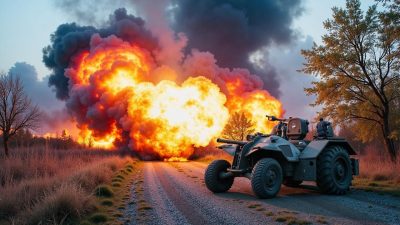
Russia Attacks Kindergarten Amid Ceasefire Tensions
Constantvpn.com – Ukrainian President Volodymyr Zelensky has criticized Russia for violating a ceasefire declared by Ukraine, citing a series of drone strikes on multiple cities. The attacks, which began on Wednesday, targeted both front-line positions and civilian areas, with one incident in the Sumy border region leaving a woman dead after a kindergarten was hit. Local authorities confirmed the casualties, noting that no children were present at the time. This incident has reignited concerns about Russia’s commitment to the truce, as Zelensky accused the aggressor of “active hostilities and terrorist shelling” during the period.
The conflict escalated further as both sides announced separate unilateral ceasefires, each with differing terms and conditions. Russia first proposed a truce on May 8th and 9th to mark Victory Day, a national celebration commemorating the Soviet Union’s triumph over Nazi Germany. Kyiv, however, countered with its own open-ended ceasefire starting at midnight on Tuesday, vowing to respond “symmetrically” to Russian actions. Despite these efforts, the ceasefires have not resolved the ongoing clashes, with Zelensky describing Russia’s actions as a “clear spurning of a ceasefire and of saving lives.”
According to Ukraine’s foreign minister, Andriy Sybiha, Russia’s calls for a ceasefire on May 9th are “fake calls for a ceasefire on May 9th have nothing to do with diplomacy.” He argued that the demand is driven by military parades rather than genuine concern for human lives. This sentiment echoes Zelensky’s own frustration, as he emphasized that Ukraine would “decide on our further actions” based on military assessments, indicating the country’s readiness to continue its defensive strategy.
Victory Day events in Russia are set to take place on Saturday, featuring a grand military parade on Red Square. However, the Kremlin has announced a reduced version of the ceremony due to the “terrorist threat” from Kyiv. Security measures have also been heightened, with residents of Moscow and St. Petersburg warned of potential disruptions to mobile internet access. These steps reflect Moscow’s broader efforts to protect its population from the war’s impact, a priority since the invasion began in 2022.
Meanwhile, Ukraine has demonstrated increasing capability to strike deep within Russian territory, as evidenced by attacks on Tuesday that killed two people in Cheboksary, a city over 1,500 kilometers from the conflict zone. The use of long-range drones has become a key tactic, allowing Kyiv to target Russian cities with limited damage but significant symbolic effect. This strategy has forced Moscow to reconsider its defensive posture, as the attacks challenge the narrative of Russian dominance in the war.
Russia’s response to Ukraine’s ceasefire demand has been equally assertive. The country has threatened a “massive missile strike” on central Kyiv if the Ukrainian side fails to uphold its unilateral truce. This escalation underscores the lack of trust between the two nations, with each side accusing the other of exploiting the ceasefire for strategic gain. The Russian defence ministry reported that 53 Ukrainian drones were downed overnight, from 21:00 to 07:00 local time, but did not clarify whether any of these were launched after Kyiv’s ceasefire took effect.
Despite the growing tension, the conflicting parties continue to use the ceasefire as a tool for diplomatic leverage. Ukraine’s open-ended ceasefire, announced earlier this week, allows for flexibility in its military operations, while Russia’s demand is tied to a specific date. The absence of a mutual agreement has left the situation fragile, with each side prepared to act based on its own interpretation of the terms. Zelensky’s assertion that Russia “carried out active hostilities” highlights the perceived failure of the truce to halt the violence.
Analysts suggest that the ceasefire declarations are more about political posturing than actual pauses in hostilities. Russia’s focus on Victory Day parades may be a way to showcase military strength, while Ukraine’s symmetric approach aims to demonstrate its ability to retaliate effectively. The recent attacks, including the kindergarten strike, serve as a reminder of the stakes involved. With the war entering its second year, the balance of power remains in flux, and the effectiveness of these ceasefires will be closely watched.
The impact of these strikes extends beyond the immediate casualties. They have also affected public opinion in Russia, as the country’s cities face targeted attacks from Ukrainian long-range weapons. This psychological warfare element has been a key component of Ukraine’s strategy, aiming to undermine Russian morale and highlight the war’s reach. In contrast, Russia has sought to bolster its domestic support by emphasizing the need for a strong defense, even as it faces criticism for its unilateral ceasefire demands.
As the conflict continues, the dynamics between the two nations remain complex. The ongoing attacks, including the kindergarten incident, reveal the challenges of maintaining a ceasefire when both sides are driven by strategic objectives. Zelensky’s comments reflect the urgency of the situation, with Ukraine determined to act in response to Russian aggression. The lack of a unified agreement on the terms of the truce means that the ceasefire is more of a temporary reprieve than a lasting solution, setting the stage for potential renewed hostilities.
With the war’s anniversary approaching, the competing ceasefire proposals highlight the evolving nature of the conflict. Russia’s insistence on marking its Victory Day with military displays contrasts sharply with Ukraine’s approach of using the ceasefire to gain tactical advantages. The recent drone strikes, which have caused significant disruption, underscore the reality that the conflict is far from over. As both sides prepare for the next phase of operations, the pressure on Russia to honor its truce will be scrutinized more closely than ever before.
The events of Tuesday and Wednesday illustrate the unpredictable nature of the war. While Ukraine’s military claimed to have struck deep into Russia, Russia’s defense ministry countered with reports of drone downing. This back-and-forth underscores the challenges of monitoring and enforcing unilateral agreements. The conflicting accounts may fuel further accusations, with Zelensky’s administration likely to emphasize the humanitarian toll of Russian actions, while Moscow will focus on its military capabilities and the threat posed by Ukrainian attacks.
Ultimately, the success of these ceasefires depends on the willingness of both parties to adhere to their terms. Zelensky’s call for a “symmetrical” response has made it clear that Ukraine will not simply accept Russian demands without a fight. As the conflict moves forward, the role of international observers and the potential for renewed violence will remain critical factors in shaping the war’s trajectory. The kindergarten attack serves as a poignant reminder of the human cost of the war, even as both sides continue to negotiate and maneuver in the shadow of the truce.
