Red Cross volunteers die from suspected Ebola in DR Congo
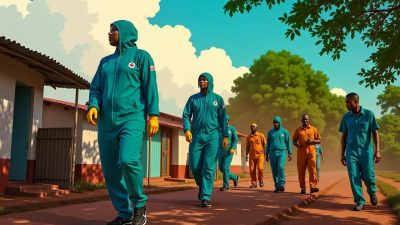
Red Cross Volunteers’ Fatal Infections Signal Escalating Ebola Crisis in DR Congo
Constantvpn.com – The International Federation of Red Cross and Red Crescent Societies (IFRC) reported that three of its volunteers have died from suspected Ebola in the Democratic Republic of Congo (DRC). The volunteers, who were working in the eastern region of Ituri, are believed to have contracted the virus on 27 March while handling deceased bodies as part of a community project unrelated to the outbreak. Their deaths mark the earliest confirmed fatalities in the current epidemic, which has now claimed over 170 suspected lives and infected more than 750 individuals.
First Wave of Losses in DRC’s Latest Outbreak
The three volunteers—Alikana Udumusi Augustin, Sezabo Katanabo, and Ajiko Chandiru Viviane—passed away between 5 and 16 May. At the time of their infection, the outbreak had not yet been officially identified. Their deaths highlight the risks faced by frontline workers in the DRC, where managing dead bodies remains a critical task during the crisis. The IFRC praised their service, stating they had “died after serving their communities with courage and humanity.”
WHO Elevates Risk Level Amid Escalating Concerns
On Friday, the World Health Organization (WHO) upgraded the public health risk of the Ebola outbreak in the DRC from “high” to “very high.” Dr. Tedros Adhanom Ghebreyesus, the WHO chief, emphasized that while the risk in the broader African region remains “high,” it is still classified as “low” on a global scale. This shift underscores the urgency of containment measures as the virus spreads further within the country.
Rare Ebola Strain Complicates Response Efforts
The outbreak is attributed to the Bundibugyo strain, a less common variant of the Ebola virus. Unlike the more frequently encountered Zaire strain, Bundibugyo has no proven vaccine and is known to have a mortality rate of approximately one-third of infected individuals. Health officials are now grappling with the challenges of this rare species, which requires tailored strategies for prevention and treatment.
Community Engagement and Trust in Crisis
Health experts warn that direct contact with the bodies of Ebola victims can transmit the virus, as bodily fluids remain highly infectious even after death. In the town of Mongbwalu, now identified as the epicenter of the outbreak, this risk has heightened concerns among local residents. Médecins Sans Frontières (MSF) noted that a tent it had set up to treat patients was set ablaze on Friday, reflecting growing anxiety in the community.
“Understandably, there are still many uncertainties and fears among the community in this rapidly evolving context,” said MSF. “This incident highlights just how critical sustained community engagement and trust building are.”
Regional Spread and Rebel Group Challenges
As the outbreak progresses, cases have been detected in the North and South Kivu regions, alongside Ituri. These areas, which are partially controlled by the M23 rebel group, pose additional logistical hurdles for health workers. The M23’s presence has complicated efforts to reach affected populations, transport medical supplies, and implement quarantine protocols. This situation has created a dual challenge: combating the virus while navigating political and security instability.
Uganda Reports New Cases, Expanding Concerns
DR Congo’s neighboring country, Uganda, has also reported cases of the virus. On Saturday, the Ugandan health ministry confirmed three new infections, raising the total confirmed cases to five. The African Centres for Disease Control (Africa CDC) simultaneously warned that 10 other nations on the continent are at risk of experiencing outbreaks. These countries include Angola, Burundi, the Central African Republic, the Republic of Congo, Ethiopia, Kenya, Rwanda, South Sudan, Tanzania, and Zambia.
Transmission Risks and Cultural Practices
Touching the bodies of Ebola victims remains a significant source of transmission, particularly in regions where traditional burial practices are common. In Ituri, an angry crowd recently attacked a hospital, setting part of its premises on fire after family members of a suspected Ebola victim were denied access to his body for burial. This incident illustrates the cultural and emotional tensions that arise when communities perceive health measures as intrusive.
Global Response and Local Struggles
While the WHO and Africa CDC have raised alarms, the DRC continues to face internal challenges in managing the outbreak. The lack of a proven vaccine for the Bundibugyo strain has intensified fears, as health systems struggle to cope with the surge in cases. In Mongbwalu, where the volunteers were based, the situation has become a focal point for international aid organizations and local authorities. MSF’s report of the tent being burnt adds to the narrative of community resistance and the need for clearer communication between health officials and the public.
Historical Context and Current Vulnerabilities
Previous Ebola outbreaks in the DRC have often been linked to the handling of dead bodies, a practice central to the region’s cultural traditions. The current epidemic, however, has a unique trajectory, with its initial cases emerging from an unrelated project. This unexpected origin has raised questions about the virus’s transmission patterns and the effectiveness of early response measures. Experts stress that the outbreak’s rapid spread is a testament to the interconnectedness of communities in the eastern regions.
International Collaboration and Future Outlook
As the situation evolves, international collaboration has become essential. The Red Cross and other organizations are working closely with local governments to strengthen containment efforts. However, the challenges posed by the Bundibugyo strain and the M23’s control over certain areas mean that the fight against Ebola is far from over. Health workers and volunteers remain on the frontlines, navigating both the physical and social complexities of the crisis.
The DRC’s experience with this outbreak serves as a reminder of the virus’s capacity to disrupt even the most well-established public health systems. With more than 750 suspected cases and over 170 deaths, the need for rapid intervention, community support, and global solidarity has never been greater. As the epidemic spreads to neighboring regions, the world watches closely to see how this rare strain will continue to shape the trajectory of the outbreak.
For further updates on the African continent, visit BBCAfrica.com. Follow us on Twitter @BBCAfrica, on Facebook at BBC Africa, or on Instagram at bbcafrica.
