
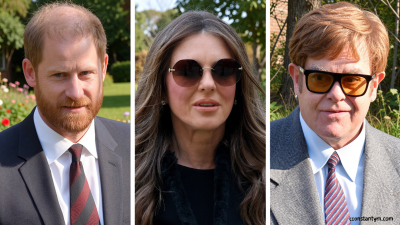
Seven Claimants Confront £34.5m Costs Order After Privacy Trial Collapse
Constantvpn.com – The Duke of Sussex and six fellow litigants now face a potential legal bill approaching £34.5 million following a High Court judge’s extraordinary costs ruling in their failed privacy action against Associated Newspapers Limited, the parent company of the Daily Mail. The order, handed down by Mr Justice Nicklin, represents one of the most punitive costs determinations in recent English civil litigation and places an immediate cash demand of £9.54 million on the claimants, payable by the Friday following the ruling.
The Ruling and Its Rationale
Justice Nicklin dismissed the group’s claims of unlawful information-gathering on 7 July, rejecting allegations that ANL had engaged in covert surveillance and other improper conduct. On Friday, the judge went further, imposing what he described as an exceptional costs order far exceeding the figures the parties had agreed before trial. He characterised the claimants’ conduct throughout the proceedings as “unreasonable to a high degree,” a finding that carried direct financial consequences.
The judge determined that ANL’s recoverable costs would be assessed on an indemnity basis rather than the standard “reasonable” basis ordinarily applied in English civil cases. Indemnity costs shift the risk of cost overruns onto the losing party and typically yield a substantially higher recovery for the winner. Justice Nicklin acknowledged that a claim exceeding £34 million was, “on its face, excessive and as giving rise to real concerns as to whether all of the costs now claimed by Associated were reasonably incurred and are reasonable in amount.” Nevertheless, he declined to impose a fixed ceiling, reasoning that any cap would be “too broad-brushed, would risk unfairness, and would be vulnerable to the charge that it was arbitrary.”
Who Is Affected
Beyond Prince Harry, the seven claimants included Sir Elton John and his husband David Furnish, former Liberal Democrat deputy leader Sir Simon Hughes, racial justice campaigner Baroness Lawrence, and actresses Sadie Frost and Liz Hurley. Baroness Lawrence entered public life after the 1993 murder of her son Stephen Lawrence, a case that became a landmark in British racial justice history.
The group had secured litigation insurance covering up to £16.2 million of ANL’s costs in the event of defeat. Because the judge’s order pushes the recoverable figure to as much as £34.5 million, the claimants could face an uninsured exposure of roughly £18 million above their policy limit.
Appeal Window and Immediate Deadlines
The claimants have until 2 October to lodge an appeal against both the substantive dismissal and the costs determination. Sir Simon Hughes told the BBC he was “disappointed” by the judgement and said he was “taking the time necessary to consider both the substantive and the costs judgment and whether to pursue appeals against decisions in either judgment or both.”
Publisher Response
In a statement issued on Friday, Associated Newspapers described the ruling as
“a devastating critique of an attempt to destroy a newspaper and the reputations of its journalists, editors and executives.”
The publisher had sought more than £9.9 million as an interim costs payment ahead of detailed cost hearings. Only after securing victory did it become apparent that its actual expenditure had far exceeded the initial agreed cap of £16 million.
Context: The Trial and Its Aftermath
The trial saw dozens of witnesses give evidence, including Prince Harry himself, who flew from the United States to attend court in person. Numerous current and former ANL journalists and executives testified, denying any illegal activity. The judge noted it was “striking” that “not a single allegation of serious wrongdoing was voluntarily withdrawn” by the claimants during the proceedings.
“That matters. Serious allegations of criminality or grave impropriety cannot properly be left hanging over individuals in that way. If a party no longer advances such an allegation, or no longer has a proper evidential basis for advancing it, the allegation should be withdrawn clearly and in terms.”
Justice Nicklin added that the claimants’ failure to withdraw unsupported allegations “was not ordinary forensic judgment” and “was not a proper or disciplined way to deal with serious allegations.”
In a joint statement following the substantive ruling last month, Prince Harry and Baroness Lawrence said:
“We came to court seeking justice and accountability. But we have received neither. It is a complete and obvious whitewash, but sadly not altogether unexpected.”
Broader Implications
The costs order arrives at a moment of heightened personal significance for the Duke of Sussex. Just days before the ruling, Prince Harry and Meghan announced their intention to relocate back to the United Kingdom, with their children Prince Archie, seven, and Princess Lilibet, five, set to begin school in September. A potential £18 million uninsured liability could complicate that transition considerably.
For the wider litigation landscape, the decision signals that English courts will not hesitate to impose indemnity-basis costs orders when they perceive a claimant’s conduct as fundamentally unreasonable. The ruling also underscores the financial risk inherent in multi-claimant privacy actions against well-resourced media defendants: even with insurance in place, the gap between a policy limit and an uncapped indemnity award can be enormous. The case, which had drawn sustained public attention to questions of journalistic surveillance and media accountability, now enters its final procedural phase as the claimants weigh whether to appeal before the 2 October deadline.
Related Reading
Frequently Asked Questions
What is Prince Harry and six others face?
Prince Harry and six others face is the main topic of this guide. The article explains the context, practical details, and next steps readers should understand.
Why does Prince Harry and six others face matter?
Prince Harry and six others face matters because readers are looking for a useful answer, not just a short summary. Good content should match search intent and help them decide what to do next.