Pope urges Europe to do more for migrants as he visits gateway island
Pope Leo XIV Urges Europe to Prioritize Migrants Amid Rising Crossings
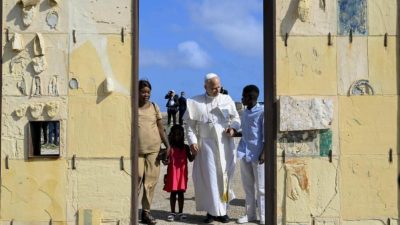
Constantvpn.com – Pope Leo XIV arrived in Lampedusa, the Italian island often referred to as the “Gate of Europe,” to deliver a message about the urgent need for Europe to address the migration crisis. The visit followed the EU’s recent approval of stricter migration policies, which include enhanced border controls and expanded detention capabilities. As the pontiff stood at the “Door of Europe” memorial, he highlighted the perilous journeys undertaken by thousands seeking refuge in the region.
A Call for Compassionate Integration and Global Responsibility
During a mass attended by local residents and migrants, the Pope emphasized that Europe must adopt a more holistic approach to migration. “The phenomenon of migration presents a profound challenge to European societies,” he stated, urging leaders to focus on integrating newcomers and improving living conditions in their home countries. This sentiment echoed his broader stance since becoming pope in May 2025, where he has consistently advocated for policies that support migrants and criticize restrictive measures.
“Those who have lost their lives in this sea are victims both of decisions that were made and of decisions that were not made,” the Pope said, reflecting on the human cost of migration.
The island, located 90 miles (145km) off Tunisia’s coast, serves as a critical entry point for migrants arriving from Africa. Despite its strategic position, Lampedusa’s migrant reception center often operates under overcrowded conditions, raising concerns about the well-being of those who land there. The Pope’s visit underscored the need for Europe to not only manage the immediate influx of arrivals but also to address the root causes driving displacement across the continent.
EU Policies and the Shifting Tide of Migration Stance
The Pope’s remarks came in the wake of the EU’s latest legislative moves, which aim to tighten controls over borders and grant authorities greater powers to detain individuals. These policies align with a growing trend among European nations to adopt more stringent measures against undocumented migration, with countries like the UK and Italy leading the charge. While such efforts are intended to deter irregular crossings, critics argue they may exacerbate the hardships faced by vulnerable populations.
Lampedusa’s role as a gateway has made it a focal point for humanitarian organizations and rescue teams. The island’s proximity to Africa means it frequently witnesses the dangers of sea crossings, where migrants board poorly maintained vessels in search of safety. The Pope’s presence at the “Door of Europe” memorial and the cemetery for those who perished in the journey was symbolic, drawing attention to the human stories behind the policy debates.
“Europe is capable of addressing the crisis in this region in a comprehensive manner, integrating immediate relief efforts into a long-term strategic plan capable of receiving, protecting, supporting and integrating migrants,” the Pope said, while also calling for assistance to developing countries.
Since his election, Pope Leo XIV has positioned migration as a central issue in his papacy. His advocacy contrasts with the policies of U.S. President Donald Trump, whom he has described as “inhuman” for his approach to immigration. In a recent letter to Americans marking the 250th anniversary of U.S. independence, the pontiff reiterated the Catholic Church’s commitment to defending life, which includes welcoming immigrants and protecting their rights.
Human Stories and the Pope’s Symbolic Role
Among the attendees at the mass were migrants, aid workers, and representatives from rescue organizations. Kandeh Abdourahman, a Lampedusa migrant who arrived in 2015, shared the impact of the Pope’s visit. “It was a reminder that our stories are seen, that welcome is not just a word but an act of humanity,” he told Reuters.
The Pope’s itinerary included a visit to a local cemetery, where he paid tribute to the lives lost during the perilous journey across the Mediterranean. He also spent time with a migrant family, offering them comfort and acknowledging the struggles they faced. These moments highlighted his efforts to humanize the migration experience, reinforcing the idea that compassion and solidarity are essential in addressing the crisis.
According to the UN’s International Organization for Migration, over 1,400 people have died or gone missing in the Mediterranean this year, including 28 children. The Pope’s visit serves as a reminder of the urgency of the situation, urging European nations to balance security concerns with humanitarian responsibilities. His words also call for a global perspective, emphasizing that migration is not solely a regional problem but one that requires collective action.
Global Perspective and the Role of International Collaboration
The Pope’s message extended beyond Europe, as he stressed the importance of supporting developing countries to reduce the pressure on migrants. “Assisting nations in need ensures that no one is forced to leave their homeland,” he said, framing migration as a symptom of broader systemic issues. This perspective aligns with his vision of a unified response that combines immediate aid with long-term solutions.
While the EU and individual nations have been tightening migration policies, the Pope advocates for a more inclusive approach. His emphasis on integrating migrants and improving conditions in their countries of origin reflects a belief in the interconnectedness of global challenges. This vision has positioned him as a key voice in international discussions about migration, often placing him at odds with leaders like Donald Trump, whose anti-immigration rhetoric he has criticized.
The visit to Lampedusa also underscores the Pope’s growing role as a mediator between migrants and host countries. His presence at the “Door of Europe” and the migrant reception center highlights the symbolic weight of his message: that Europe must recognize the dignity of every individual, regardless of their origin. This call for unity and empathy resonates with both those who have arrived and those who have remained, offering a vision of shared responsibility.
As the Pope concluded his trip, his focus on migration remained steadfast. His recent visits to the Canary Islands and Spain further illustrate his commitment to addressing the challenges faced by migrants in different parts of Europe. These trips, which highlight the risks of sea crossings and the importance of welcoming policies, are part of a broader effort to reframe migration as a humanitarian issue rather than a political one.
In a world where migration has become a defining issue, Pope Leo XIV’s words in Lampedusa carry both moral weight and practical implications. By urging Europe to act with compassion and foresight, he positions the Church as a key player in shaping a more just and inclusive future for migrants. His message, delivered at the heart of the Mediterranean, serves as a powerful reminder of the human faces behind the statistics and the need for sustained global solidarity.
Amid the rising number of migration-related deaths and the ongoing debate over border controls, the Pope’s visit to Lampedusa has sparked renewed conversations about Europe’s role in the global migration narrative. His emphasis on integrating migrants and supporting their home countries challenges the notion that migration is a burden, instead framing it as an opportunity to demonstrate collective care and shared values. As the world watches, the Pope’s vision offers a blueprint for
