Pope Leo visits Canary Islands to highlight perilous journeys of migrants
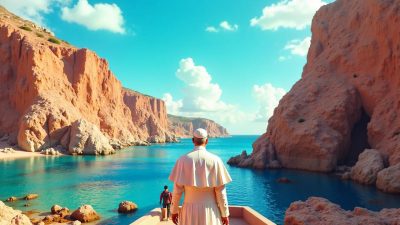
Pope Leo XIV’s Canary Islands Mission: A Call for Compassion Amid Migration Struggles
Constantvpn.com – On Thursday, Pope Leo XIV commenced a two-day tour of the Canary Islands, focusing on the human stories behind the mass movement of migrants seeking refuge in Europe. His visit underscored the emotional toll of long, dangerous voyages across the Atlantic, with the pontiff emphasizing the dignity of those who risk everything to flee hardship. Speaking on Gran Canaria, the Pope addressed a group of migrants, declaring,
“You are not mere figures or records, but individuals. You are not just statistics, you are people.”
This message of empathy served as a direct challenge to narratives in Europe that frame migration as a crisis or an invasion.
The Pope’s presence on the island highlighted the contrast between the human cost of migration and the political debates surrounding it. While data from the UNHCR shows a notable decline in sea arrivals to Spain this year, attributed to increased EU-funded naval patrols intercepting crossings off the West African coast, many still embark on perilous journeys. The reduction in numbers has not eased the dangers, as reports continue to emerge of fatal accidents and missing vessels. In the southern port of Arguineguín—often a key departure point—Pope Leo XIV urged the creation of “legal and safe pathways” to address the root causes of displacement.
Bakary Jaiju, a 19-year-old from The Gambia, shared his own harrowing experience as a migrant. He described the seven-day journey in a wooden boat, where dwindling supplies of food and water made survival a daily struggle.
“You can’t even sleep in case you fall in,”
he recalled, reflecting on the anxiety of navigating the ocean. After reaching Tenerife last year, Jaiju spent three months in a migrant camp, enduring harsh conditions before joining a program that helped him learn Spanish and secure legal residency. His story, like many others, illustrates the resilience required to pursue a better life in a foreign land.
Padre Pepe, a parish priest in Las Palmas de Gran Canaria, has become a central figure in supporting young migrants. Known for his casual attire—jeans and a checked shirt instead of a traditional dog collar—he founded the Good Samaritan Foundation to provide shelter and training. “The streets will eat you up, young people are like carrion there,” he said, describing the challenges faced by those aged 18 and older, who lose state support once they reach adulthood. The foundation now assists around 170 young men, offering workshops on language, skills, and integration. Pepe believes the labor market could accommodate these newcomers, pointing to a lack of local workers in certain sectors.
The Pope’s visit also aligned with Spain’s recent efforts to address its migrant population. Under Prime Minister Pedro Sánchez’s Socialist government, hundreds of thousands of undocumented migrants have been granted the chance to regularize their status. Those who arrived before December last year can now apply for residence and work permits, a policy aimed at bridging the gap between migration and economic opportunity. Padre Pepe’s team is working tirelessly to help applicants meet deadlines, highlighting the urgency of the initiative. However, this move has sparked debate, with Spain’s opposition parties criticizing it as a “reckless decision” that contradicts EU immigration standards.
The far-right Vox party has labeled the policy an “invasion,” warning that it could overwhelm healthcare, housing, and security systems. Meanwhile, the conservative Popular Party has accused the government of prioritizing compassion over control, arguing that the program undermines border management. Despite these criticisms, Spain’s administration frames the measure as a blend of humanitarian, practical, and political priorities. With a shrinking, aging population, the country needs more workers, a challenge shared across Europe. “We couldn’t find local people who wanted to work with us,” said Diana del Molino Rodriguez of the Domingo Alonso Group, a car firm that partnered with local authorities to hire young migrants after they turned 18. Initially, the collaboration faced backlash, with social media users accusing migrants of “stealing” jobs in Spain. Rodriguez noted that public perception of migration has shifted, as the economy increasingly relies on diverse labor forces.
The Pope’s visit added a spiritual dimension to the discussion, with his wreath-laying ceremony in the sea symbolizing remembrance for those who lost their lives at sea. The gesture resonated with locals who have witnessed the tragic consequences of migration firsthand. While Europe’s leaders debate policies, the Canary Islands remain a critical point of contact between Africa and the continent, where hope and hardship coexist. For Jaiju, the Pope’s words offered a reminder of the shared humanity in the face of adversity. “I decided to go, whether I survive or die, because I want my family to be in a good condition,” he said, encapsulating the sacrifices made in pursuit of stability.
As the Pope’s tour concluded, his message lingered in the minds of those who heard it. By centering the stories of migrants, he sought to humanize their struggles and challenge the stigma often attached to their journeys. The visit underscored a growing recognition that migration is not just a demographic shift but a complex interplay of survival, opportunity, and policy. In a world where the seas have become graveyards and borders are battlegrounds, the Pope’s appeal for solidarity and compassion serves as a poignant reminder of the resilience and humanity that drive people to seek new beginnings.
