Polanski says two-party politics ‘dead’ after election gains for Greens
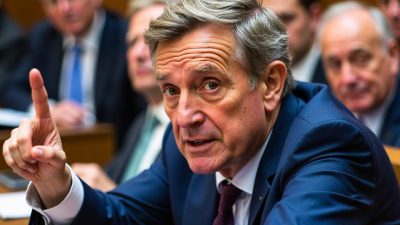
Polanski says two-party politics ‘dead’ after election gains for Greens
Constantvpn.com – Zack Polanski, the leader of the Green Party in England and Wales, declared that the traditional two-party political system is “dead and buried” following significant local election victories that have bolstered the party’s position. These results, which include the Greens’ first-ever mayors in key areas, mark a pivotal moment in the nation’s political landscape. Polanski emphasized that the electoral outcomes reflect growing support for the Greens, positioning them as a formidable alternative to Labour and signaling a shift in voter allegiance.
The Green Party’s campaign has seen notable successes in several local elections, with the party securing control in Norwich, Hastings, and the London borough of Waltham Forest. Additionally, they emerged victorious in mayoral contests in Hackney and Lewisham, areas previously dominated by Labour. These wins have not only expanded the Greens’ reach but also demonstrated their ability to challenge established political forces. In Wales, the party achieved a breakthrough by electing its first two representatives to the Welsh Parliament, while in Scotland, the Greens secured their inaugural constituencies in the Scottish Parliament. These developments underscore a broader trend of increasing influence across the UK.
Polanski attributed the surge in Green support to a mix of dissatisfaction with Labour and enthusiasm for the party’s policies. “Some people are voting for the Greens because they’re disillusioned with Labour,” he noted, but added that the trend also reflects a newfound excitement among voters. “Lots of people are supporting the Greens for the first time, which is incredibly exciting.” This dual motivation—anger at the current government and optimism for a new political direction—has driven the party’s success in recent weeks. The leader highlighted that the Greens are now gaining traction in regions such as Manchester, Sheffield, Leeds, Oxford, and Exeter, where they have seen unexpected electoral gains.
One of the most symbolic victories occurred in Hackney, where Zoë Garbett defeated her Labour opponent to become the city’s first Green mayor. Polanski called this “a historic victory,” underscoring the significance of the win. Similarly, Liam Shrivastava triumphed over Labour in Lewisham, further solidifying the Greens’ presence in urban centers. These local triumphs have provided a platform for the party to showcase its appeal to voters seeking change. Polanski’s remarks suggest that the Greens are not merely a fringe movement but a growing political force capable of reshaping the UK’s electoral dynamics.
“Two-party politics is not just dying, it is dead and it is buried,” Polanski said after the Hackney mayoralty win. “Whether it’s here that Labour have been rejected, or whether we’re seeing this trend across the country, the new politics is the Green Party versus Reform.”
Polanski also addressed the question of whether the Green surge was driven by a protest vote against Labour or a genuine endorsement of the party’s platform. He asserted that the Greens have experienced a “rise in the Green vote,” with voters increasingly drawn to their environmental and social policies. “People are both sick of Labour and really excited by a Green alternative,” he explained. This sentiment has been echoed by Rachel Millward, the Green Party’s deputy leader, who described the party’s gains as “massively increased vote share pretty much everywhere we’ve stood.” She highlighted the “massive breakthrough” in London and the unexpected success in Manchester, which she called “over our expectations.”
Analysts have noted that the Greens’ performance in local elections has set a new benchmark for their national impact. According to polling expert Sir John Curtice, the party recorded their “best-ever performance” in the recent vote, with a projected national share of 18% of the total vote. This figure places the Greens behind Reform UK at 26%, but ahead of Labour and the Conservatives, both at 17%, and the Liberal Democrats at 16%. Curtice’s analysis is based on data from over 1,000 wards where the BBC collected detailed voting information, assuming that voters who did not cast ballots in certain areas mirrored the patterns of those who did.
Polanski’s remarks about the Greens’ growing influence extend beyond local victories. He suggested that the party’s success reflects a broader discontent with the current political establishment, particularly under Prime Minister Sir Keir Starmer. “But I don’t think that’s my message,” Polanski said, “I think that’s the country’s message.” His comments imply that the Greens are tapping into a national sentiment that questions the viability of the traditional two-party model. This could have long-term implications for the UK’s political structure, potentially leading to a more fragmented and multiparty system.
While the Greens have made significant strides, challenges remain. Their expansion into new regions will require sustained efforts to maintain momentum and translate local success into national policy influence. However, the party’s ability to win in diverse areas—ranging from urban boroughs to rural constituencies—suggests a strong and adaptable campaign strategy. As the Green Party continues to grow, it may become a key player in shaping the UK’s political future, offering a viable alternative to Labour’s dominance.
Polanski’s bold statements about the death of two-party politics have sparked debate among political observers. Some argue that while the Greens are gaining traction, they still face obstacles in a deeply polarized electoral landscape. Others see the party’s rise as a clear sign of shifting voter priorities, with younger and more environmentally conscious demographics increasingly aligning with the Greens’ vision. Regardless of the interpretation, the recent election results have undeniably amplified the party’s profile, setting the stage for a more dynamic and competitive political environment.
For voters, the Greens’ campaign has offered a fresh alternative to the status quo, emphasizing sustainability, social justice, and fiscal responsibility. As the party consolidates its gains, it is likely to play a more prominent role in national conversations, potentially influencing the outcomes of upcoming elections. The success of the Green Party in key areas serves as a testament to their growing appeal and the changing tides in UK politics. With continued support, the Greens could emerge as a major force in the years to come, challenging the dominance of Labour and the Conservatives in both local and national elections.
Those interested in staying informed about the evolving political scene are encouraged to sign up for the BBC’s Politics Essential newsletter. This resource provides insights into the inner workings of Westminster and the broader implications of political shifts across the UK. As the Green Party’s influence expands, the newsletter will offer updates on their strategies, electoral performance, and the potential for further disruption in the traditional political framework.
