
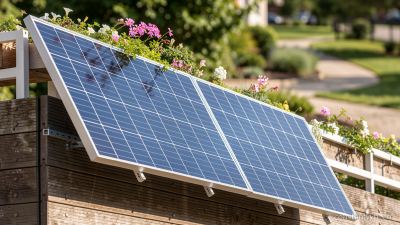
UK households gain access to plug-in solar panels as regulatory barrier falls
Constantvpn.com – For years, homeowners wanting to tap solar energy in Britain faced a single path: commission a full rooftop installation, hire a certified installer, and wait for planning permissions where applicable. That landscape shifts this week. Following a change in government rules, plug-in solar panels — compact, balcony- or wall-mountable units that slot directly into a standard domestic socket — are now cleared for retail sale across Great Britain. Argos is among the first High Street names to stock the products, with other major retailers expected to follow in the coming weeks.
The move arrives at a moment when household energy costs remain volatile. Fluctuating prices for imported fuels, amplified by ongoing conflict in the Middle East, have kept domestic bills under sustained pressure. The government frames the new product category as a way to give ordinary consumers a low-cost entry point into renewable generation, reducing dependence on externally sourced fuel while trimming annual expenditure.
What the panels cost and what they deliver
UKSOL, a domestic solar supplier, lists a single-panel kit at £699 and a two-panel configuration at £1,089. The government anticipates that intensified competition and a broader product pipeline will push retail prices down into the £400–£600 band over time. Current regulations cap each property at one plug-in device, though that restriction may be relaxed in future rule revisions. A single device is permitted to incorporate more than one panel, so the restriction is on the number of units plugged in, not the number of photovoltaic cells within a unit.
Independent modelling commissioned by the government estimates annual bill savings of £70 to £110 per household, contingent on panel orientation, local irradiance, and how long the system runs each day. An unshaded, south-facing position maximises yield. Households that draw significant electricity during daylight hours — running washing machines, dishwashers, or home-office equipment while the sun is up — will capture the greatest share of the generated power, because the system is designed to feed the home directly rather than store surplus.
Any electricity not consumed on-site flows back into the distribution grid. However, because these small-scale units fall outside the Smart Export Guarantee scheme, homeowners should not expect a cash payment for exported energy. The financial benefit is purely the avoided cost of grid electricity during generation hours.
The 800-watt ceiling and what it means in practice
Each plug-in kit includes a microinverter that converts the direct current from the photovoltaic cells into alternating current usable by household appliances. Critically, that microinverter caps output at 800 watts, a deliberately conservative figure chosen for grid-safety reasons. The government states this level should cover roughly one-fifth of an average household’s electricity demand while sunlight is available.
In practical terms, 800 watts comfortably handles always-on loads: a refrigerator compressor cycling, a router, a standby television, a home-office monitor. Larger draws — a kettle demands around 3 kilowatts, an electric oven far more — will be met by a blend of the panel’s 800 watts plus the remainder from the national grid. The system is not designed to power a home independently.
“Plug-in panels won’t solely power a home but can meaningfully reduce how much electricity you need to buy during the daytime,” British Gas told customers explaining the technology’s role.
Safety architecture and compliance checks
Government laboratory tests confirmed that sample systems operated without unacceptable heating at connection points or unsafe energy flows under normal and fault conditions. The microinverter continuously monitors its link to the grid. Should a supply interruption occur — whether from a utility outage or simply from the user pulling the plug — the inverter detects the loss and shuts down within milliseconds, preventing any possibility of pushing live current into dead wiring.
Unlike full rooftop installations, plug-in panels are not required to carry certification under the Microgeneration Certification Scheme (MCS), the UK’s formal quality mark for small-scale renewable equipment. That exemption simplifies manufacturing and retail but also means the products sit outside the MCS-linked incentive framework, including the Smart Export Guarantee mentioned above.
To be sold legally in Great Britain, every new panel must pass testing against the industry’s G98 standard alongside a government-issued product specification. Units that meet both requirements are listed as compliant on the Energy Networks Association’s public register. Buyers are advised to verify a product’s entry on that register before completing a purchase.
What Electrical Safety First recommends before you buy
Consumer-safety charity Electrical Safety First urges shoppers to purchase through established retailers and their own websites rather than third-party sellers operating on online marketplaces. The charity notes that certain platforms are not currently bearing legal responsibility for the safety of goods transacted through them.
The organisation’s principal technical concern is interaction between the plug-in system and older protective devices — residual-current devices, older fuse boards, or legacy earthing arrangements — that may still be present in pre-1990s wiring. It has published a checklist of pre-purchase steps and strongly recommends that a registered electrician inspect the home’s electrical installation before a panel is installed, with particular emphasis on older properties where wiring standards have evolved considerably since original construction.
Why the timing matters
The regulatory opening coincides with a period of heightened public attention on energy independence. Balcony-mounted solar has already gained traction in neighbouring European markets, where similar plug-in formats have been available for several years. Britain’s entry into the category, while later, gives millions of flat-dwellers and terraced-house owners who lack suitable roof space a practical, sub-£1,000 route into household-scale solar generation. The modest savings per unit are unlikely to transform a household’s finances overnight, but they do introduce a small, self-contained renewable stream into the daily energy mix — and they do so without planning applications, structural modifications, or multi-day installation projects.
Related Reading
Frequently Asked Questions
What is Plug in solar panels are coming?
Plug in solar panels are coming is the main topic of this guide. The article explains the context, practical details, and next steps readers should understand.
Why does Plug in solar panels are coming matter?
Plug in solar panels are coming matters because readers are looking for a useful answer, not just a short summary. Good content should match search intent and help them decide what to do next.