
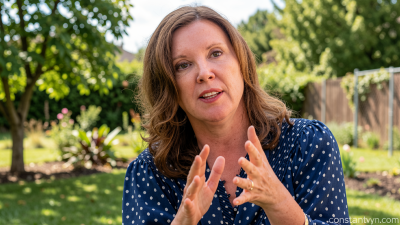
Commissioner Demands Legal Right to Paid Leave for Parents of Gravely Ill Children
Constantvpn.com – The UK government’s ongoing consultation on how to financially assist families and unpaid carers in England, Scotland, and Wales is set to close on Monday, and the deadline has sharpened a long-running debate about workplace protections for parents facing a child’s serious illness or disability. Children’s Commissioner Dame Rachel de Souza has thrown her full institutional weight behind a proposal that would create a statutory entitlement to twelve weeks of paid leave at ninety percent of an employee’s usual earnings whenever a child develops a debilitating condition.
The intervention lands at a moment when thousands of households across the UK are already navigating the collision between caregiving duties and employment obligations. Families dealing with chronic paediatric illness, developmental disabilities, or acute medical crises frequently report having to ration their time between hospital wards and work shifts, often at the cost of income, career progression, or both. Dame Rachel framed the issue bluntly: the current legal framework leaves parents without a guaranteed mechanism to stay at their child’s bedside without forfeiting their livelihood.
“Parents should not be forced to choose between being at their seriously ill child’s bedside and keeping their job.”
What the Commissioner Is Proposing
Beyond the headline twelve-week paid-leave entitlement, Dame Rachel outlined a package of complementary measures. She urged that the existing five days of unpaid carer’s leave per year be doubled to ten days, and that a separate category of paid carer’s leave be introduced into employment legislation. The rationale is straightforward: short, unpaid absences are often insufficient for families managing complex or fluctuating care needs, and the absence of pay during those days pushes many parents back into work before their child’s situation stabilises.
She also endorsed what she termed a “right to return to work” following extended periods of absence. In her framing, such a guarantee would allow families whose children have ongoing, variable care requirements to remain attached to their employer while still delivering the day-to-day support those children need. The proposal thus addresses not only the acute crisis moment but the longer arc of chronic paediatric illness, where caregiving demands can stretch over months or years.
The Menai-Davis Campaign and Hugh’s Law
The commissioner’s intervention follows sustained campaigning by Frances and Ceri Menai-Davis, parents of Hugh, who died of cancer at the age of six in 2021. Since his death, the couple has lobbied for a change to employment law that would oblige employers to guarantee three months’ salary to any parent whose child confronts a serious physical or mental illness. Their advocacy has been central to what is now referred to as Hugh’s Law, a legislative push to codify bedside-presence rights for parents in hospital settings.
In June, Ceri Menai-Davis articulated the gap in existing protections with stark clarity:
“There’s no specific right that allows the parents to legally be by the bedside of the child in hospital. If you’re a parent with a child, there is nowhere else you are going to be other than their bedside.”
The Menai-Davis campaign has drawn widespread public sympathy and has kept the question of parental caregiving rights firmly on the political agenda. Their experience mirrors that of countless other families who, upon receiving a diagnosis, find themselves without a clear legal pathway to remain present for their child while retaining some degree of financial stability.
Government Response
Kate Dearden, minister for the future of work, acknowledged the emotional weight of the issue as the consultation nears its close. She stated:
“Serious childhood illness is a heartbreaking situation for families. I’ve been incredibly moved by the powerful stories we have heard, and we will move quickly to consider how we can strengthen support and employment rights for families facing serious childhood illness.”
The minister’s remarks signal that the government intends to move beyond the consultation phase into substantive policy design, though no timeline for legislative action has been announced. The scope of the consultation covers financial support mechanisms for families and unpaid carers across England, Scotland, and Wales, meaning any resulting measures would need to account for devolved administrative arrangements.
Why This Matters Beyond the Individual Family
The question at the centre of this debate is not merely one of compassion; it is a structural labour-market issue. When a parent must quit or reduce hours because no paid-leave mechanism exists, the household loses income, the employer loses a trained worker, and the state faces downstream costs in benefits, health services, and lost tax revenue. A statutory paid-leave right, properly funded and administered, would redistribute some of that risk from the individual family to the collective system, much as existing maternity and paternity leave provisions already do for new parents.
For families managing conditions that are chronic rather than acute—autoimmune diseases, cerebral palsy, neurodevelopmental disorders, long-term cancer treatment—the proposed right to return to work after extended absence addresses a gap that current employment law leaves entirely unregulated. Without such a guarantee, a parent who steps away for six months to manage a child’s treatment may find their position eliminated on return, compounding the very financial precarity the leave is meant to alleviate.
As the consultation closes and the government signals its intention to act, the coming months will determine whether the UK’s employment framework evolves to recognise that caregiving for a gravely ill child is not a private sacrifice to be absorbed silently by one parent, but a social responsibility warranting institutional support.
Related Reading
Frequently Asked Questions
What is Parents of seriously ill children should?
Parents of seriously ill children should is the main topic of this guide. The article explains the context, practical details, and next steps readers should understand.
Why does Parents of seriously ill children should matter?
Parents of seriously ill children should matters because readers are looking for a useful answer, not just a short summary. Good content should match search intent and help them decide what to do next.