OCD made me think I was a monster
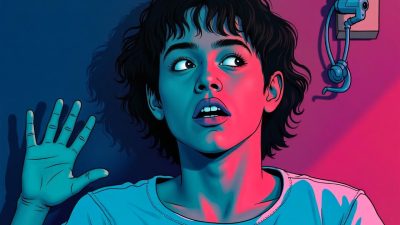
OCD made me think I was a monster
Constantvpn.com – Obsessive Compulsive Disorder (OCD) casts a shadow over the lives of millions, yet its true nature often remains misunderstood. For Sarah, a 34-year-old mother of three from Redditch, Worcestershire, the condition manifests in ways that blur the line between reality and fear. Every day, she is haunted by unrelenting thoughts of her healthy children perishing in a car accident or succumbing to a deadly illness. These mental intrusions, which strike without warning, swirl around her like a storm, leaving her feeling trapped in a cycle of dread. “I was plunged into deep depression because no one wants to dwell on their children’s possible deaths,” she explains, describing the relentless grip of obsessions that overshadow the joy of family life. “It’s something most people never consider, but my mind fixates on it daily—like it’s the only thing that exists.”
Understanding OCD: Beyond the Stereotype
While the public often associates OCD with compulsive cleaning, organizing, or an obsession with symmetry, the disorder is far more intricate. It encompasses obsessive thoughts and compulsive behaviors that individuals feel compelled to perform to ease their anxiety. Sarah’s experience highlights a less visible form of OCD, known as Pure-O, where the focus is on intrusive, distressing ideas rather than physical rituals. These thoughts can spiral into profound fear, disgust, or shame, often leaving sufferers unaware of their own condition. “I didn’t realize the images in my head were a symptom of OCD until I saw how they were affecting my family,” she says.
The World Health Organization classifies OCD as one of the ten most disabling conditions globally. Its hold on a person can be so intense that it dictates their daily routines, relationships, and even their sense of self. Sarah’s case illustrates this: when her children began asking to attend mainstream school, she felt the need to homeschool them to maintain a sense of control. “They will go to school because that’s what they want,” she says. “But it had started impacting their lives as much as mine, so I knew I needed serious help.”
The Hidden Struggles of Pure-O
For many OCD sufferers, the battle is internal. Intrusive thoughts—often linked to taboo subjects—can feel like a constant companion. These mental images, which may appear suddenly and without cause, can dominate a person’s mind, making it difficult to focus on anything else. Sarah’s postnatal OCD, which surfaced after the birth of her second son in early 2020, is a prime example. At first, she envisioned her family perishing if they left the house, or that food was poisoned. Over time, her anxiety deepened, leading her to fear that she might not be a good mother. “I feel awful thinking about it now, but there was a time when I’d just look at him and think, ‘I don’t want you here,'” she recalls.
This form of OCD, sometimes called Pure-O, can be particularly insidious. It doesn’t always involve visible actions, but the emotional toll is just as severe. Sarah’s third son exacerbated her condition, triggering an overwhelming surge of love that collided with her fears. “The love for my baby went into full-on overdrive,” she says. “I wouldn’t let anyone hold him or go near him—even my husband struggled to bond with his own child because of the thoughts that he’s safest with me.” This paradoxical effect of OCD, where the disorder amplifies both affection and anxiety, underscores its complexity.
Another lesser-known subtype, paedophilia OCD (POCD), further illustrates how the condition can manifest in unexpected ways. Individuals with POCD may experience intrusive thoughts about being sexually attracted to children, leading to feelings of guilt, isolation, and self-loathing. These thoughts, termed “ego-dystonic,” are in direct conflict with the person’s beliefs and moral values. For example, Molly Lambert, a 22-year-old from Manchester, first encountered POCD during her teenage years. After noticing a young girl’s outfit in an airport seemed inappropriate, she began questioning her own sexuality. Within a year, her mind was consumed by fears that she might secretly be drawn to children, despite having no evidence or desire to act on those thoughts.
Seeking Help: A Journey Through Recovery
Recognizing the need for intervention, Sarah sought treatment and now takes a combination of antidepressants and antipsychotic medications. These drugs have helped her reclaim moments of normalcy, such as attending her son’s birthday party at a soft play center. “I never thought I’d be able to do that again,” she says, reflecting on the progress she’s made. However, the journey has been fraught with challenges. “There were days I couldn’t get out of bed because the thoughts felt so real,” she admits.
For Sarah and others like her, awareness plays a crucial role in overcoming the disorder. She emphasizes that understanding OCD is vital for those who may not yet recognize its signs. “People need to know that these thoughts aren’t a reflection of their true selves,” she says. “They’re just part of the condition, and that’s something you can manage with the right support.” This sentiment is echoed by Molly, who uses her TikTok platform to educate others about OCD. “I want to show people that it’s not about being a monster or a pervert,” she explains. “It’s about feeling trapped by thoughts you can’t control.”
OCD’s ability to distort reality is a defining feature. It can make individuals believe they are responsible for catastrophic outcomes, even when there is no logical basis for such fears. For Sarah, this meant doubting her ability to protect her children, while Molly feared she might be drawn to children in ways that felt inevitable. Both stories reveal how OCD can create a sense of helplessness, compelling sufferers to take extreme measures to manage their anxiety. Whether through homeschooling, medication, or public advocacy, the path to recovery often requires a combination of strategies and a willingness to seek help.
Despite the challenges, Sarah’s experience offers hope. “I used to think I was a monster for imagining my kids dying, but now I know it’s a condition,” she says. “It’s not who I am—it’s just what my brain is doing.” Her journey underscores the importance of early diagnosis and treatment, as well as the need for societal understanding. OCD may be ranked among the most debilitating illnesses, but with awareness and support, its impact can be mitigated. For millions like Sarah and Molly, the struggle is real, but so is the possibility of reclaiming their lives.
