North Korea’s powerhouse women footballers are in Seoul to fight for title
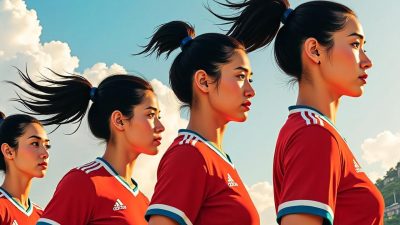
North Korea’s Women’s Football Team Makes Impact in Seoul
Constantvpn.com – Despite the relentless rain and gusty winds, over 5,000 fans gathered at a stadium in Suwon, a city just south of Seoul, for a rare encounter between North Korea and South Korea. The match, which drew mixed reactions from the crowd, featured the North Korean women’s team, the Naegohyang Football Club, facing off against their southern counterparts. What made the event notable was the unexpected support from a segment of South Korean fans, who raised their voices in unison to chant “Naegohyang,” a gesture organized by local NGOs to foster unity through sports.
A Bridge Over Divided Lines
The North Koreans’ appearance in Suwon marked their return to the South since 2018, a move that surprised many given the strained relations between the two Koreas. Tensions have escalated in recent years, fueled by North Korea’s aggressive nuclear ambitions and frequent ballistic missile tests. Kim Jong Un, the Supreme Leader, has openly labeled South Korea a “hostile state” since 2023, abandoning Pyongyang’s earlier goal of reunification. Yet, the team’s arrival was met with anticipation, as their participation in this match underscored the enduring allure of sports as a diplomatic tool.
The Naegohyang Women’s Football Club, known for its dominance in the sport, secured a 2-1 victory in the semi-final of the Asian Women’s Champions League, defeating South Korea’s Suwon FC Women. The goals came in the second half, with Choe Kum Ok and Kim Kyong Yong delivering the decisive strikes. This win sets up a final showdown against Japan’s Tokyo Verdy Beleza, a formidable opponent in the tournament. For football enthusiasts and analysts, the outcome was not unexpected, as North Korea’s women’s team has long been a powerhouse in Asian competitions.
From Pyongyang to the World Stage
Founded in 2012 in Pyongyang, the Naegohyang Football Club has quickly become a symbol of North Korea’s athletic prowess. The team’s success is rooted in a rigorous training system that prioritizes talent development from an early age. Managed by a former head coach of the national women’s team, the squad includes several key players from the country’s national side. This structured approach to nurturing young athletes has produced results that extend beyond the pitch, serving as a tool for national pride and propaganda.
Kim Yong-hyun, a professor of North Korean Studies at Dongguk University, highlights the regime’s commitment to football as a means of showcasing strength. “North Korea is deeply invested in identifying and cultivating young talent,” he explains. The country’s focus on sports aligns with Kim Jong Un’s vision of transforming North Korea into a “sporting powerhouse.” This ambition is embodied in the Pyongyang International Football School, established in 2013 on Rungna Island. The school is seen as a breeding ground for elite players, offering specialized training to promising youth from across the nation.
Kim Sang-yoon, a former North Korean national boxer who defected in the 2000s, recalls the systematic approach to athlete development. “Even in the 1990s, there was a clear structure in place,” he notes. “Students with potential were selected early, often before entering high school, and placed in elite sports academies.” This top-down model ensures that athletes are groomed for excellence, with resources allocated to maximize their performance. The system has produced remarkable outcomes, particularly for women, whose achievements have overshadowed those of the men’s teams.
Economic Struggles and Sporting Triumphs
North Korea’s footballing success is remarkable given the economic challenges it faces. The country’s nuclear program, which consumes a significant portion of its national budget, has drawn Western sanctions that have crippled its economy. Despite this, the regime maintains a strong grip on its sports initiatives, allocating funds to support programs that highlight its capabilities. While the families of leaders enjoy relative wealth, the average citizen struggles with limited income in a state-controlled economy. Leaving the country for opportunities abroad is a risky endeavor, as defection often leads to imprisonment or labor camp sentences.
Nevertheless, the emphasis on women’s football has yielded tangible results. Analysts argue that the centralized approach has allowed the team to thrive, even in the face of economic hardship. The women’s achievements, including titles at the 2024 Fifa U-20 Women’s World Cup and the 2025 Fifa U-17 Women’s World Cup, far outshine those of the men’s side. These victories have not only boosted national morale but also elevated the sport’s profile within North Korea, making it a popular spectacle for the public.
North Korean defector and former athlete Han Seol-song emphasizes the cultural shift brought about by the women’s success. “Their performances have captured the attention of the entire nation,” he says. “Football has become more than a game—it’s a source of pride and connection.” This growing popularity is evident in the way fans rally behind the team, even in a divided society. For the athletes, triumphs on the field offer more than just medals; they provide a rare opportunity to enhance their social standing and, in some cases, secure personal rewards.
Contrasting Genders in the Spotlight
While North Korea’s women’s team enjoys widespread recognition, their male counterparts face significant challenges. Heo Jeong-pil, a specialist in North Korean sports, points out the physical limitations that hinder male athletes. “The biggest weakness of North Korean male players is their smaller stature,” he observes. “Competing with Western athletes requires comprehensive training, including a high-protein diet and advanced nutrition, which are difficult to maintain in the current economic climate.” This disparity underscores the unique advantages afforded to female athletes, who have become the regime’s preferred ambassadors on the global stage.
North Korea’s investment in women’s football is not just about competition—it’s a strategic effort to project strength and unity. The team’s victories are celebrated as symbols of national resilience, even as the country grapples with sanctions and economic strain. By focusing on the women’s game, the regime has created a narrative of progress and achievement, contrasting with the struggles faced by other sectors of society. The combination of state support, disciplined training, and personal incentives has turned the team into a beacon of hope and pride for many North Koreans.
As the final between Naegohyang and Tokyo Verdy Beleza approaches, the significance of the match extends beyond the sport itself. It represents a rare moment of cross-border camaraderie and a testament to the enduring power of football to unite even in the most divided of contexts. For the players, the opportunity to compete in Seoul is both a professional milestone and a personal triumph, highlighting the sacrifices and dedication that define their journey. In a country where success is tightly linked to status, their achievements offer a glimpse into the broader aspirations of a regime that continues to leverage sports for political and social gain.
