
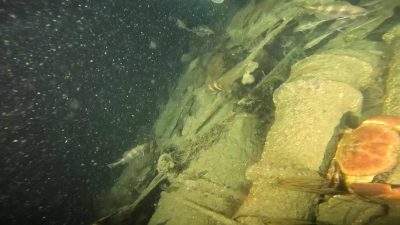
Wreck of German U-boat identified off Devon after 82 years
Constantvpn.com – A German submarine lost during the Second World War has been identified on the seabed off the Devon coast, resolving a mystery caused by an error in the wartime records of its sinking.
The wreck, confirmed as U-672, lies around 20 miles (32km) from Salcombe at a depth of approximately 230ft (70m). It was located in August by a deep-sea diving team from Portland, before Plymouth divers from Gasperados examined the site and established the vessel’s identity.
U-672 was damaged during an encounter with the Royal Navy in July 1944. HMS Balfour attacked the submarine, leaving it taking on water beneath the surface. Although the boat was ultimately deliberately sunk by its own crew, all 52 men aboard survived the incident.
A wartime position recorded incorrectly
The submarine had remained undiscovered for decades despite the existence of naval documentation about its loss. The problem was not that the wreck had vanished far from its expected route, but that its position had been entered wrongly in the records.
German Second World War historian Dr Axel Niestle, an expert on U-boats, said the wreck was where it should have been, but the paperwork contained a clerical mistake. The listed location was about 46 miles (74km) away from the actual resting place of the submarine.
That discrepancy helps explain why a vessel lost in well-documented circumstances was not positively identified until now. The discovery also highlights how even a small administrative error in wartime navigation records can affect later searches for decades.
Features beneath the water confirmed the find
For the Gasperados team, the key task was to document enough of the wreck to distinguish it from other wartime vessels in the area. Diver Dominic Robinson said the shape and surviving equipment became increasingly recognisable as the team moved around the submarine.
“Once we started moving around it and I started seeing the individual features – I saw the snorkel, I saw the conning tower, all those kind of things – I knew that we were going to get the video needed to identify it, so I was really pleased about that.”
The snorkel and conning tower were important visual clues. These are among the defining external features of a submarine, and their presence helped the divers build a clear record of the wreck for identification. The team said it was especially satisfying to play a part in naming the vessel after so many years.
Finding a wreck is only the first stage in such work. Divers must compare what they see underwater with surviving historical evidence, including the known circumstances of a vessel’s loss and any available technical details. In this case, the corrected location and the images recorded on the seabed allowed U-672 to be identified.
A final decision to save the crew
The last moments of U-672 were shaped by the damage inflicted during the July 1944 attack. The submarine remained underwater while leaking, and its commander waited as long as possible before deciding to surface.
Blowing the tanks allowed the boat to rise and gave the crew their final opportunity to escape. Once the submarine reached the surface, the men left it and entered life rafts.
“They were bobbing around in the sea and then the very next day they were found by British aircraft, British vessels and then taken away to the prisoner of war camp,” Robinson said.
The fact that every crew member survived distinguishes the sinking from many wartime submarine losses. After being rescued, the 52 men became prisoners of war. They later returned to Germany after the conflict ended, including the submarine’s skipper.
For those examining the wreck today, the site is therefore connected not only to a naval attack and the destruction of a vessel, but also to the survival of everyone aboard. The crew’s escape turned a potentially fatal incident into a story that continued long after the submarine disappeared beneath the water.
A discovery with personal meaning
Robinson said he had spoken with relatives of U-672’s skipper. They told him that the former commander went on to live a long and happy life after the war.
“They just said how proud he would have been and how pleased he would have been to know that it had been found at last.”
The identification gives the family and historians a more complete account of what happened to the boat. It also restores a specific place in the Channel to an event that had long been obscured by inaccurate coordinates.
U-672 now forms part of the extensive underwater legacy of the Second World War around the south-west coast. Its discovery does not alter the known outcome of its final voyage, but it brings physical confirmation to a wartime episode that had remained uncertain in location for more than eight decades.
For the divers involved, the wreck is a reminder that the seabed can still hold unanswered historical questions. In this case, careful exploration, video evidence and corrected historical interpretation have finally linked a submerged vessel off Salcombe to the submarine lost in July 1944.
Related Reading
Frequently Asked Questions
What is Missing German WW2 U boat found 82?
Missing German WW2 U boat found 82 is the main topic of this guide. The article explains the context, practical details, and next steps readers should understand.
Why does Missing German WW2 U boat found 82 matter?
Missing German WW2 U boat found 82 matters because readers are looking for a useful answer, not just a short summary. Good content should match search intent and help them decide what to do next.