Misleading posts about Trump at World Cup final viewed by millions
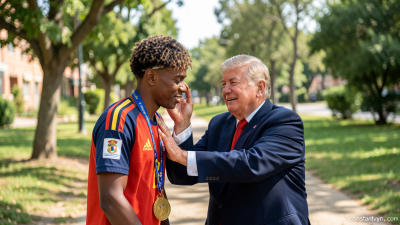
Millions Encounter Deceptive World Cup Final Imagery on Social Platforms
The Spread of False Visual Content During Global Football Spectacle
Constantvpn.com – During the recent World Cup championship match, a significant wave of inaccurate and misleading photographs circulated across various social media networks, accumulating tens of millions of views in the process. These visual deceptions have captured widespread attention as users share content without verifying its authenticity. The phenomenon highlights how quickly false information can spread during major international sporting events when millions of people are actively posting and sharing content simultaneously.
Among the most widely shared posts are those featuring two prominent figures: American President Donald Trump and Spanish football prodigy Lamine Yamal. Both individuals have become focal points for viral misinformation, with fabricated images being presented as genuine photographs from the tournament. The sheer volume of engagement on these posts demonstrates how quickly visual content can be misinterpreted or deliberately altered to create compelling narratives.
Understanding the Verification Process
BBC Verify has conducted an extensive investigation into these misleading images, examining the methods used to create and distribute false content. Their analysis provides viewers with tools to distinguish between authentic photographs and manipulated versions. Aisha Sembhi, who covered the story for BBC Verify, explains the methodology behind their fact-checking process and how they identified the discrepancies in the viral posts.
The verification team employed multiple techniques to confirm the authenticity of images, including reverse image searching, examining metadata, and consulting with experts in digital forensics. These methods help determine whether an image has been altered, taken from a different context, or completely fabricated. The investigation reveals patterns in how misinformation is created and how it spreads through social networks.
The Trump Connection in Viral Misinformation
Posts featuring Donald Trump have been particularly prominent in the wave of misleading content. Some images show the American President in contexts that appear to be from the World Cup final but are actually from different events or have been digitally manipulated. These images often gain traction because they fit into existing narratives about the President’s interests or activities, making them more likely to be shared without verification.
The Trump-related posts demonstrate how political figures can become unintentional subjects of viral misinformation. When an image appears to show a well-known person in an unexpected situation, social media users are often more inclined to share it, assuming it represents something newsworthy or surprising. This tendency can lead to the rapid spread of content that may not accurately represent reality.
Lamine Yamal: A Young Star at the Center of Misinformation
Spanish wonderkid Lamine Yamal has also been featured in numerous misleading posts related to the World Cup final. As one of the tournament’s standout performers, Yamal has attracted significant attention from fans and media outlets worldwide. However, this attention has also made him a target for fabricated images and false claims.
The young footballer’s rapid rise to prominence has resulted in a surge of content featuring him, including both genuine photographs and misleading versions. Some posts show Yamal in situations that never occurred, while others use images from different matches or even different tournaments. The volume of content featuring Yamal makes it particularly challenging for casual viewers to identify which posts are authentic.
Impact and Implications of Viral Misinformation
The spread of misleading images during major sporting events has broader implications for how information is consumed and trusted. When millions of people encounter false content, it can shape public perception and create lasting misconceptions. The World Cup final, with its global audience, provides an ideal environment for misinformation to flourish, as viewers from diverse backgrounds share content across multiple platforms.
Graphics by Sally Nicholls and Mark Edwards provide visual context for the investigation, helping to illustrate the differences between authentic and misleading images. Their work supports the verification process by making complex technical information accessible to general audiences.
As social media continues to evolve, the challenge of identifying authentic content will only grow more significant. The World Cup final serves as a case study in how quickly false information can spread and why verification mechanisms are essential for maintaining trust in digital content. Viewers are encouraged to approach viral posts with skepticism and to seek confirmation from reliable sources before accepting content as accurate.
