Major rail disruption expected in southern England until end of day
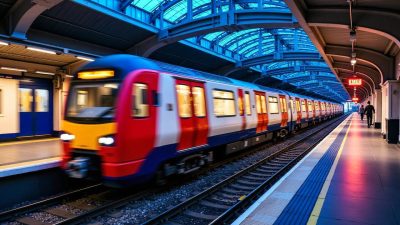
Major Rail Disruptions in Southern England Continue Through Day
Constantvpn.com – Following an initial technical issue that impacted train communications, National Rail has confirmed that significant service interruptions are anticipated across several rail networks in southern England until the end of the day. The fault, which was reported at 08:53 BST, was resolved by 11:00, allowing some services to gradually resume. However, the authority warned that disruptions may persist, with certain journeys still facing delays of up to 90 minutes or cancellations as the system stabilizes.
Impact on Multiple Operators
Several key rail services, including South Western Railway, CrossCountry, Southern, Gatwick Express, the London Overground, and Thameslink, experienced delays and cancellations earlier on Thursday. The problem disrupted communication between trains and signallers, causing widespread confusion and inconvenience for commuters. While the London Overground services have since been unaffected, other operators are still working to restore full normality.
South Western Railway, which had previously warned of hour-long delays, cancellations, and service changes, reiterated that disruptions would remain “significant” as it continues to address the aftermath. The company emphasized that trains might be detained at stations, and schedules or platform information could shift unexpectedly. Passengers are advised to verify their travel plans before heading to the station, with options to use tickets on Friday or for free on alternative transport modes like buses and the London Underground on Thursday.
Travelers Share Their Experiences
Among those affected was Gemma Givans, a 28-year-old tattooist whose work trip from London Victoria was canceled. “If I don’t work, I don’t get paid,” she explained to the BBC, highlighting the financial strain caused by the delays. “It is affecting me financially.” Her frustration is echoed by Caleb Anderson, an 18-year-old sixth-form student, who said the disruptions from Portsmouth forced him to arrive several hours late for college in Winchester. “With my A-Levels starting soon, it was stressful,” he said, noting that a friend would need to collect him by car.
Paul Barrick, a 50-year-old resident of Basingstoke, shared his disappointment over missing a ferry to the Isle of Wight. “I’m not going to make it,” he remarked, as delays threatened his plans for a 30-mile coastal hike. “I will have to get to the terminal and just hope I can get on a later one.” He described the morning as “a lot of inconvenience and, of course, disgruntled passengers,” underscoring the toll on daily routines.
Regional Disruptions and Service Adjustments
Southern Railway reported that services to and from London Victoria were particularly impacted, alongside its West Coastway route connecting Brighton and Portsmouth/Southampton. The operator warned that journeys “may still take at least an additional 60 minutes,” requiring passengers to change trains or use different operators. Similarly, Gatwick Express highlighted delays for services linking London Victoria to Gatwick Airport, while Thameslink noted likely delays on routes to and from Brighton, Horsham, and Three Bridges.
GTR, which manages South Western Railway, CrossCountry, and Southern, issued an apology for the ongoing disruptions. The company specified that the fault primarily affected services west of Chichester in West Sussex, but it urged travelers to check their routes in the afternoon for updates. This guidance comes as commuters adjust to the shifting landscape of train schedules and platform changes.
How to Manage the Delays
Passengers are encouraged to consult National Rail’s real-time updates to determine eligibility for compensation on delayed or canceled journeys. The authority provides tools to track service status and inform travelers of alternative travel options. While some operators have stated their services are no longer impacted, others are still navigating the recovery process, leaving passengers in a state of uncertainty.
The incident has sparked concerns about the reliability of rail networks in the region. With multiple companies reporting separate issues, the disruption has created a ripple effect across interconnected services. For example, Southern Railway’s West Coastway route has seen extended delays, forcing some travelers to rebook or alter their plans. Meanwhile, Gatwick Express passengers are left waiting for train updates that could determine whether they reach their destinations on time.
Broader Implications for Commuters
As the day progresses, the focus remains on restoring normal service while managing the fallout for those caught in the chaos. The cancellation of Gemma Givans’ train, for instance, disrupted her ability to work, directly impacting her income. For Caleb Anderson, the delays meant not only a missed class but also heightened anxiety as he prepares for exams. Paul Barrick’s story adds a personal dimension to the broader disruption, illustrating how even leisure trips can be thrown off track by unexpected service issues.
The situation has also tested the adaptability of commuters reliant on these networks. With frequent changes to timetables and platforms, passengers must remain vigilant to avoid missing connections. While some have found temporary solutions, such as using alternative transport or adjusting travel days, others face the challenge of prolonged uncertainty. The incident has prompted calls for improved communication and contingency planning, especially during peak travel times.
As the rail companies work to resolve the problem, the emphasis is on minimizing further delays and ensuring passengers are informed. The coordination between operators, such as GTR, has been crucial in managing the crisis, but the disruption underscores the importance of a robust infrastructure to prevent such issues in the future. For now, travelers in southern England are advised to stay flexible and monitor updates to navigate the ongoing challenges with minimal inconvenience.
