Keiko Fujimori declared winner of Peru’s presidential election weeks after vote
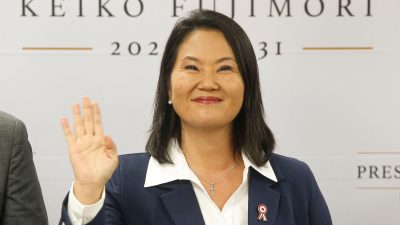
Keiko Fujimori Elected President of Peru in Tight Runoff Race Weeks After Vote
Constantvpn.com – Peru’s right-wing presidential candidate, Keiko Fujimori, has secured victory in a closely contested runoff election, nearly a month after the initial vote. The 51-year-old Fujimori narrowly edged out her left-wing rival, Roberto Sánchez, with 50.135% of the vote compared to 49.865% for Sánchez. This slim margin—less than 50,000 votes—has sparked significant debate, as the results were certified by Peru’s electoral court. Fujimori’s win marks a pivotal moment in the country’s political landscape, signaling a potential shift toward conservative leadership in the region.
A Fourth Bid for Power and a Narrow Margin
Fujimori, the daughter of former Peruvian president Alberto Fujimori, has attempted to lead the nation four times, each time facing a similarly tight race. Her latest campaign centered on addressing organized crime and political instability, issues that have plagued Peru for years. The runoff, held on 7 June, was the culmination of a campaign marked by intense scrutiny and a focus on security reforms. Fujimori’s promise to implement a military-driven crackdown on criminal networks, particularly targeting extortion, resonated with voters concerned about public safety.
“Each day of this transition process is an opportunity to listen, engage in dialogue and arrive prepared at the start of the new government,” Fujimori said, emphasizing her commitment to a responsible and stable administration.
The election result coincides with Colombia’s own close presidential race, where Abelardo de la Espriella was elected as the next leader. Both leaders capitalized on shared concerns about crime, aligning their platforms with the growing demand for stronger law enforcement and reduced political chaos. This parallel outcome highlights a broader trend in Latin American politics, where right-wing candidates are gaining traction in countries once dominated by leftist movements.
Controversy and Legal Challenges
Despite her victory, Fujimori’s win has not gone unchallenged. Sánchez, a former foreign trade minister, accused the runoff of being “seriously compromised,” citing the strong support Fujimori received from voters abroad. He vowed to pursue legal action against the electoral court, arguing that the overseas votes, which accounted for a significant portion of the total, indicated potential irregularities. His party immediately filed an appeal, demanding the vote be annulled.
Sánchez’s campaign focused on economic transformation, advocating for progressive reforms to address inequality and stimulate growth. However, Fujimori’s appeal lay in her promise to restore order and tackle the rising tide of extortion and other criminal activities. Her campaign subtly leveraged the controversial legacy of her father, Alberto Fujimori, whose tenure saw the implementation of authoritarian policies and human rights violations. While the younger Fujimori has distanced herself from her father’s past, the shadow of his record remains a point of contention in the political discourse.
A New Era of Right-Wing Leadership in Latin America
Fujimori’s election adds her to a growing list of right-wing leaders in Latin America, many of whom have emerged as alternatives to leftist governments in recent years. Her victory is seen as part of a regional shift, with figures like El Salvador’s Nayib Bukele and Ecuador’s Daniel Noboa also positioning themselves as allies of U.S. President Donald Trump. This alignment reflects a shared focus on conservative policies and a more interventionist approach in regional affairs.
Fujimori’s upcoming swearing-in ceremony on 28 July will mark the beginning of a new chapter for Peru. She is set to become the country’s ninth president in a decade, a milestone that underscores the political volatility the nation has experienced since the 2011 election. The narrow margin of victory has raised questions about the stability of her administration, but Fujimori has framed her win as a mandate to address the country’s pressing security and economic challenges.
Legacy of Political Instability and Reformist Ambitions
The electoral process in Peru has been shaped by years of political instability, a factor that Fujimori’s campaign capitalized on. Her father, Alberto Fujimori, was imprisoned for crimes against humanity, including extra-judicial killings and forced sterilizations, during his presidency. Keiko Fujimori’s campaign promised to learn from these lessons, vowing to attract private investment to boost economic growth and expel undocumented immigrants found guilty of criminal activities. These pledges were designed to appeal to both middle-class voters and those weary of prolonged social unrest.
Previous elections in Peru, including those in 2011, 2016, and 2021, had seen Fujimori lose by similarly narrow margins. The 2021 race, in particular, was marred by allegations of fraud and a fractious political environment. Fujimori’s persistence in the face of repeated setbacks has positioned her as a resilient figure in Peruvian politics, despite the controversies surrounding her family’s past.
Regional Implications and the Left’s Last Stand
With Fujimori’s win, the political tides in Latin America appear to be turning toward the right. This trend has seen leaders like de la Espriella in Colombia, Bukele in El Salvador, and Noboa in Ecuador gain prominence by emphasizing security, economic pragmatism, and alignment with U.S. interests. In contrast, Brazil’s Luiz Inácio Lula da Silva remains the region’s last major left-wing leader, as he faces his son, Jair Bolsonaro, in an upcoming election. The outcome of this contest could determine whether the left continues to hold sway in the region or if the right consolidates its influence.
Analysts suggest that Fujimori’s victory is part of a broader pattern of voters prioritizing stability over ideological change, particularly in the wake of economic crises and rising crime rates. Her administration is expected to focus on restoring public confidence in institutions and addressing the ongoing security challenges that have defined her campaign. Meanwhile, the political landscape in Peru continues to evolve, with her win likely to shape the country’s direction for years to come.
The close election result has also highlighted the role of international factors in Latin American politics. The electoral court’s certification of the outcome, combined with the support Fujimori received from overseas voters, underscores the interconnectedness of regional and global dynamics. As the Andean nation prepares for a new era, the balance of power in Latin America may once again shift, with Fujimori’s leadership serving as a case study for the right’s resurgence in the region.
Peru’s election result is not just a national story but a reflection of broader shifts in Latin American politics. The combination of security-focused agendas and alignment with U.S. policies has reshaped the political narrative, leaving left-wing leaders to navigate a changing landscape. Fujimori’s ascension to the presidency marks a significant step in this transformation, as she prepares to lead a nation at a crossroads. The implications of her victory will be closely watched across the region, with her approach to governance potentially influencing the trajectories of neighboring countries.
