
Thousands Gather in Trafalgar Square to Honor Jason Arday as Family Says They Are “Still Coming to Terms”
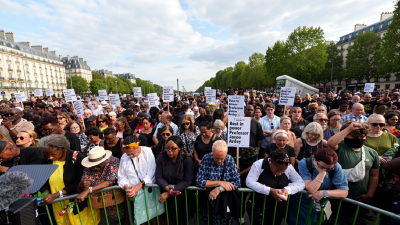
Constantvpn.com – More than 2,000 people filled the space around Nelson’s Column in central London on Monday, many dressed in black and carrying bouquets, to pay tribute to Jason Arday, the Cambridge academic found dead in south London on 14 August. The gathering, arranged at short notice by the campaign group Stand Up to Racism, carried a heavy, mournful atmosphere threaded through with palpable anger directed squarely at the press corps that had dogged the 41-year-old professor for weeks before his death.
Arday had become Cambridge University’s youngest black professor when appointed in 2023 to a chair in the sociology of education. His tenure, however, was overshadowed almost immediately by sustained allegations of plagiarism and broader questioning of his academic credentials — claims he consistently denied. On 5 August, two days before Cambridge announced it would examine the circumstances surrounding his appointment, Arday stepped down from his post. He insisted his departure should not “be mistaken for an acceptance of the narratives that have surrounded me.”
Family Statement Read at the Vigil
Labour MP Bell Ribeiro-Addy delivered a statement on behalf of Arday’s family, in which they described themselves as “still coming to terms” with the loss. The family’s words, read aloud to the silent square, struck a tone of grief laced with frustration at the public spectacle that had consumed the final weeks of Arday’s life.
“The public cruelty Jason was subjected to was too much for any man to bear.”
The family went on to describe the scale of his influence in the days following his death:
“What has become clear over the past 72 hours is the profound impact he had on people.”
They expressed a wish that he be remembered “for the wonderful person he was and all that he achieved,” adding:
“A selfless and gentle soul, he tirelessly uplifted others through his words and actions. His achievements were great and we do not want misrepresentations about his character to overshadow them.”
Speakers Direct Fury at the Media
Several speakers at the vigil turned their remarks toward what they described as a coordinated press assault. Labour MP Diane Abbott, a long-standing figure in British politics, characterised the coverage as a “vicious and bitter media campaign” that she attributed to “people who didn’t believe a black man should be a Cambridge professor.”
“He must have felt that if he resigned, the attacks on him would stop. But in fact, they got even worse. This was a campaign against all of us.”
Filmmaker and activist Misan Harriman delivered perhaps the most pointed critique of the press, accusing the legacy media of crossing every conceivable boundary in how they treated Arday.
“Imagine being so lost in the business of cruelty that you relish hurting another human for sport, with your own poison pen. Jason should still be here today.”
Cambridge’s Response and Internal Testimony
Lord Simon Woolley, principal of Homerton College at the University of Cambridge, told the crowd that when he met Arday the previous week, the academic told him he felt critics were “hounding me to death.” The remark underscored the psychological toll the sustained scrutiny had taken on the professor in his final days.
Cambridge’s chancellor, Lord Chris Smith — a former Labour MP who served as secretary of state for culture, media and sport and later chaired the Environment Agency — broke his silence on the controversy. Speaking publicly for the first time on the row, Smith condemned what he called a “racist feeding frenzy” in the weeks preceding Arday’s death, while insisting that academic integrity and fair treatment need not be mutually exclusive.
“I do believe it is possible to hold to two principles at the same time: to believe in the importance of academic integrity, and where criticisms of plagiarism arise, about any academic, whoever they are, ensure that they are rigorously investigated. And also to refuse to join in a racist feeding frenzy over a particular academic.”
Political and Legal Aftermath
By the time the vigil took place, more than 90,000 people had signed a Good Law Project petition calling for a formal inquiry into the media coverage surrounding Arday. Downing Street, when pressed on whether Prime Minister Andy Burnham was weighing such an inquiry, declined to commit at that stage, describing the period as “a moment for reflection” and affirming that “the usual processes,” including a coroner’s inquest, should run their course.
London Inner South Coroner’s Court confirmed that an investigation into the cause of death is underway and may take several weeks. Once complete, the coroner will determine whether a full inquest will proceed.
Shadow housing secretary Sir James Cleverly voiced anger over the sequence of events, arguing that the university establishment broadly — not merely Cambridge — should have “done the robust due diligence and checking” expected before confirming appointments of such prominence. His remarks pointed to a wider institutional question about how quickly and how thoroughly senior academic hires are vetted, particularly when they attract public attention from the outset.
For Arday’s family, colleagues, and the thousands who gathered beneath the August sky in Trafalgar Square, the central question remains not whether his work warranted scrutiny, but whether the manner and ferocity of that scrutiny constituted something far beyond legitimate academic debate — something, in their words, no one should have had to endure alone.
Related Reading
Frequently Asked Questions
What is Jason Arday s family still coming?
Jason Arday s family still coming is the main topic of this guide. The article explains the context, practical details, and next steps readers should understand.
Why does Jason Arday s family still coming matter?
Jason Arday s family still coming matters because readers are looking for a useful answer, not just a short summary. Good content should match search intent and help them decide what to do next.