
Wrong Donors, Broken Trust: How a Northern Cyprus IVF Clinic May Have Misled Dozens of British Families
Constantvpn.com – At least thirty children — the vast majority of them British — are believed to have been conceived through in-vitro fertilisation procedures in northern Cyprus using sperm or egg donors that were never the ones their parents had chosen. The revelation, emerging from a sustained investigative inquiry into fertility-tourism practices on the island, points to a pattern of alleged deception spanning more than a decade of treatments.
Every parent involved in the latest wave of disclosures says they made careful, informed selections of anonymous donors, weighing factors such as medical background, physical appearance, personality traits, educational attainment, and personal interests. Yet now they face the unsettling possibility that the genetic material used to create their children came from entirely different individuals.
The Clinic at the Centre of the Storm
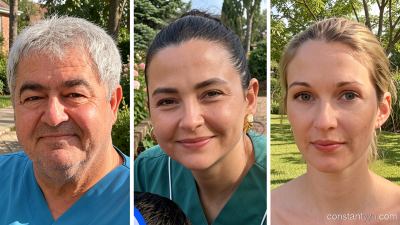
Half of the thirty affected children were born following procedures carried out at a single facility: the Dogus IVF Centre. Three individuals — Dr Firdevs Uguz Tip, Dr Sevket Alpturk, and patient co-ordinator Julie Hodson — were directly involved in the care of many of these patients at that clinic. Families now suspect these staff members may have deliberately steered them away from their chosen donors.
Dr Firdevs has denied any wrongdoing. Neither Dr Alpturk nor Ms Hodson has responded to questions seeking comment on the allegations.
A Pattern of Genetic Mismatch
Eleven of the thirty children have since undergone commercial DNA ancestry testing. The results indicate inherited genetic markers traceable to Turkey or neighbouring countries — a finding inconsistent with the Western European donors their parents had specifically requested. The majority of those who took the tests were conceived through IVF procedures at Dogus between 2012 and 2024.
The implications extend beyond a single clinic. Families are left grappling with fundamental questions: Who are their children’s true biological donors? What medical histories attach to those unknown individuals? For donor-conceived people, answers to such questions are not merely academic — they carry lifelong health and identity significance.
“These reports are deeply troubling,” said Laura Bridgens, founder of the charity Donor Conceived UK. “It’s a fundamental human right for a donor-conceived person to know the truth about their origins.”
One Mother’s Long Road to Answers
Rachel, who was thirty-nine when she sought treatment in 2012, chose Dogus partly because of a “helpful and friendly” patient co-ordinator named Julie Hodson, whose stated role was to serve as the liaison between Rachel and Dr Firdevs Uguz Tip — known professionally as Dr Firdevs — who was to carry out her procedures. Rachel needed a sperm donor so that her eggs could be fertilised in a laboratory, producing an embryo for implantation into her uterus. The complete IVF package carried a price tag of roughly €4,000 (approximately £3,200 at the time), markedly cheaper than comparable treatment available in the United Kingdom, and included donor sperm sourced from what was presented as the world’s largest sperm bank.
For years, Rachel quietly questioned whether the clinic had substituted a different donor without her knowledge. After reading an earlier investigative report that first surfaced the scandal in March of this year, she and her thirteen-year-old donor-conceived son, Jonah, decided to pursue commercial DNA testing. The results confirmed her long-held suspicions.
“I used to think the clinic had made a one-off mistake,” Rachel said. But now, after learning that more families were coming forward with similar accounts, she added: “it feels like this is something much bigger and more deceitful.”
A Regulatory Vacuum on the Island
Northern Cyprus occupies a peculiar legal position. It is a territory where European Union legislation does not apply and which is recognised as a sovereign state only by Turkey. Clinics operating there face comparatively loose regulatory oversight while marketing themselves to international patients with promises of low prices, high success rates, and an extensive menu of donor options. For British couples seeking fertility treatment abroad, the Turkish-occupied territory has become one of the most frequently chosen destinations.
In response to the initial allegations, the territory’s Ministry of Health announced that it had opened an official investigation. However, the ministry has not responded to repeated requests for updates or findings on the progress of that inquiry.
The UK’s Foreign Office has, in recent days, updated its travel advice to warn that fertility treatment in northern Cyprus “carries risks” owing to the absence of robust regulation, and it encourages prospective patients to conduct thorough independent research before travelling.
The Blacklist Signal
Adding weight to the concerns, Cryos International — the world’s largest sperm bank — has maintained a blacklist on the Dogus clinic since 2016. The fact that the very institution from which donors were purportedly sourced had, for years, excluded the clinic from its supply network raises pointed questions about how donor material reached patients in the first place, and whether the provenance information presented to families was accurate.
What Comes Next
For the families now caught up in this unfolding story, the practical and emotional fallout is considerable. Children conceived under uncertain donor circumstances may face gaps in their medical records, unknown hereditary risk factors, and a fractured sense of origin. The broader question — whether the pattern extends beyond Dogus to other clinics in the territory, and whether regulatory authorities will ultimately hold anyone accountable — remains unanswered.
Parents who believe they have been affected by donor-substitution issues in northern Cyprus are encouraged to seek independent genetic testing and to document their treatment histories while records remain accessible. Until formal findings emerge from the territory’s health ministry, the burden of verification falls largely on the families themselves.
Related Reading
Frequently Asked Questions
What is IVF staff accused of misleading UK parents?
IVF staff accused of misleading UK parents is the main topic of this guide. The article explains the context, practical details, and next steps readers should understand.
Why does IVF staff accused of misleading UK parents matter?
IVF staff accused of misleading UK parents matters because readers are looking for a useful answer, not just a short summary. Good content should match search intent and help them decide what to do next.