Israeli strikes in southern Lebanon kill 17, reports say
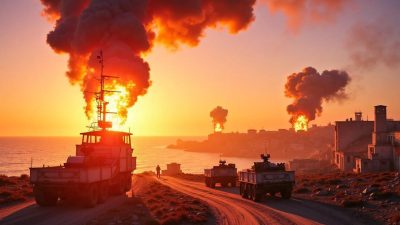
Israeli Strikes in Southern Lebanon Kill 17, Reports Indicate
Constantvpn.com – Recent Israeli air strikes in southern Lebanon have claimed the lives of at least 17 individuals, according to Lebanese media. The National News Agency (NNA) reported that nine casualties occurred in the town of Tayr Debba, located just east of the port city of Tyre. Additional strikes targeted nearby villages, resulting in further fatalities. The escalating violence has drawn international attention, with the UN deploying investigators to assess potential human rights violations.
Hezbollah Targets Israeli Forces
Amid the bombardment, the Iranian-backed armed group Hezbollah announced its own attacks on Israeli troops stationed in southern Lebanon. The group launched rocket barrages and shellfire at military gatherings, intensifying the conflict. This reciprocal action underscores the ongoing tensions between Israel and its regional adversaries, as the war between these powers continues to spill into Lebanese territory.
On Wednesday, Israeli strikes intensified across the south, with multiple attacks reported in cities, towns, and villages. The NNA stated that Israeli jets and drones carried out at least four strikes in Tayr Debba, leading to nine deaths. In the nearby village of Deir Qanoun el-Nahr, two strikes killed three more people, while another incident in Seddiqin, southeast of Tyre, claimed two lives. A car explosion in Sidon, a coastal city halfway between Tyre and Beirut, added to the toll. An AFP correspondent described witnessing a burning vehicle after an explosion, with two casualties pulled from the wreckage by rescuers.
Iran Demands Inclusion in Peace Deal
Iran has been vocal about its demands, insisting that any agreement to end its war with the US and Israel must also address Lebanon. This stance has complicated negotiations with US President Trump, who brokered a ceasefire deal between Israel and Lebanon on April 16. However, the conflict has persisted since then, with both sides exchanging fire and escalating their efforts.
The latest hostilities between Israel and Iran were sparked by events in Lebanon. On Sunday, Israel targeted Beirut’s southern suburbs, a Hezbollah stronghold known as Dahieh, following rocket launches from the group into Israeli territory. In response, Iran launched approximately 30 ballistic missiles at Israel. This marked their first direct confrontation in two months. After a brief lull, Iran issued a warning, threatening to resume attacks if Israel continued its campaign against Hezbollah. Israel, however, has remained resolute, stating it will not accept a “new equation” in the conflict.
Humanitarian Crisis Intensifies
The humanitarian toll of the ongoing violence is growing, with over one million Lebanese displaced from their homes. The UN reports that 1.4 million people require aid, highlighting the severity of the crisis. Lebanon’s health ministry has documented at least 3,696 deaths in the country since the conflict began, while Israeli authorities claim 30 soldiers and four civilians have been killed on both sides of the border.
Despite the scale of the devastation, the Israeli military has not issued immediate comments on Wednesday’s strikes. However, it previously stated that it had targeted six Hezbollah infrastructure sites in Tyre and several other areas in southern Lebanon. The lack of cooperation from Israel has raised concerns among international observers, who await the findings of the UN human rights team.
UN Investigators to Assess Violations
UN Human Rights Chief Volker Türk announced on Wednesday that a team of investigators would travel to Lebanon at the request of the Lebanese government. The mission aims to examine potential human rights abuses committed by all parties since mid-March. The findings are expected to be presented by late July and may serve as evidence for war crimes prosecutions.
Israel has been informed of the UN mission but has not confirmed its participation. This uncertainty could affect the team’s ability to gather comprehensive evidence. The UN’s involvement reflects the growing international scrutiny of the conflict, which has drawn Lebanon into the broader struggle between Israel, the US, and Iran.
The war in Lebanon began on March 2, when Hezbollah launched rockets into Israel in retaliation for an Israeli strike that killed Iran’s supreme leader. Israel’s response included a bombing campaign and a military invasion of significant parts of southern Lebanon. This escalation has led to widespread displacement and a deepening humanitarian crisis, with civilians bearing the brunt of the violence.
As the conflict enters its second phase, the balance of power remains fragile. Hezbollah’s attacks on Israeli forces and the Iranian-backed group’s threats to resume hostilities have kept the situation volatile. The US, while playing a mediating role, has not been able to halt the violence entirely. With each passing day, the toll on Lebanon’s population continues to rise, raising questions about the future of the region and the possibility of a lasting peace agreement.
The recent strikes in Massaken al-Shaabiya, a district of Tyre, added to the list of casualties. On Tuesday, the Lebanese health ministry reported that 11 people were killed in these areas, prompting Israel to issue an evacuation order that included its Christian quarter for the first time. This decision highlights the military’s growing concerns about civilian exposure in the region.
As the conflict unfolds, the interplay between local and international actors becomes increasingly complex. Iran’s insistence on including Lebanon in peace talks has created new challenges for negotiations, while the UN’s investigation offers a potential avenue for accountability. The war’s human cost and the displacement of civilians underscore the urgent need for a resolution that addresses both military and humanitarian concerns.
