Iran sends tankers loaded with oil past US military blockade
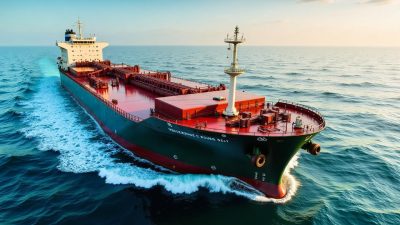
Iranian Tankers Navigate US Blockade Line Amid Ongoing Sanctions
Constantvpn.com – Ship-tracking data reveals that three Iranian tankers, carrying crude oil, have crossed the US blockade line in the Gulf of Oman. Two of the vessels transmitted their positions as they passed through, while the third activated its location tracker shortly after the line. This movement occurs despite the US government’s recent declaration that the blockade of Iranian ports would remain in place until a diplomatic agreement with Tehran is finalized. The deal, set to be signed in Switzerland on Friday, has not yet lifted the restrictions, though Iran appears to be acting as if it has.
Sanctions and Strategic Implications
Iran has faced sustained US sanctions for years, primarily due to concerns over its nuclear program, backing of groups labeled as terrorist by Washington, and alleged human rights violations. These measures have significantly curtailed the country’s oil exports, which have plummeted to their lowest level in six years. In May alone, Iran’s crude oil shipments reached just 260,000 barrels per day, a fraction of the 1.67 million average seen in 2025. The latest tanker movements suggest a possible rebound in the nation’s energy trade, though the situation remains fluid.
The National Iranian Tanker Company (NITC), which owns the three vessels—Diona, Hero II, and Sonia I—has been subject to US Treasury sanctions. These sanctions have restricted the company’s operations, yet the recent crossings indicate a renewed effort to restore maritime activity. The tankers’ routes, tracked by platforms like MarineTraffic, show they departed from Chabahar port in Iran on Tuesday. There, several other Iranian ships were anchored, awaiting their turn to navigate the disputed waters.
Tracking the Movement of Iranian Vessels
Hero II and Sonia I left Chabahar early on Wednesday morning, sailing into the Arabian Sea. Their passage through the US blockade line, which spans from Oman’s eastern coast to Iran’s shoreline, marks a shift in their operational strategy. Diona, meanwhile, began transmitting its location just beyond the blockade, signaling its readiness to proceed. This data is notable as it represents the first time these particular tankers have shared their positions since March, according to Windward Maritime Intelligence.
Maritime intelligence firm Windward noted that if the tankers successfully reach their destinations, they will mark Iran’s first oil exports in two months. The combined cargo of the three vessels totals 3.8 million barrels of crude oil. However, their planned destinations remain unconfirmed, as they are not currently broadcasting that information. Analysts are closely monitoring their progress, with some suggesting the ships may be heading toward key markets in Asia or the Middle East.
“This is a sign that Iran is confident the blockade is over, even if the US has insisted it will be in place until Friday,” said Michelle Wiese Bockman, a senior analyst at Windward Maritime Intelligence, in response to BBC Verify’s inquiry.
Meanwhile, another NITC-owned tanker, Stream, halted its location broadcasts just before crossing the blockade line. It appears to be moving toward Iran, raising questions about its route. The unladen ship has been circling the Pakistani port of Karachi since May 8, a period of inactivity that could reflect strategic planning or logistical delays.
US Blockade Enforcement Beyond the Gulf
The US had previously announced that its blockade enforcement could extend beyond the Gulf of Oman, a move that has prompted Iranian vessels to operate in contested waters. BBC Verify has previously reported on US naval forces intercepting Iranian-linked ships in the Indian Ocean, thousands of miles from the Gulf. This broader strategy suggests the US aims to disrupt Iran’s oil trade regardless of location, though it has not yet confirmed the blockade’s full effectiveness.
Additionally, two other NITC tankers, Dan and Sinopa, began transmitting their positions in the Strait of Malacca, between Malaysia and Indonesia, on Tuesday. These ships had not been sighted on public tracking platforms since early April, indicating a deliberate effort to re-enter the global shipping network. Their movement toward Iran underscores the company’s push to reestablish its operations amid the ongoing diplomatic negotiations.
“Iran is wasting no time getting its tankers back into circulation,” remarked Bockman, highlighting the country’s rapid response to the potential easing of sanctions.
The resurgence of Iranian maritime activity follows the announcement of a US-Iran deal, which has already prompted increased activity from Iranian-linked vessels. United Against Nuclear Iran (UANI), a campaign and monitoring group, noted that this trend reflects a strategic shift in Iran’s approach to circumventing US restrictions. The group emphasized that the tankers’ movements are part of a broader effort to maintain economic ties despite the geopolitical tensions.
Analysts suggest that the US blockade’s prolonged presence has forced Iran to adapt its shipping routes. While the primary focus has been on the Gulf of Oman, the broader enforcement strategy has pushed Iranian tankers to navigate alternative paths, including the Arabian Sea and the Indian Ocean. This flexibility may allow Iran to bypass US naval checkpoints and maintain a steady flow of crude oil to international markets.
The impact of the blockade on Iran’s economy has been substantial, with oil exports dwindling to a six-year low. However, the recent crossings indicate that the country is leveraging its maritime infrastructure to mitigate these losses. As the deal with the US nears completion, the situation could evolve rapidly, with potential changes to Iran’s energy trade dynamics. The success of these tankers in reaching their destinations will be a critical indicator of the agreement’s immediate effects on the global oil market.
Additional reporting by Barbara Metzler
