Iran releases footage of missiles launched at Israel
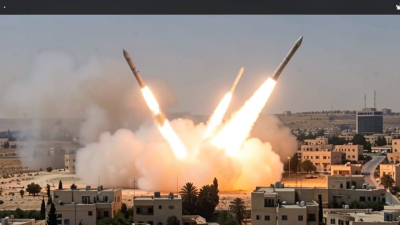
Iran Unveils Video of Missiles Targeting Israel, Citing Strategic Offensive
First Joint Attack Since Two-Month Ceasefire Sparks Regional Tensions
Constantvpn.com – Iran has unveiled video footage of missile launches directed at Israeli territory, asserting that the strikes signify the commencement of a “full week of continuous attacks” against its regional rival. The footage, released on Monday, shows a series of ballistic missiles being fired from Iranian soil toward Israeli positions, capturing the launch process and the trajectory of the projectiles. This marks the first time since a two-month ceasefire between the two nations was established in late September that both sides have engaged in reciprocal military actions. The video was accompanied by a statement from Iranian officials, who emphasized that the operation was a calculated response to perceived threats and a demonstration of Iran’s capability to retaliate across borders.
“Today’s strikes are the beginning of a sustained campaign, showing Israel that we are prepared to act decisively,” said a spokesperson for Iran’s Revolutionary Guard, in a statement quoted by international media outlets. The clip, shared on social platforms, highlights the coordination and scale of the missile attacks, with analysts noting the use of advanced weaponry that could have reached multiple Israeli cities within minutes.
The Israel Defense Forces (IDF) confirmed that its air force had targeted military installations in western and central Iran, though details about the extent of the damage or the specific locations remain scarce. A spokesperson for the IDF stated that the strikes were aimed at “key strategic assets” to disrupt Iran’s ability to project power in the region. However, the Israeli military has not provided clear information on the number of missiles intercepted, the casualties reported, or the impact on Iranian infrastructure. This lack of transparency has fueled speculation among analysts about the potential for further escalation.
Meanwhile, U.S. President Donald Trump has expressed concern over the situation, urging Israel to refrain from immediate retaliation. In a direct call to Israeli Prime Minister Benjamin Netanyahu, Trump emphasized the urgency of the moment, stating, “I’m going to call Benjamin Netanyahu right now and tell him not to retaliate.” This intervention comes as a significant development in the ongoing diplomatic efforts between the United States and Iran, which have been strained by competing interests in the Middle East. Trump’s comments suggest a desire to prevent the ceasefire from collapsing, even as he has previously criticized the Israeli government for its aggressive posture.
Historically, Iran and Israel have been adversaries, with their rivalry intensifying over decades of regional conflicts. The current episode follows a period of relative calm since the ceasefire agreement was signed, which was intended to reduce hostilities between the two nations. However, the attacks indicate that the fragile peace may be under threat, as both sides appear to be testing each other’s resolve. The video released by Iran has been interpreted by some as a psychological maneuver to deter further Israeli strikes, while others see it as a warning to regional allies.
Analysts suggest that the missile launches could be part of a broader strategy by Iran to assert its influence in the region and challenge Israeli military dominance. The targets in western and central Iran are believed to include air defense systems, missile storage facilities, and command centers, all of which are critical to Iran’s ability to conduct long-range operations. The timing of the attacks, just days after the ceasefire was established, has raised questions about the effectiveness of the agreement and the role of external actors in maintaining it. Some experts argue that the attacks may have been coordinated with other regional groups, such as Hezbollah, to create a unified front against Israeli interests.
Despite the intensity of the strikes, the Israeli military has maintained a measured response, focusing on precision targeting to minimize civilian casualties. A recent report from the Israeli defense ministry indicated that the attacks were successful in striking key Iranian positions, though the full consequences of the strikes are yet to be assessed. The lack of detailed damage reports has led to calls for more transparency, with some observers questioning whether the Israeli military is exaggerating its capabilities or downplaying the impact of the attacks.
Iran’s decision to release the footage has also been seen as a way to gain international support for its actions. The video has been widely shared on state-controlled channels and social media, with Iranian officials using it to highlight the country’s military prowess and justify the strikes as a necessary measure. The footage includes footage of missile silos, launch sequences, and the destruction of targets in Israel, which has been praised by some as a powerful visual statement of Iran’s resolve. However, critics argue that the video may be edited to emphasize the scale of the attack while omitting the full context of the ongoing conflict.
The situation has sparked renewed debate about the role of the ceasefire in stabilizing the region. While the agreement was designed to allow both sides to regroup and avoid further escalation, the recent attacks suggest that the balance of power may be shifting. Experts warn that the strikes could lead to a cycle of retaliation, with each side accusing the other of provocation. The involvement of external players, such as the United States and Gulf states, adds another layer of complexity to the conflict, as their support for Israel or Iran could influence the outcome of the ongoing tensions.
In the wake of the attacks, diplomatic discussions between Iran and Israel have been paused, with both nations focusing on their military preparations. The United Nations has called for de-escalation, urging the parties to engage in dialogue to prevent further hostilities. Meanwhile, regional allies have expressed mixed reactions, with some supporting Iran’s actions and others urging caution to avoid a wider war. The footage released by Iran has become a focal point for media coverage, with analysts and journalists dissecting every detail to assess the implications for the Middle East.
