
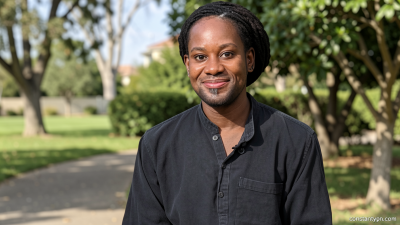
Coroner Opens Formal Investigation into Death of Former Cambridge Academic Jason Arday
Constantvpn.com – A formal coroner’s investigation has been launched into the circumstances surrounding the death of Jason Arday, the 41-year-old scholar whose brief tenure at the University of Cambridge became entangled in one of the most heated academic disputes of recent years. Arday was discovered lifeless at his Battersea residence on 14 August, just days after stepping down from his faculty position. His appointment in 2023 had been widely celebrated as a landmark moment — at 37, he became the youngest Black professor ever to hold a chair at the institution — yet the final months of his career were consumed by allegations that would follow him into the public record long after his departure.
The Coronial Findings and Police Position
Speaking at London Inner South Coroner’s Court on Wednesday, senior coroner Dr Julian Morris outlined the basis for opening the investigation. He noted that multiple reports submitted to his office had raised questions about the manner of death.
“The various reports have given me reason to suspect that Professor Arday died an unnatural death 12 days ago. It therefore follows that I must open an investigation.”
The court heard that family members discovered Arday unresponsive at his home. Despite immediate resuscitation attempts, he was pronounced dead at the scene. The Metropolitan Police had earlier characterised the death as unexpected, stating at the time that it was “not believed to be suspicious.” That initial assessment, however, did not preclude the coroner from pursuing a formal inquiry once documentary evidence warranted further examination.
The distinction between an “unexpected” death and an “unnatural” one carries procedural significance in English coronial law. An unnatural death triggers a mandatory investigation regardless of whether criminal intent is suspected, ensuring that all available medical, toxicological, and circumstantial evidence is reviewed before a conclusion is reached.
The Plagiarism Dispute That Defined His Final Months
Arday’s time at Cambridge was overshadowed by accusations that portions of his published work had been lifted from other sources without adequate attribution. The claims were brought into sharp public focus by Nathan Cofnas, a self-described “race realist” who had held a position at Cambridge before being dismissed from the university in 2024. Cofnas identified what he described as numerous instances of uncredited borrowing across Arday’s publications.
Arday categorically denied that he had plagiarised. He acknowledged, however, that errors existed in his work and offered an explanation rooted in his own neurodivergence. He explained that, as an autistic individual, he had relied heavily on mimicry — the act of imitating patterns and structures — to process and internalise information. In his account, this cognitive strategy could produce superficial similarities between his writing and source material without constituting deliberate appropriation. He argued that comparable minor errors would be found in the output of many academics if subjected to the same level of forensic scrutiny.
Arday characterised the sustained media attention and online vitriol that followed the allegations as having produced what he described as:
“an unrelenting level of public scrutiny and personal attack.”
The episode raised broader questions about how academic misconduct allegations are handled in the age of social media, where a single viral post can transform a departmental review into a national spectacle. It also intersected with debates about race, representation, and the standards applied to scholars from underrepresented backgrounds — questions that Cambridge’s own leadership sought to address publicly in the weeks following Arday’s departure.
Family Response and Calls for Accountability
In a statement released after his death, Arday’s family expressed their devastation.
“We are in shock to have lost this amazing father, partner, brother, uncle and son. The campaign of misinformation was too much for Jason, who was a gentle man and who always wanted to see the best in everyone.”
Their words pointed to a wider concern: that the volume and tenor of public commentary surrounding Arday’s work may have contributed to a psychological burden that proved fatal. In the aftermath, advocates and colleagues have called for a public inquiry examining how media outlets covered the plagiarism dispute in the period before his death, arguing that editorial choices amplified speculation beyond what the evidence supported.
Cambridge’s chancellor, speaking separately, used the phrase “racist feeding frenzy” to describe the tone of much of the coverage, while the university confirmed that Cofnas — the academic who had levelled the original accusations — had been suspended from his role as part of its internal review process.
A Memoir Set to Reach Shelves
Arday’s memoir, long anticipated by readers who followed his career, is scheduled for publication in the United Kingdom on Thursday. Publisher Simon & Schuster confirmed on Monday that the book will proceed on its original timeline. His family endorsed the decision, stating:
“It is only right that we honour his wishes.”
The forthcoming volume is expected to offer Arday’s own account of his academic journey, his experience of navigating elite British institutions as a Black scholar, and his reflections on the controversy that consumed his final months. Its release will place his voice back at the centre of a conversation that, since his death, has been shaped largely by third-party commentary.
The coroner’s investigation will continue as further evidence is gathered and witnesses are called. A conclusion — whether in the form of a formal finding or a referral to other authorities — will follow once the inquiry is complete. For now, the question at the heart of the proceeding remains straightforward: what exactly happened in the Battersea home on the afternoon of 14 August, and what, if anything, preceded it.
Related Reading
Frequently Asked Questions
What is Inquest begins into death of Jason?
Inquest begins into death of Jason is the main topic of this guide. The article explains the context, practical details, and next steps readers should understand.
Why does Inquest begins into death of Jason matter?
Inquest begins into death of Jason matters because readers are looking for a useful answer, not just a short summary. Good content should match search intent and help them decide what to do next.