
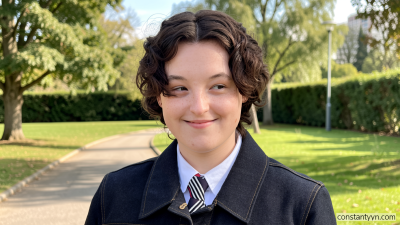
Bella Ramsey Reflects on Missed Teenage Rebellion After Sunny Dancer Experience
Constantvpn.com – At twenty-two years old, Bella Ramsey has found herself looking back at her youth with a sense of regret—not for missed opportunities, but for being too sensible. The British actor, who rose to international fame portraying Lyanna Mormont in the cultural phenomenon Game of Thrones, spent much of her formative years surrounded by adults rather than peers. This professional immersion meant she largely bypassed the moody, rebellious phase that many associate with adolescence.
Having made her television debut at just eleven years old, Ramsey developed a conscious strategy to avoid stereotypical teenage behavior after absorbing criticism from older colleagues. “I was like, I’m not going to be that,” she recalled about her deliberate choice to remain composed. This self-imposed maturity served her well professionally, but left her wondering whether she had sacrificed something valuable in the process.
A Second Chance at Adolescence
The opportunity to reclaim those lost years arrived through Sunny Dancer, a feature film centered on a summer camp designed for young people impacted by cancer. Given seven weeks to immerse herself in teenage life at age twenty-one, Ramsey described the experience as both “brilliant” and “liberating.” The timing proved serendipitous—she could finally experience the freedom she had observed in others without the complications of actual adolescence.
Within the film, Ramsey portrays Ivy, a young woman in remission who reluctantly attends what she considers a “chemo camp.” Instead of dreading the experience, Ivy discovers an unexpected community of friends and undergoes a transformative summer. The production brought together a notable ensemble cast including Neil Patrick Harris, Jessica Gunning, and James Norton, but it was the younger co-stars who proved most instructive for Ramsey.
“They were teaching me what being a teenager was for them and I was learning all the songs like five years later,” Ramsey explained.
A Director’s Personal Journey
Beneath the surface of Sunny Dancer lies a deeply autobiographical narrative crafted by writer and director George Jaques. When Jaques was fifteen years old, his mother received a cancer diagnosis. Rather than immediately channeling that experience into art, he waited eight years until he felt emotionally prepared to transform his memories into a screenplay.
“I never seem to write in the moment I’m going through it,” Jaques noted. “You have to sort of get through and understand it and have that reflection of it.”
While Jaques emphasized that the film does not directly mirror his family’s story, he acknowledged that fragments of his own experience permeate every character. Recognizing the limitations of his personal perspective, Jaques engaged extensively with the Teenage Cancer Trust, gathering insights from both young survivors and parents who had lost children to illness.
One particular interaction left a lasting impression. During a presentation to young cancer survivors, Jaques received direct feedback about how he should refer to them. “They were like, ‘don’t call us kids, do not say we’re brave,'” he remembered. This guidance fundamentally shaped the film, to the extent that Jaques cast two of these young people in actual roles.
Confronting Loss and Grief
The production process compelled Jaques to revisit his own anxieties about mortality. During the film’s premiere in Berlin in February 2026, an unexpected emotional moment occurred. “I remember seeing my mother and I realised there’s a version of that movie where my mum wasn’t sitting in the audience,” he shared.
Both Ramsey and Jaques identified a cultural tendency to rush people back to normalcy following loss. Jaques recalled losing someone close to him at eighteen while completing his A-levels, noting that society expects young people to simply “carry on” and return immediately to work and school.
“If we really were honest with how we feel we might be able to understand it a bit better,” Jaques suggested.
The conversation extended to UK bereavement policy, where no general legal right to paid leave exists when someone close dies. The primary statutory provision covers parental bereavement leave and pay specifically for the death of a child under eighteen or a stillbirth after twenty-four weeks of pregnancy.
Ramsey observed that British culture often minimizes emotional expression. “You speak to people who are grieving, you’re like, ‘How are you doing?’ They’re like, ‘Oh, yeah, yeah, you know, it’s hard, but I’m fine.’ It feels very unhealthily British,” she commented. She advocated for greater acceptance of grief in all its forms—whether expressed loudly or kept quietly private.
Advice for a Generation
Having spent seven weeks embodying a teenager desperate to assert her independence, Ramsey offered straightforward guidance for young people navigating social pressures. “Don’t try and fit in. Please don’t change to try and fit in because there are people who will fit in with you.”
Jaques agreed but cautioned against placing the entire burden of resilience on young shoulders. “There’s so much pressure on young people to change on social media,” he observed, highlighting how digital platforms amplify expectations for conformity and emotional control.
For Ramsey, the experience of Sunny Dancer provided closure on a question she had carried since childhood. “I kind of wish that I had made the most of being a teenager and getting away with things and being a bit rebellious,” she admitted. Now, at twenty-two, she has finally given herself permission to be exactly what she once avoided—unapologetically, messily, and freely, a teenager.
Related Reading
Frequently Asked Questions
What is I wish I had been a more?
I wish I had been a more is the main topic of this guide. The article explains the context, practical details, and next steps readers should understand.
Why does I wish I had been a more matter?
I wish I had been a more matters because readers are looking for a useful answer, not just a short summary. Good content should match search intent and help them decide what to do next.