
I’d Rather Die Than Ring Police: A66 Crash Aftermath
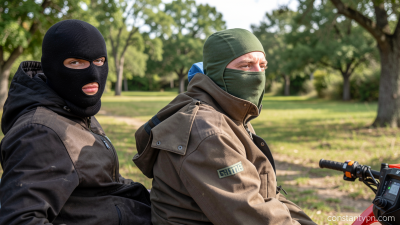
Constantvpn.com – In a quiet Grangetown park just outside Middlesbrough, a muddy-red quad bike roared past a dog walker while two teenagers in balaclavas pulled wheelies for a ring of wide-eyed boys. When the engine idled to a stop, the conversation that followed had nothing to do with school or local politics. One rider, asked whether he would call Cleveland Police if trouble broke out on his street, answered flatly: “I’d rather die than ring them.” That single sentence captured the mood of an entire neighbourhood reeling from a head-on collision on the A66 that killed seven people — two serving officers and five young men in a single car.
The crash triggered a sweeping police operation across Middlesbrough and neighbouring towns. More than twenty arrests followed as detectives pursued what Cleveland Police labelled a network of “serious and organised crime.” Internal sources pointed to two rival gangs locked in a widening feud as the driver behind a sudden spike in local violence. For residents of Grangetown and the adjacent South Bank district, the operation did little to ease the fear that had already taken root.
The Collision and Its Immediate Aftermath
The fatal impact occurred on Saturday, 22 August. A Volkswagen Passat, already under police pursuit, entered the A66 travelling in the wrong direction and met a police vehicle head-on. The result was instantaneous. PC Matthew Blades, 37, and PC Tom Clough, 38, died at the scene. All five occupants of the Passat were also killed: Michael Cahill, 23; Jakub Matusiak, 23; Makai Saddington, 18; and two 17-year-olds, Theo Rae and Cole Worthy.
Police records showed four of the five young men carried a combined total of thirty convictions spanning car theft, drug possession, assaults on officers, and various driving offences. Cahill, the eldest of the group, had no prior record. The circumstances surrounding the pursuit and the crash remain under independent investigation, yet many residents in Grangetown already blame the police for the deaths — a view that sits in tension with the ongoing inquiry.
Eight Miles Away: The Ramming in Acklam
The sequence that culminated on the A66 did not begin on the motorway. It began roughly eight miles away on a quiet suburban street in Acklam, a stretch of 1930s semi-detached houses with hanging baskets and immaculate front gardens. On the same night the five young men died, a Volvo XC60 was driven directly into the bay window of one of those houses, shattering glass and exposing the interior to the street. Fragments of lighting fixtures and bumper plastic lay scattered across the driveway; large metal barriers now enclose the property.
The home belongs to Gye Worthy, father of Cole Worthy. Neighbours say the house had been targeted for more than a year before that night. There is no indication Gye Worthy is connected to any criminal activity. Police and local sources indicate that Cole and his four companions set out in the Passat specifically to locate the Volvo responsible for the ramming. That pursuit ended on the A66.
“They Should Be Scared, Shouldn’t They?”
Walking Acklam’s streets, nearly every resident who agreed to speak did so only on condition of anonymity. Faces, they feared, could be matched to addresses. One neighbour, asked what message the attacks conveyed to people on the street, answered plainly:
“Well, they should be scared, shouldn’t they, that something’s going to happen to their property if they say anything or get involved. So we don’t.”
The reticence extends well beyond Acklam. Back in Grangetown, the quad-bike riders — asked whether their area was out of control — answered without hesitation: “No. Definitely not.” Then came the explanation reporters heard repeatedly from young people across the neighbourhood. They do not trust the police. One rider put it bluntly: “They’re saying there are gangs, but there are no gangs. It’s not London, mate. Do you know what I mean?”
That distrust runs deep enough that several residents described the choice as binary: cooperate with police, or risk retaliation from the very people the police are hunting. In their telling, the phrase “I’d rather die than ring” is not hyperbole but a practical summary of daily life on streets where a phone call to 999 could mark you as a witness.
A Pattern Older Than One Weekend
The A66 tragedy did not arrive in a vacuum. Back in May, a tractor was driven into a house on Priory Road in Middlesbrough, and Cleveland Police opened a separate investigation into that incident. Schools in the area closed early to allow families to attend the funeral services for those killed on the motorway. A local MP publicly condemned disorder at a balloon-release event, signalling that civic frustration had spilled beyond the streets into public gatherings. For many residents, the question is no longer whether violence will reach their doorstep but whether anyone in authority will answer when they finally decide to call.
Frequently Asked Questions
What happened on the A66 on 22 August?
A Volkswagen Passat, already being pursued by police, entered the A66 in the wrong direction and collided head-on with a police vehicle. Two officers — PC Matthew Blades (37) and PC Tom Clough (38) — and all five occupants of the Passat were killed. An independent investigation into the pursuit is ongoing.
Why do some residents say they would “rather die than ring” the police?
Many young people in Grangetown and South Bank describe a climate of intimidation in which calling Cleveland Police could expose them or their families to retaliation from local gangs. The phrase captures a community-wide reluctance to engage with law enforcement, even after a fatal crash has drawn national attention.
What is the Acklam ramming incident?
On the same night as the A66 crash, a Volvo XC60 was driven into the bay window of a home in Acklam belonging to Gye Worthy, father of one of the five men killed on the motorway. Neighbours report the property had been targeted for over a year. Police say the five men set out in the Passat to find the Volvo, and that pursuit ended in the fatal collision.
How many arrests followed the crash?
More than twenty arrests were made across Middlesbrough and neighbouring towns as Cleveland Police pursued what they described as a network of “serious and organised crime,” reportedly linked to a feud between two rival gangs.