Hungary’s public news broadcasts halted in bid to scrap Orban-era propaganda
Hungary’s Public News Broadcasts Suspended Amid Media Reforms
Constantvpn.com – On Tuesday, Hungary’s state-run public media underwent a significant shift as its flagship television channel, M1, and the radio station Kossuth temporarily paused news programming. The move, part of a broader initiative to restructure state media, aimed to establish a framework where broadcasts would be “independent and trustworthy,” according to the country’s newly elected Prime Minister Péter Magyar. This marks a pivotal moment in the nation’s media landscape, following years of centralized control under the previous administration led by Viktor Orbán.
Breaking from Orbán’s Legacy
Magyar, who assumed power in a landslide victory earlier this year, has made media reform a central pillar of his agenda. His administration’s decision to halt news transmissions on M1 and suspend Kossuth entirely was framed as a necessary step to dismantle what he described as “propaganda broadcasts” from the Orbán era. The new PM emphasized that the previous government had manipulated state media to serve political interests, insulating Orbán from scrutiny and distorting public discourse.
“They lied at night, they lied during the day, they lied on every wavelength. That is now over,”
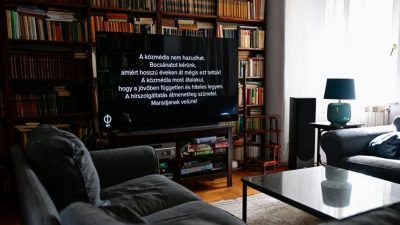
Magyar stated in a public address, underscoring his commitment to transparency. The reforms, he claimed, would not only restore credibility to public broadcasting but also pave the way for a “regime change” in the media sector. His promises have been backed by the suspension of news programs, which were replaced with messages highlighting the need for reform. M1’s screen displayed a stark white text on black background, reading: “Public media should not lie. We are sorry for doing it for so long.” The message continued: “Public media now will be reformed so it will be independent and trustworthy. Our news programme is currently suspended. Stay tuned!”
Kossuth, Hungary’s primary public radio station, faced an even more abrupt change. Its frequencies were redirected to broadcast classical music via Bartok Radio, according to AFP. Kossuth had traditionally covered news, current affairs, sports, and cultural topics, making the shift a symbolic departure from its former role. The decision to suspend Kossuth was met with criticism from Orbán’s supporters, who viewed it as an attack on the legacy of his tenure.
Orbán’s Criticism and Political Context
Orbán, the ousted former prime minister, denounced the move as “another example of Tisza [the ruling party] tyranny” in a Facebook post. He accused the new government of undermining the established media system, which he had controlled for 16 years. Orbán’s followers were urged to switch to Hir TV, a channel aligned with his Fidesz party, to continue receiving news. The former leader also claimed that his allies had infiltrated most Hungarian media outlets, spreading falsehoods and denying him access to state television since September 2024.
Magyar, however, framed the suspension as a strategic recalibration. “The end of propaganda broadcasts” was a key promise during his campaign, and the action was intended to align public media with democratic principles. The new PM’s government has already begun reshaping the media environment, with M1’s website and Kossuth’s platform going offline on Tuesday afternoon. MTVA, the operator of M1, announced that the channel would restart in a “new format” without news programs, gradually reintroducing bulletins alongside a reformed editorial team.
Since taking office, Magyar has taken swift steps to distance himself from Orbán’s policies. TV2, a commercial broadcaster with ties to Fidesz, has also seen its staff reshuffled, with main news anchors and the news director resigning. This has raised questions about the extent of Orbán’s influence on media institutions even after his departure. Magyar’s reforms are seen as a response to public frustration over the previous administration’s control over information, which critics argued stifled free speech and distorted public opinion.
Historical Significance and Institutional Changes
Magyar’s initiative follows a pattern of institutional overhauls since his election victory. He has called for the establishment of a new public service media authority, a move that could centralize control under a different framework. While this might address some of Orbán’s criticisms, it also introduces new challenges, such as ensuring editorial independence amid political pressures. The suspension of Kossuth and M1 signals a dramatic shift in the media’s role, transforming it from a tool of government messaging to a platform for reformist narratives.
The decision to halt news broadcasts has sparked debates about the balance between political control and media freedom. Magyar’s allies argue that the previous regime’s dominance over state media had eroded public trust, while opponents warn of potential overreach by the new administration. The new PM has positioned his reforms as a breakthrough, citing the “historic day” of the media shutdown. Yet, the long-term success of these changes depends on the implementation of policies that prevent the recurrence of partisan control.
Hungary’s political landscape has been transformed by the transition from Orbán to Magyar. The new government faces the daunting task of rebuilding public confidence in media institutions while navigating the complexities of a fragmented media ecosystem. The suspension of Kossuth and M1 is part of a larger strategy to redefine the role of state media, which had long been a cornerstone of Orbán’s influence. Magyar’s actions are also a response to the recent parliamentary vote that limited Orbán’s rule to eight years, a move that symbolized the end of his 16-year dominance.
Implications for Hungary’s Media and Democracy
As the reforms take shape, Hungary’s media sector is at a crossroads. The suspension of news programming on M1 and Kossuth has left a vacuum, with the public awaiting the introduction of a new editorial team. Magyar’s administration has pledged to ensure press freedom, but the effectiveness of these measures will be tested in the coming weeks. The government’s ability to maintain media independence without aligning it with partisan agendas will determine whether this transition represents genuine progress or a continuation of political influence under a different guise.
Meanwhile, the European Union has hailed the changes as a “wind of change” in Hungary, signaling optimism about the nation’s move toward democratic reforms. The EU’s approval of €16.4bn in funding for Magyar’s government further underscores the significance of these developments. However, the new administration must prove that its reforms are not merely symbolic but substantive. The challenge lies in transforming the media landscape without succumbing to the same patterns of control that defined Orbán’s era.
Public reactions to the suspension have been mixed. While some celebrate the removal of propaganda from state media, others express concern about the potential for new forms of bias. The shift in programming has also raised questions about the role of public media in shaping national discourse. As Hungary navigates this transition, the success of its media reforms will depend on the transparency of its processes and the willingness of the new government to uphold democratic standards in all aspects of public communication.
Magyar’s administration now faces the task of not only redefining the media’s role but also rebuilding its credibility. The suspension of Kossuth and M1, while a bold move, has required careful coordination to avoid further public backlash. With the political landscape in flux and the media sector undergoing transformation, Hungary’s path toward a more independent public broadcasting system remains uncertain. Yet, the symbolic importance of this shift cannot be overstated, marking a clear departure from the Orbán era’s centralized control and signaling a new chapter in the nation’s media history.
