Hungary’s president agrees to stand down after parliament backs removal
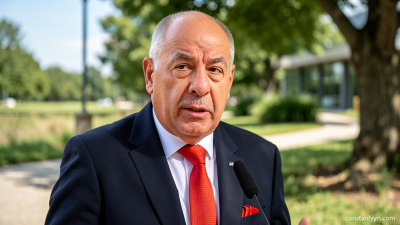
Hungary s President Agrees to Stand Down Amid Constitutional Shift
Hungary s president agrees to stand down following a dramatic parliamentary decision that reshapes the nation’s political landscape. Hungarian President Tamás Sulyok has formally agreed to step down from his position, signing a crucial amendment to the country’s constitution that will conclude his presidential term at midnight on Sunday. This significant development comes after Prime Minister Péter Magyar’s Tisza party successfully pushed the law change through parliament, effectively removing Sulyok from office. The move ends what many observers viewed as a prolonged period of political tension between the new government and the presidential office.
Sulyok faced a critical five-day deadline to either sign the constitutional amendment or risk triggering a protracted constitutional crisis alongside potential impeachment proceedings. He confirmed his willingness to accept the law change as the Saturday evening deadline passed, though he did not do so without criticism. In a formal statement, Sulyok accused Magyar’s government of violating fundamental principles of the rule of law. He characterized the amendment as marking a “breaking point in Hungarian constitutional democracy,” emphasizing that the “core values of a free society… have been trampled underfoot for the sake of political power.”
Constitutional Changes and Political Repercussions
This development represents the latest and most dramatic action by the Tisza government, which has consistently viewed Sulyok as a political puppet of the former administration. The government had been pushing for his resignation since taking power. Since securing a landslide electoral victory in April, the Tisza administration has rapidly implemented major constitutional reforms. The 17th amendment, which received an overwhelming majority vote on Monday, officially terminates the president’s term by citing a “serious loss of confidence” in his leadership and conduct.
Beyond removing the president, the amendment package includes several other significant provisions. It simultaneously removes the head of Hungary’s Constitutional Court and introduces a restriction that prevents members of parliament who have completed three terms from running for re-election. This provision directly impacts more than half of the current deputies who belong to Orbán’s Fidesz party. Former Prime Minister Viktor Orbán, who lost power in April after ruling for 16 years, has strongly criticized the amendment, describing it as an act of tyranny and encouraging citizens to participate in protests against the changes.
Orbán himself has remained largely absent from public appearances since the election, notably refusing to take his designated seat in parliament. His party, which held power from 2010 until 2026, fundamentally reshaped Hungary’s state institutions according to its preferences. During this period, Fidesz utilized its two-thirds parliamentary majority to fill supposedly independent state positions with loyal party members. The 141 Tisza deputies in parliament responded with a standing ovation when the amendment results were announced on Monday, signaling strong support for the constitutional changes.
Following the parliamentary vote, András Baka, former head of Hungary’s Supreme Court, expressed his support for the presidential removal. In an interview with the BBC, Baka argued that Hungary had been governed by the rule of law from 1989 to 2010, but Fidesz subsequently captured state institutions and established what he described as an authoritarian state. “And it is now very difficult to break up a sophisticated authoritarian regime… which was designed to survive even after electoral defeat,” Baka explained, providing historical context for the current political transition.
The European Union has welcomed Hungary’s political transformation, hailing it as a “wind of change” and unlocking €16.4 billion in funding for the new prime minister. Péter Magyar has committed to serving the Hungarian people, stating that he will serve rather than rule over the nation. This comprehensive set of constitutional changes marks a pivotal moment in Hungary’s democratic evolution, with Hungary s president agrees to stand down as the central event in this ongoing political realignment.
