How Iran’s new regime is very different to what came before
How Iran’s New Regime is Very Different to What Came Before
Constantvpn.com – The recent ceasefire agreement between the United States and Iran, signed during a dinner at the Palace of Versailles, has sparked reflection on the symbolic weight of the event. French President Emanuel Macron, hosting the meeting, may have sought to secure the Memorandum of Understanding (MoU) before Trump’s potential shifts in strategy. The opulent Hall of Mirrors, a historic setting, naturally drew parallels to the Treaty of Versailles, which ended World War One in 1919. That landmark document not only restructured Europe but also imposed severe reparations on Germany, sowing seeds of resentment that later contributed to the rise of fascism and the outbreak of another global conflict within two decades. Now, as the Iran deal hangs in the balance, some wonder if it might similarly reshape the Middle East’s future.
Despite the fragile truce, the region’s instability persists. Skirmishes near the Strait of Hormuz have continued, and key war objectives remain unmet. The MoU, a one-and-a-half page document, seems modest compared to the sweeping changes of 1919. Yet, its implications could be just as profound. As the ceasefire holds, the question lingers: has the agreement prevented a larger conflict, or merely postponed it? The answer may depend on how the new era in Iran unfolds.
The Unfolding of a New Era
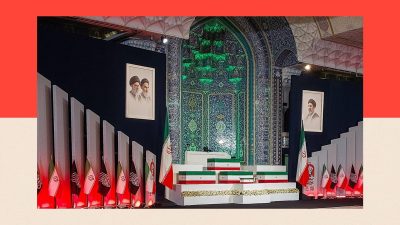
Iran’s leadership is undergoing a dramatic transformation. The country is mourning the loss of its former supreme leader, Ayatollah Ali Khamenei, who died more than four months ago during a joint US-Israeli military operation. His death marked the end of an era, with the old guard in Tehran replaced by a new generation of leaders. This transition is not just political—it carries cultural and strategic weight, signaling a shift in Iran’s priorities and alliances. However, the question remains: are these new leaders more capable, or merely different in style?
Vali Nasr, a professor of International Affairs and Middle East Studies at Johns Hopkins’ School of Advanced International Studies, offers a perspective on the broader impact of the conflict. “This war is much more consequential and larger than we have given it credit for thus far,” he remarked. “All major wars of this magnitude ultimately reorder the chess board. This will do it for the Middle East.” His words underscore the potential for lasting geopolitical realignment, even as the immediate crisis appears to ease.
Legacy of Setbacks and Resilience
Iran’s recent challenges have tested its resilience. In January, mass protests erupted across the country, fueled by economic hardship and the aftermath of a 12-day war with the US and Israel. Trump and Israeli Prime Minister Benjamin Netanyahu had both anticipated these protests as a harbinger of the Islamic Republic’s collapse. Iran’s economy, already weakened by decades of international sanctions, faced further strain as the war disrupted trade and infrastructure. Despite these pressures, the regime has endured, thanks in part to its ability to assert influence through strategic actions.
The war itself was a turning point. Joint strikes by the US and Israel targeted key figures in Iran’s leadership, including Khamenei. While the attacks weakened the regime, they also galvanized its supporters. The destruction of the Isfahan nuclear complex left the country’s uranium stockpile uncertain, yet much of it was reportedly hidden beneath rubble. This resilience, combined with a new sense of urgency, has defined Iran’s approach to diplomacy and defense.
Internationally, Iran’s influence has waned. Its “Axis of Resistance,” once a formidable network of allies and proxies, has faced significant reversals. In Syria, the collapse of Bashar al-Assad’s government—a long-standing Iranian partner—left the country vulnerable. Lebanon’s Hezbollah, a critical Iranian ally, suffered losses after Israeli forces assassinated its leadership and targeted its communication devices. Similarly, Hamas, another Iranian-backed group, was severely weakened by Israel’s sustained assault following its October 2023 attacks on Israeli cities. These setbacks have created a power vacuum, with Iran’s regional reach now in question.
Yet, the country’s defiance has not been extinguished. Houthi rebels in Yemen, supported by Iran, have continued to challenge Israeli interests by launching ballistic missiles and disrupting shipping in the Red Sea. This has prompted a counterstrike from the US, UK, and Israel, targeting Houthi leadership. The cycle of retaliation highlights the ongoing tension between Iran and its adversaries, even as the ceasefire appears to stabilize the immediate conflict.
The Weight of Historical Parallels
The comparison to the Treaty of Versailles is apt, though the circumstances are markedly different. The 1919 agreement imposed heavy penalties on Germany, fostering resentment that culminated in World War Two. In contrast, the Iran deal is a conciliatory step, yet it risks being perceived as a compromise. The United States, with its influence, may have engineered a pause in hostilities, but Iran’s survival underscores its adaptability. The question is whether this agreement will solidify Iran’s position or mark the beginning of its decline.
Iran’s current state reflects a mix of vulnerability and determination. Domestically, the regime has weathered protests and economic turmoil, but its ability to maintain power is now contingent on external support. Internationally, the loss of key allies has weakened its strategic position, yet the country remains a key player in Middle Eastern geopolitics. The new leadership, though younger and less experienced, must navigate this precarious landscape, balancing internal stability with external threats.
As the situation evolves, the implications of the ceasefire are far from clear. The Strait of Hormuz, a critical artery for global oil trade, has remained under Iranian control, demonstrating its capacity to leverage strategic assets. This move has sent a message to the West: Iran’s defiance is not confined to rhetoric. However, the country’s ability to sustain this posture depends on its internal cohesion and the willingness of its allies to support its ambitions.
Looking ahead, the trajectory of Iran’s new regime will shape the region’s future. The previous leadership, which had been a cornerstone of Iran’s foreign policy, is gone. The new era promises a different approach—one that may prioritize survival over expansion. Whether this shift will lead to a more pragmatic foreign policy or further entrench Iran in its adversarial stance remains to be seen. As Vali Nasr notes, the war has already begun to reshape the Middle East’s geopolitical landscape, and its effects will echo for years to come.
