
£100 Energy Support Announced as Bank Tax Rises
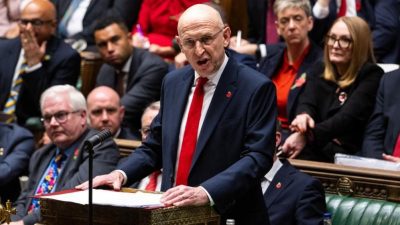
Constantvpn.com – Millions of households in England are set to receive a one-off £100 payment to help with high energy costs under measures set out by Chancellor John Healey in his first Budget. The support will be financed in part by a higher levy on major banks’ profits, while the government has also outlined changes affecting fuel duty, business rates, savings and welfare.
The payment will go to households in council tax bands A to D in England. Wales has said it will match the arrangement, while the Scottish government intends to replicate the support. The policy is designed to offer immediate help as families continue to face pressure from household bills.
“Those are the storms we face. We can’t wish them away. We must choose the course we steer through them,” Healey told MPs, referring to global uncertainty and rising oil prices linked to conflict in the Middle East.
Energy bills and transport costs
Alongside the £100 payment, the Budget includes plans to remove gas standing charges across England, Scotland and Wales during 2027, or as soon as possible afterwards. Standing charges are fixed daily costs that customers pay regardless of how much gas they use.
Instead of disappearing entirely, those costs will be transferred into the charge for each unit of energy consumed. This means households using relatively little gas may benefit, while larger gas users could see higher bills because more of the cost would be tied to consumption.
The 5p reduction in fuel duty for petrol and diesel, originally introduced as a temporary measure, will remain in place until July. Minimum wage rates will increase by 3.9% in April. However, the Budget does not set out progress on reducing the difference between pay rates for younger and older workers.
Higher taxes for banks and some savings income
Healey said the tax on profits at large banks will rise from 3% to 6%. The increased rate will apply from January next year until April 2028. Taxes on high-stakes gambling machines will also increase.
The chancellor presented the bank levy as part of the funding for help with household energy costs. He said the government wanted to give struggling families “breathing space now” while also offering “hope for the future” during a period of economic disruption.
Not all tax changes will reduce the burden on households. Income tax thresholds will remain frozen, which can pull more income into higher tax bands as wages rise. From April 2027, the tax rate on income from savings and property rentals will rise to 24% for basic-rate taxpayers. That rate had previously been expected to increase to 22%.
At the same time, a planned cut in the annual cash ISA allowance has been dropped. The allowance had been due to fall from £20,000 to £12,000 under a proposal announced last year by Healey’s predecessor, Rachel Reeves. Keeping the higher limit preserves the amount that savers can place in cash ISAs each year without paying tax on interest.
Business relief and regional powers
High street businesses in England will receive additional business-rates support. The threshold at which shops begin paying business rates will increase from £12,000 to £18,000. Vape shops and adult gaming centres will not qualify for the relief.
The government also plans to give regional mayors more control over locally raised revenue. Mayors will initially be allowed to retain 20% of business rates and a share of income tax for spending on regional priorities. Healey said the longer-term ambition is for mayors to keep all business rates raised in their areas by the end of the decade.
Healey described the proposal as “the most radical act of devolution in a generation”.
For local areas, the proposal could mean greater scope to direct money towards priorities such as regeneration, transport or other services chosen at regional level. The details of how the changes will work are expected to be developed over time.
Growth outlook and spending pressures
The Budget arrives with public finances under strain. The UK is expected to spend an additional £14bn on debt interest payments this year, limiting the room for large-scale tax cuts or major new spending commitments.
The Office for Budget Responsibility has reduced its growth forecast for next year to 1%, although it expects slightly stronger growth in the following years. Its latest assessment also paints a difficult longer-term picture for living standards, with British households projected to be only marginally better off than before the Covid pandemic even ten years after the crisis began.
David Miles, the head of the fiscal watchdog, described that outlook as “pretty grim”. The forecast underlines why the government has focused on a collection of smaller measures rather than a broad package of major giveaways.
Defence and welfare decisions deferred
Healey confirmed that the £4.7bn gap in the defence investment plan will be covered partly by drawing on capital budgets across Whitehall. He said further detail would be provided on how the government intends to fulfil its commitment to spend 3% of national income on defence.
Major decisions on welfare have been delayed until next year. Healey said reforms would follow the publication of reviews led by Alan Milburn, examining young people who are not in work or training, and Stephen Timms, looking at Personal Independence Payments.
The chancellor rejected suggestions that the government was unwilling to bring down welfare spending, saying he and Prime Minister Andy Burnham remained committed to reducing the bill in a “Labour way”.
Conservative leader Kemi Badenoch criticised the Budget as insufficiently ambitious, arguing that the government was “overspent, overborrowed, overtaxed and drowning in an out-of-control welfare system”.
For households, the immediate effect will depend on energy use, council tax band and income sources. The £100 payment offers short-term assistance for eligible homes, while changes to standing charges, savings taxation and wage rates may have different consequences for different groups over the coming years.
Related Reading
Frequently Asked Questions
What is Healey unveils 100 for energy bills?
Healey unveils 100 for energy bills is the main topic of this guide. The article explains the context, practical details, and next steps readers should understand.
Why does Healey unveils 100 for energy bills matter?
Healey unveils 100 for energy bills matters because readers are looking for a useful answer, not just a short summary. Good content should match search intent and help them decide what to do next.