
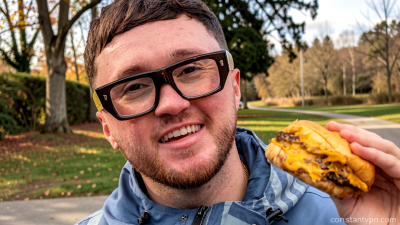
When the Fork Meets the Algorithm: Bristol’s Food Scene Grapples With Influencer Credibility
Constantvpn.com – The Friday-night dilemma — scroll endlessly through delivery apps, compare menus, second-guess every choice — has found a new shortcut. Social media food creators now sit at the centre of how millions of diners decide where to spend an evening. But a recent investigation out of Bristol has pulled back the curtain on a troubling undercurrent: some of these creators were prepared to promise glowing coverage before tasting a single bite, and before confirming the restaurant they were being asked to champion actually existed.
The question that follows is uncomfortable for anyone who has ever booked a table based on a fifteen-second reel. Can a viewer trust the person on screen to deliver an honest verdict? Or has the economics of content creation quietly rewritten the rules of food criticism?
A Fake Restaurant, Forty-Eight Messages, and Thirty-Three Replies
Meg Houghton-Gilmour, food writer and founder of The Bristol Sauce, designed a two-part research exercise that turned the influencer economy inside out. She built a website and social media presence for a fictitious Japanese restaurant described as “coming soon to Bristol,” then sent outreach messages to forty-eight food creators. Each message asked three things: what would they charge to produce content, what would guarantee a positive review, and whether they would disclose the post as an advertisement.
Thirty-three creators responded. The pricing spread was wide. Several offered to post simply in exchange for complimentary food and drink, with no additional fee. Five of those respondents indicated they would publish the content without labelling it as an advert — a practice that runs directly against UK advertising regulations, which require paid or compensated posts to carry a clear #ad tag or the platform’s native paid-partnership indicator. A free meal swapped for a favourable post counts as compensation under those rules.
“I realised how insular and repetitive it is. Everyone going to the same places, saying the same thing,” Houghton-Gilmour said of the wave of positive noise her experiment generated around the phantom restaurant’s supposed opening.
She described the exercise as offering “a fascinating insight” into influencer behaviour, and noted that the requests she sent out produced a “swell of misleading positive noise” across social media before anyone had actually eaten at the establishment.
The Creator’s Side: Celebration Over Critique
Oscar Bostock, known online as Bos Finesse, commands more than 135,000 Instagram followers and millions of views on TikTok. He describes himself as a driving force in Bristol’s food-creator scene and called the decision to build a career around food content a “no-brainer.”
“There are food creators in the social media space, like myself, who do have a lot of credibility. But we need to respect the culture a bit as well. You’ll never beat the people that write about food for a living. I don’t really like to review and criticise food — I’ll leave that to the professionals. At the same time, you need people here like myself to just celebrate food,” Bostock told the BBC.
He stressed that authenticity governs his choices. He has turned down numerous invitations to review or feature venues, explaining that being compensated to declare a restaurant “good” is categorically different from being paid to promote a new menu or a newly opened space.
“I feel very strongly about it, anywhere I work with had to be a place I actually valued and would visit in my own time,” he added.
The Critic’s Perch: Authority, Economics, and Survival
Jay Rayner, who writes food criticism for the Financial Times, frames his role as producing “as interesting, entertaining [and] truthful column” as possible. He pushes back firmly on the notion that the newspaper critic is an extinct species.
“I don’t think there’s much truth in the idea that the newspaper critic is dead. What I see happening is an awful lot more media around restaurants, full stop. I know, anecdotally, that a good review from me still results in many bookings, which is lovely — but it’s not actually a concern of mine.”
Asked whether influencers pose a threat to his work, Rayner’s answer was characteristically blunt: “only if it’s better than what I do.” He added, “I do not have a right to my lofty perch,” acknowledging that his authority is earned, not inherited.
The economic distinction matters. Rayner pointed out that newspapers like the Financial Times cover the cost of a critic’s meal when writing a review, whereas many influencers are invited to dine at no charge. That asymmetry, he argued, should be visible to the consumer.
“That does undermine the credibility of the review,” he said. “[But] you know, we’re all celebrating the culture of eating food and eating out.”
Why the Distinction Matters to the Diner
For the person scrolling through a creator’s feed at 9 p.m., trying to decide between three takeaways, the practical stakes are straightforward. A post marked with #ad signals a commercial arrangement; an unmarked post implies an independent opinion. UK advertising rules exist precisely to keep that line visible. When creators blur it — by accepting a free meal and publishing an unlabelled endorsement — the viewer loses the one tool that lets them weigh the recommendation.
The Bristol experiment did not set out to condemn anyone. It illuminated a structural tension: the same platforms that make food discovery effortless also reward volume, repetition, and positive framing. A creator who posts forty-eight restaurant visits a year, most of them complimentary, faces different incentives than a critic whose employer pays the bill and whose byline carries institutional accountability.
Chef Adam Armstrong, speaking in the same conversation, noted that both influencers and critics ultimately offer an opinion — the difference lies in how that opinion is funded, disclosed, and consumed. For diners, the takeaway is not to abandon either voice, but to read the fine print: the hashtag, the sponsorship tag, the quiet question of who paid for the plate.
As Bristol’s dining scene continues to grow and its creator economy matures, the credibility question will not resolve itself. It will be answered, or ignored, one unmarked post at a time.
Related Reading
Frequently Asked Questions
What is Food influencers v critics?
Food influencers v critics is the main topic of this guide. The article explains the context, practical details, and next steps readers should understand.
Why does Food influencers v critics matter?
Food influencers v critics matters because readers are looking for a useful answer, not just a short summary. Good content should match search intent and help them decide what to do next.