
Port Glasgow Shipyard to Shed 70 Jobs as Order Pipeline Stalls
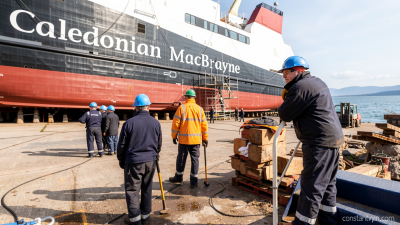
Constantvpn.com – Ferguson Marine, the Clyde’s final remaining commercial shipbuilding facility, has opened a voluntary redundancy scheme that will eliminate roughly 70 positions from its workforce. The move comes at a moment of acute uncertainty: the yard’s two long-delayed CalMac ferry contracts are reaching their end, and the replacement orders promised by Holyrood remain unconfirmed. With no vessel currently under construction on the main Port Glasgow slipway for the first time in twelve years, management says the headcount reduction is essential to keeping the operation financially sustainable until new work materialises.
The firm presently carries 247 core employees, 31 agency workers, and 32 apprentices. The voluntary scheme is projected to remove around 70 of those roles. Staff who elect to depart will receive a payment of £1,000 for every completed year of service, capped at £10,000, layered on top of their statutory redundancy entitlements.
A Yard at the End of Its Current Workload
The timing of the cuts is dictated by the physical reality of the slipway. MV Glen Rosa, the second of two dual-fuel CalMac ferries that have consumed years of the yard’s capacity, has already been towed downriver to Inchgreen for final fitting-out and commissioning. Its sister vessel, MV Glen Sannox, was handed over in November 2024 after a protracted delivery dispute. Once Glen Rosa is completed by the end of this year, the Port Glasgow yard will sit idle — a situation unseen since roughly 2013.
Ferguson Marine’s chief executive, Graeme Thomson, framed the redundancy exercise as a necessary step to preserve the yard’s future capacity rather than a sign of retreat.
“However, as the vessel nears completion, we face an inevitable gap in workload while we work with the Scottish government to make the relevant preparations to enable us to proceed with contract negotiations.”
Thomson added that shipbuilding capability depends on continuity of skilled labour, and that acting proactively now would keep the organisation “lean, modern, and ready to cut steel on the new fleet as quickly as possible.”
The Unconfirmed Four-Vessel Programme
In March, ahead of the Holyrood election, the Scottish government announced its intention to award Ferguson Marine direct contracts for four smaller vessels: two compact CalMac ferries, a fisheries research ship, and a marine protection vessel. The then Economy Secretary, Kate Forbes, described the package as a “bridge to the future” for the yard and stated that the government had already completed substantial scoping and legal groundwork.
Forbes acknowledged, however, that engagement with the Competition and Markets Authority would be required before any award could proceed. More than a year later, none of the four contracts has been confirmed. Ministers continue to cite ongoing “due diligence” as the reason for the delay. According to information available to BBC Scotland, the Scottish government has not yet approached the CMA for guidance on the legality of its proposed direct-award approach.
Economy, Tourism and Transport Secretary Stephen Flynn defended the redundancy scheme as part of a broader modernisation agenda for the yard.
“The action that the leadership team at Ferguson Marine is taking today is necessary to help secure a viable future for the yard, and that of commercial shipbuilding on the Clyde.”
Flynn stated he had been assured the reduced workforce would not compromise completion of MV Glen Rosa, and reiterated that the four-vessel programme “continues to undergo full due diligence further to next steps which will be announced to parliament in due course.”
Union Response and the Clyde’s Shipbuilding Legacy
Trade unions have reacted sharply. Louise Gilmour, Scotland secretary of the GMB union, characterised the redundancy drive as “a betrayal of a blameless workforce,” arguing that ministers have failed to deliver new contracts locally while sending equivalent work to yards abroad.
“Fergusons was once Scotland’s ferry factory with a worldwide reputation for excellence and should be again. Instead, skilled and experienced shipbuilders are being encouraged to leave as those in charge send contracts everywhere but here.”
Gilmour accused the decision-makers of “hubris and incompetence,” pointing to what she described as a pattern of outsourcing that undermines the very capability the government claims to want to protect.
Background: Nationalisation and the Ferry Dispute
Ferguson Marine was brought into public ownership in 2019 following a bitter, multi-year dispute between its former private owner and Caledonian Maritime Assets Ltd (CMAL), the government-owned ferry agency. The conflict centred on claims for additional costs incurred during construction of the two dual-fuel CalMac ferries. The episode left the yard financially strained and its reputation damaged, though it preserved the facility and its workforce from outright closure.
Since nationalisation, the yard has also undertaken sub-contracting work for BAE Systems on the new Type 26 frigate programme, providing a stopgap revenue stream between ferry deliveries. A cohort of ten new apprentices recently received a yard tour before commencing their first year of college training — a symbolic gesture of continuity even as the broader workforce contracts.
The redundancy exercise thus lands at a particularly exposed moment: the last commercial shipyard on the Clyde, with no confirmed orders beyond the current ferry programme, and a government pipeline that has yet to clear regulatory scrutiny. Whether the four-vessel award ultimately materialises — and on what timetable — will determine whether the cuts represent a temporary lean-down or a permanent shrinkage of Scotland’s remaining shipbuilding capacity.
Related Reading
Frequently Asked Questions
What is Ferguson shipyard to cut a quarter?
Ferguson shipyard to cut a quarter is the main topic of this guide. The article explains the context, practical details, and next steps readers should understand.
Why does Ferguson shipyard to cut a quarter matter?
Ferguson shipyard to cut a quarter matters because readers are looking for a useful answer, not just a short summary. Good content should match search intent and help them decide what to do next.