‘Endless fears’: Even if fighting stops, the damage to Iran’s children will endure
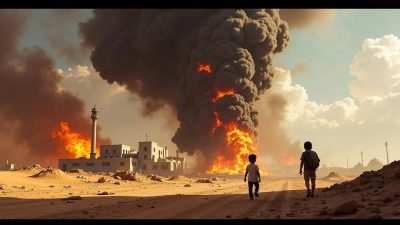
Endless Fears
Children’s Trauma Persists Beyond Ceasefire
The war has become a persistent shadow in Ali’s mind. Even now, the echo of distant explosions and sudden noises trigger his body’s instinctive reaction. “Before the war, I felt no stress,” he recalls. “But today, even the smallest sound can send my brain into chaos.” At just 15, Ali has witnessed how the relentless airstrikes by US and Israeli forces have imprinted fear onto the psyche of Iranian youth. This constant state of alert, known as hyperarousal, is a potential precursor to post-traumatic stress disorder.
Iran’s young population, over 20.4 million children under 14, is disproportionately affected. The conflict has disrupted their routines, narrowing their world to the confines of home. With schools closed and streets patrolled by regime militias, families have been forced into a state of vigilance. “I have no contact with my friends,” Ali says. “I should be studying, working, and preparing for the future. Instead, I live in endless anxiety, wondering if bombs will fall at any moment.”
“Before the war, I had no stress at all,” says Ali. “But now even the smallest sound causes my brain to react very badly.”
Parents, too, are bearing the psychological toll. For Ali’s mother, the fear is constant. “Whenever fighter jets fly overhead, she becomes frightened and stressed,” he notes. “She shows clear signs of anxiety, yet she tries to shield me from it.” His father’s unemployment adds to the family’s uncertainty, leaving little room for normalcy. The war has fractured their daily lives, replacing laughter with tension.
Aysha, a counselor in Tehran, has seen firsthand the toll on children. Through a phone call, she guides a mother struggling to soothe her anxious child. “Create a calmer environment for him,” she advises. “Play with him, keep him engaged. If that fails, bring him here.” Her center is overwhelmed, receiving countless calls from worried parents. Symptoms like sleep disturbances, nightmares, and aggression are increasingly common. “When a child is killed—whether in protests or war—no parent can bear the weight of that loss,” Aysha reflects.
According to the Human Rights Activists News Agency, 3,636 people have died in the conflict, including at least 254 children. The war has also led to tens of thousands of injuries. Yet, the Iranian government has not only targeted civilians but also sought to involve children in combat. Through appeals on state media, officials urge parents to send their children to checkpoints, framing it as a rite of passage. “Take your children by the hand and come out to the street,” a regime leader once said. “Let them feel like heroes on the battlefield.”
Eleven-year-old Alireza Jafari was among those who answered the call. On 29 March, he and his father were killed during a drone strike while manning a checkpoint in Tehran. His mother, Sadaf Monfared, shared that he had told her he “wanted to become a martyr.” This tragic case underscores the broader issue: Iran’s security laws permit the enlistment of children under 15, violating international humanitarian law. Amnesty International condemns this practice as a “grave violation” of children’s rights, labeling it a war crime.
Parents like Noor, a Tehran resident, are determined to protect their children. “I’ll keep my son away from the military,” he vows. “He’s too young to face the horrors of war.” But for many, the fear is already too deep to escape. The war has not only scarred their physical surroundings but also the minds of a generation that may never fully recover.
