
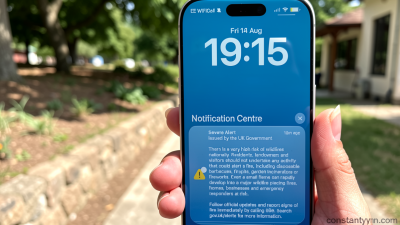
Wildfire Emergency Alert Sparks Alarm Over Hidden Phones Used by Abuse Survivors
Constantvpn.com – At 19:00 BST on a Friday evening, millions of mobile phones across England and Wales erupted with a shrill notification. The message carried the label “severe alert” and warned of a “very high risk of wildfires nationally,” urging residents to avoid disposable barbecues, open flames, and fireworks. For most recipients, the blaring sound was an unexpected interruption to the evening. For survivors of domestic abuse who rely on concealed second phones to contact support services or plan an escape, the sudden noise carried a far more dangerous implication: it could reveal the very device meant to keep them hidden from an abuser.
The Hidden Phone Problem
In households where domestic violence is present, many victims keep a small, inexpensive mobile phone tucked away — in a drawer, a bag, a coat pocket — specifically so they can reach out to friends, helplines, or professionals without their partner noticing. The entire purpose of that secret device is silence and invisibility. When a government-wide emergency notification forces every phone in the home to ring simultaneously, that invisibility vanishes in an instant.
Padua Eaton, 29, a domestic abuse survivor who founded the peer-support group The Harborough Doves, described the moment the alert struck her own phone.
“My first thought was anxiety at the alarm — many people in domestic abuse relationships have a secret second phone in order to keep communication with friends or professionals and this alarm would have alerted abusers immediately.”
Eaton argued that the government’s communication around the alert was inadequate. A Cabinet Office press release appeared on the department’s website at roughly 18:45, fifteen minutes before the notification went out. Much of the media missed the release entirely, leaving the general public with no advance notice.
“The government should have been more upfront about the alarm — telling the press 15 minutes before it went off is poor planning in my opinion. Other measures should have been put in place to inform people without resorting to the alarm at such short notice.”
She went further, urging ministers to explore silent or vibration-only notification modes for future alerts. Her warning was pointed: if such alarms become a regular feature of daily life, victims may stop feeling safe keeping a second phone at all, deepening their isolation.
Charities Call for Advance Warning and Consultation
Women’s Aid, the national charity dedicated to ending domestic abuse, issued a formal call for the government to provide forewarning of alerts wherever operationally possible. Veronica Oakeshott, the charity’s head of external affairs, explained the stakes.
“Survivors of domestic abuse frequently turn to second phones to help them access lifesaving support or flee from abuse.”
She stressed that keeping those devices concealed is not a preference but a safety requirement, and added:
“We would urge the government to forewarn the public that alerts might be issued, when possible.”
Maggie Evans, director of frontline services at the abuse prevention charity Hourglass, echoed the concern and broadened it. She said there had been “no meaningful advance warning to frontline domestic abuse charities” and “no targeted safety guidance for victims” ahead of the Friday notification.
“Domestic abuse victims should never be put at risk by the very systems meant to keep us all safe.”
Evans called on ministers to consult organisations that support the most vulnerable populations before deploying future alerts, arguing that “effective public safety must always be built on proper safeguarding.”
Government Response
A government spokesperson confirmed the alert was dispatched “after a direct request from fire and rescue services” and stated the department was working closely with domestic abuse charities on future system tests. The spokesperson noted that on Friday alone, crews were tackling 43 wildfires across the country and had declared 11 major incidents, stretching emergency resources to their limits.
Prime Minister Andy Burnham publicly urged the public to take the wildfire warning “seriously,” framing the alert as a necessary response to an escalating summer fire season.
The Wildfire Context
The alert followed a particularly severe stretch of summer fires. On Thursday, a blaze in Stourbridge, West Midlands, destroyed 19 homes, forcing residents to flee their neighbourhood. By Friday, crews were responding to dozens of incidents simultaneously across England and Wales. Senior government figures had reportedly been debating whether to trigger the national alert as early as Friday morning, weighing the operational picture against the potential public disruption.
Was the Alert Necessary?
Not everyone agreed the threshold had been met. Julian Jessop, a fellow at the Institute of Economic Affairs, told BBC Radio 4’s Broadcasting House on Sunday that he believed the “very high” bar for issuing a severe alert “hasn’t been reached — I don’t think there’s an immediate risk to life everywhere.”
Frazer Rhodes, one of the architects of the UK’s emergency alert system, acknowledged the episode “really has divided opinion” and argued the government should publish clear criteria explaining when the system will and will not be activated, so the public can understand the decision-making behind each notification.
Broader Implications
The Friday alert marked the largest single deployment of the UK’s emergency notification system to date. Its scale made the domestic-abuse vulnerability visible in a way that smaller, targeted tests had not. For millions of households, the question now is not whether emergency alerts are needed — the wildfire season made that clear — but how the system can be calibrated so that protecting the public from fire does not inadvertently expose the most vulnerable members of that public to a different kind of danger. The debate over silent notifications, advance warnings, and published trigger criteria is likely to continue as the government refines its approach to future alerts.
Related Reading
Frequently Asked Questions
What is Emergency phone alert put domestic abuse?
Emergency phone alert put domestic abuse is the main topic of this guide. The article explains the context, practical details, and next steps readers should understand.
Why does Emergency phone alert put domestic abuse matter?
Emergency phone alert put domestic abuse matters because readers are looking for a useful answer, not just a short summary. Good content should match search intent and help them decide what to do next.