
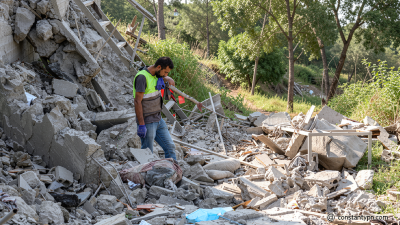
Deadliest Day of Violence Since June Ceasefire Framework Brings Death Toll to Eleven in Southern Lebanon
Constantvpn.com – Lebanon’s southern regions experienced one of their most devastating days of aerial bombardment since international mediators announced a framework designed to ease hostilities between Israel and Hezbollah. The coordinated Israeli strikes claimed eleven lives across two separate locations, marking a significant escalation in the ongoing conflict that has drawn the small Mediterranean nation into a broader regional confrontation.
Concentrated Attacks on Civilian Populations
The first wave of strikes descended upon Ansar, a town situated within the Nabatieh district, at approximately 04:30 local time. According to Lebanese authorities, seven individuals perished in this initial assault, with state media confirming that the casualties included three children and two women. The location proved particularly vulnerable as displaced families had established temporary residences in the area following displacement from other conflict zones.
Later on Saturday, a second series of bombardments targeted Deir al-Zahrani, resulting in four additional fatalities and five injuries. The Lebanese Ministry of Health documented the casualties from this separate but related attack, bringing the total death toll to eleven within a single day.
Official Condemnation and Diplomatic Tensions
Lebanon’s Prime Minister Nawaf Salam issued a forceful condemnation of the attacks, emphasizing that the seven civilians lost in Ansar were not legitimate military targets. His statement underscored Lebanon’s position that the safety of its citizens and their fundamental right to exist on their own territory should not be treated as a variable in diplomatic negotiations.
“Israel must halt this escalation,” Salam declared. “For the security of our people and their right to life on their land are not subject to negotiation or bargaining.”
President Joseph Aoun also voiced strong objections to the Israeli operations, particularly criticizing what he characterized as repeated violations of the June ceasefire framework. Aoun noted that these strikes sent a “clear message” to the United States-led negotiation process, suggesting that Lebanon viewed the attacks as undermining broader diplomatic efforts.
Military Justifications and Strategic Context
The Israel Defense Forces provided a military rationale for the Ansar strike, stating that it targeted “Hezbollah terror infrastructure.” The IDF specified that the triggering incident occurred in the Ali al-Taher Ridge, a strategically significant elevated area that overlooks much of southeastern Lebanon and contains some of the war’s most fiercely contested positions.
Lebanon’s state-run National News Agency documented additional strikes in the vicinity of the ridge, while also reporting that several homes were destroyed in Bint Jbeil near the border. Israeli forces reportedly engaged in heavy machine gun fire directed toward residential structures in that area as well.
Regional Conflict Timeline and Framework Details
Lebanon’s involvement in the broader regional conflict began on March 2, when Hezbollah launched rocket attacks into Israel in retaliation for an operation that killed Iran’s supreme leader. Israel responded with an extensive bombing campaign across Lebanese territory and deployed ground forces into a substantial portion of the country’s southern region. Israeli military presence currently occupies approximately five percent of Lebanese territory, with the IDF maintaining a security zone extending ten kilometers deep into southern Lebanon.
The June ceasefire framework established several key provisions: Hezbollah must disarm its arsenal, Israeli forces must gradually withdraw from southern Lebanon, and the Lebanese army must deploy across the contested area. However, Hezbollah has not participated directly in the agreement and has rejected entering into direct negotiations with Israel.
“The Israeli enemy must clearly understand that its attacks, violations and attempts to impose a fait accompli cannot continue, and will be met with an appropriate response in defense of Lebanon, its people, sovereignty and national dignity,” Hezbollah stated on Saturday.
Looking Ahead: Negotiations and Continued Uncertainty
Despite the reduction in fighting intensity following the June agreements, Israeli strikes and demolitions have persisted in southern Lebanon. Lebanese and Israeli negotiators are scheduled to convene for an eighth round of discussions in September, though a definitive date has not yet been confirmed.
The ongoing violence raises critical questions about the durability of the ceasefire framework and the willingness of all parties to honor their commitments. With Hezbollah maintaining its position outside direct negotiations and Israel continuing military operations, the path toward a comprehensive resolution remains uncertain. The deaths of eleven civilians in a single day serve as a stark reminder of the human cost borne by Lebanon’s southern population as regional powers continue their strategic contest.
Related Reading
Frequently Asked Questions
What is Eleven killed in Israeli strikes on southern?
Eleven killed in Israeli strikes on southern is the main topic of this guide. The article explains the context, practical details, and next steps readers should understand.
Why does Eleven killed in Israeli strikes on southern matter?
Eleven killed in Israeli strikes on southern matters because readers are looking for a useful answer, not just a short summary. Good content should match search intent and help them decide what to do next.