
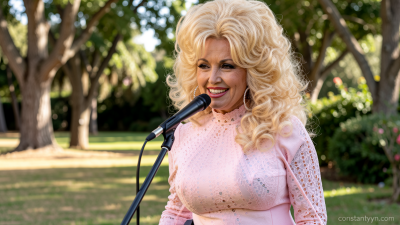
Dolly Parton’s Death Marks the End of an Era in Country Music
Constantvpn.com – The country music landscape has been fundamentally altered by the passing of Dolly Parton, who died at the age of 80. Her family confirmed the news through a social media announcement, delivering the message to fans around the globe who had followed her work for decades. The announcement came from her nephew, Brian Seaver, who addressed the public in a recorded video message, framing the family’s grief with a sentiment that reflected Parton’s own lifelong philosophy about joy and resilience.
“Sadness lies with us, not with Dolly.”
Those words from Seaver captured something essential about the woman behind the name. Parton did not view her life as a tragedy waiting to happen, nor did she see her career as a burden. She saw it as expression, as survival, and as a form of personal liberation that few women in American popular music had previously been permitted to claim on such a grand scale.
A Career Measured in Decades and Millions
The scope of what Parton accomplished over roughly seven decades of professional activity is difficult to compress into a single paragraph. She collected ten Grammy Awards across her career, a tally that places her among the most decorated artists in the history of American popular music. Her recordings sold in excess of 100 million copies worldwide, a figure that spans vinyl, cassette, CD, and digital formats across multiple generations of listeners. Beyond performing, she authored more than 3,000 songs, many of which became standards in the country canon or crossed over into mainstream pop, rock, and gospel.
Parton emerged from the Appalachian foothills of Sevier County, Tennessee, where she grew up in a one-room schoolhouse household among twelve siblings. Poverty was the default condition of her childhood. She began singing publicly as a young child and moved to Nashville as a teenager to pursue a recording career, arriving with little more than a guitar and an unshakeable conviction that her voice belonged in front of an audience. What followed was a career spanning more than sixty years in show business, a span that carried her through the golden age of Nashville country, the disco-influenced pop crossover of the late 1970s, the arena-rock spectacle of the 1980s, and the modern streaming era.
The Songwriter First
Despite her fame as a performer, Parton consistently identified herself above all as a songwriter. She treated the craft of writing lyrics and melodies with a seriousness that went well beyond the conventions of the Nashville publishing system. For her, the act of composition was not a commercial exercise but a deeply personal one.
“It’s my way of expressing myself. It’s my therapy.”
That framing mattered. In an industry that often reduced female artists to decorative voices attached to songs written by men, Parton insisted on authorship. She wrote for herself and for others, and her catalog includes songs that became signature pieces for artists across genres. Her willingness to credit herself as the creative engine behind her own career was, in its own quiet way, a form of defiance.
Businesswoman, Philanthropist, Cultural Institution
Parton was also a shrewd operator in the commercial machinery of entertainment. She understood contracts, brand equity, and the long game of intellectual property in ways that many artists of her generation did not. She built and owned Dollywood, a theme park in Pigeon Forge, Tennessee, which became one of the state’s most visited attractions. She launched the Imagination Library program, which mails a free book to children in the United States each month, turning a personal love of reading into a large-scale literacy initiative. She managed her own image, her own touring schedule, and her own catalog with a degree of autonomy that was unusual for a woman in the industry at any point in her career.
Her quick wit and unmistakable southern charm were not merely personality traits; they were tools of negotiation and self-protection. In boardrooms, on talk shows, and in the corridors of record labels, Parton wielded humor as both shield and sword, steering conversations toward outcomes that served her interests while keeping the atmosphere warm enough that no one felt they had been outmaneuvered.
What Her Passing Means
The loss of Dolly Parton removes a living bridge between the old Nashville publishing model and the modern creator economy. She was among the last major stars who learned the craft in the pre-digital era, who understood the physicality of a live performance, the economics of a record deal, and the social architecture of a genre that was, for much of its history, overwhelmingly male. Her career demonstrated that a woman could be the songwriter, the performer, the business owner, and the philanthropist simultaneously, without surrendering any of those roles to a manager or a husband or a label executive.
For fans who grew up hearing “Jolene” on the radio, who learned the melody of “I Will Always Love You” before knowing its author, or who spent a summer afternoon at Dollywood with a cotton-candy-stained smile, the news lands with the particular weight of losing someone who was never quite a person but always quite a presence. Parton was a cultural constant for generations of Americans, a voice that appeared in the background of childhoods, weddings, and road trips. That constancy makes its absence feel less like a single event and more like a shift in the weather.
The family’s announcement, delivered with restraint and a note of enduring affection, offered fans a final frame: not a eulogy of loss, but a declaration that the sadness belongs to those left behind, while the woman herself remains, in the songs and the stories and the millions of records still spinning in living rooms across the country, exactly as she was.
Related Reading
Frequently Asked Questions
What is Dolly Parton?
Dolly Parton is the main topic of this guide. The article explains the context, practical details, and next steps readers should understand.
Why does Dolly Parton matter?
Dolly Parton matters because readers are looking for a useful answer, not just a short summary. Good content should match search intent and help them decide what to do next.