Dating can be hard in South Korea – so the monks stepped in
Monks Step In to Help South Korean Singles Find Love
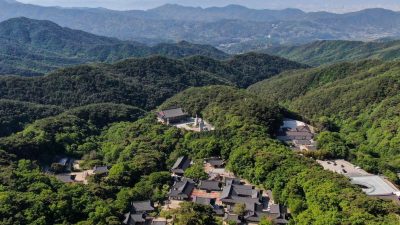
Constantvpn.com – In the heart of South Korea’s Palgongsan mountain, an ancient Buddhist temple dating back to the eighth century has become an unlikely matchmaking hub. A monk wearing burnt-orange robes addresses a gathering of young men and women, declaring that they have arrived on an important mission: to help save their nation by finding romantic partners and eventually raising children. The attendees share nervous giggles as they exchange tentative glances with potential matches. This is not a television production, but rather an authentic dating retreat designed to bring together singles seeking meaningful connections.
The thirty-hour event features continuous activities and plenty of awkward encounters, all aimed at breaking down social barriers and fostering romance. Host Yoo Cheol-ju explains the spiritual significance of the gathering, noting that Buddhists have historically been quick to respond when the nation faces challenges. She references the temple’s role as a military camp where monk militias protected Korea from Japanese invaders during the fifteenth century. However, the current challenge comes from within rather than foreign threats.
“Low births are a national crisis. We had to do something about it,” Yoo says.
Similar to trends observed globally, South Korea has experienced a dramatic decline in birth rates as economic prosperity has increased. The total fertility rate reached a record low of 0.72 in 2023, significantly falling short of the 2.1 level needed to maintain population stability. Various factors contribute to this phenomenon, including expensive housing, insufficient childcare assistance, and women increasingly focusing on professional advancement. Additionally, research indicates that younger South Koreans socialize less and pursue romantic relationships less frequently than previous generations.
While certain individuals deliberately choose singlehood, many others encounter difficulties meeting compatible partners, which has consequently reduced marriage statistics. In response, authorities have implemented extended parental leave policies, financial incentives for new parents, and affordable housing options for recently married couples. Regional organizations and community groups have expanded these efforts by organizing government-supported matchmaking gatherings, such as the retreat at Donghwasa Temple.
A Competitive Selection Process
Participants arrived after navigating a rigorous application procedure that included detailed questionnaires and video submissions. Kim Ah-kyung, known by her Buddhist name Sunhyeji, was among the first to reach the temple grounds. The energetic twenty-eight-year-old settled on a bungalow porch and greeted fellow female attendees as they gradually appeared. Having successfully competed against 1,580 other candidates, Sunhyeji expressed relief at being selected for the retreat, which welcomed individuals regardless of religious background.
After relocating from the Seoul metropolitan area for an administrative position in the southeastern provinces, Sunhyeji found limited opportunities to connect with men. “There’s really no chance to meet men,” she explained. “I only go between work and home. I don’t have a hobby. I tried to get one but they were all one-on-one activities.” She also noted that her workplace consists primarily of older colleagues.
South Korean singles traditionally discover romantic interests through educational institutions, employment settings, or sogaeting—blind dates arranged by acquaintances or relatives. Urban small talk has become uncommon, alcohol consumption has decreased, and dating applications never achieved widespread popularity. When Tinder launched in 2015 following a period of limited expansion, it repositioned itself as a platform for friendship rather than romance to attract younger demographics.
Chivalry and Connection
Kwon Seung-oh, who goes by the name Enyo, represents another participant drawn to the temple retreat. The thirty-year-old had consistently avoided online dating and experienced approximately ten unsuccessful blind dates arranged by friends. He described these encounters as superficial connections that failed to develop further. Compounding his difficulties, ninety-seven percent of his colleagues at a major dairy manufacturing facility outside Daegu are male.
As women entered the temple complex, male participants demonstrated traditional courtesy by assisting with luggage. Enyo brought homemade French pastries to the introduction session, receiving enthusiastic approval from the group. During the initial pairing activity, Sunhyeji was matched with Minho, a thirty-two-year-old government employee known for his calm demeanor. The couple enjoyed a quiet walk along the temple’s forested pathways, allowing for intimate conversation away from the larger group.
