
Jackdaw Gas Field Faces Final Government Decision as Climate Debate Intensifies
Constantvpn.com – A decision on one of the North Sea’s most contested energy projects is expected within weeks, with government insiders indicating that formal approval for the Jackdaw gas field could be granted as early as mid-September — just before Parliament adjourns for the autumn party conference period. The announcement would resolve a multi-year legal and political standoff over whether new offshore extraction can proceed in a country committed to cutting carbon emissions.
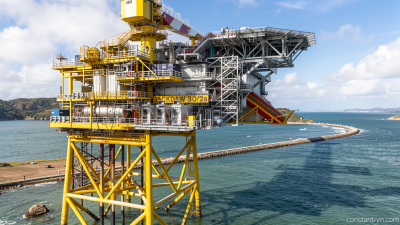
The Jackdaw platform and its associated drilling rig sit in the North Sea east of Aberdeen, in waters where decades of oil and gas activity have shaped the local economy. Yet the project’s path to production has been anything but straightforward. Originally sanctioned by the Conservative administration in 2022, the development was subsequently blocked by a Scottish court ruling that found the original consent had been granted without adequate consideration of the climate consequences of burning the extracted gas.
The Legal Challenge That Reshaped the Timeline
Environmental campaigners mounted legal challenges against both the Jackdaw approval in 2022 and the separate green-lighting of the Rosebank oil field off Shetland in 2023. The Court of Session in Edinburgh ultimately sided with the challengers, ruling last year that both projects had been unlawfully approved because the government had failed to factor in the downstream climate impact of combusting the hydrocarbons once brought to shore.
A judge ordered that more granular climate assessments be published before any renewed consent could be considered. Those updated estimates were placed out for public consultation in July, and the consultation window closed in August. The ball now sits with Energy Secretary Miatta Fahnbulleh, who holds the authority to grant or withhold final approval.
Energy Minister Kate White addressed MPs in the House of Commons on Thursday, confirming that the secretary of state would take separate decisions on the two sites. She offered no specific timetable for when those decisions would be communicated.
“The process ended in August, and the Secretary of State will be taking those decisions in due course,” White told the chamber.
Who Operates the Fields, and What Do They Produce?
Both Jackdaw and Rosebank are managed by Adura, a joint venture pairing energy major Shell with Norway’s Equinor. Aberdeen-based company Ithaca additionally holds a 20% stake in the Rosebank development. Adura’s own modelling suggests Jackdaw could emit roughly 35.8 million tonnes of carbon dioxide across its projected 11-year operational life — a figure equivalent to approximately 90% of Scotland’s total emissions recorded in 2023. The company has also cited a lower, more probable estimate of around 23.6 million tonnes, still representing some 60% of that annual national total.
On the supply side, Adura claims the field would meet up to 6% of UK gas demand at peak output. Environmental organisations dispute this, arguing the realistic contribution is closer to 2%. The disagreement underscores a broader tension: whether marginal new production meaningfully alters national energy balances or merely extends a trajectory that climate science says must be reversed.
Industry Arguments: Jobs, Infrastructure, and Energy Security
Supporters of the project contend that bringing Jackdaw online would sustain thousands of jobs in and around Aberdeen while reinforcing the UK’s energy independence at a moment when overseas conflicts threaten supply chains. They also point to a structural argument: Jackdaw’s gas output is, they say, essential to keeping other North Sea infrastructure operational — most notably Shearwater, a large offshore processing hub that handles hydrocarbons before they are piped to coastal refineries and terminals. Without the additional feedstock, advocates warn, the economic viability of that wider infrastructure network could erode.
Adura has stated that should approval arrive in September, the field could begin delivering gas to British households before the end of the year, with construction described as “99% complete.” That near-finished state means the capital already sunk into the platform would otherwise sit idle, a point industry representatives have pressed repeatedly.
The Climate Case Against Further Drilling
Opponents maintain that sanctioning additional extraction is incompatible with the scale of emissions reductions required to limit global warming. They point to intensifying heatwaves and extreme weather events affecting billions of people worldwide as evidence that the transition to lower-carbon energy must accelerate, not stall. Starting a new gas field, they argue, locks in infrastructure and investment that will need to be decommissioned within a decade or two, diverting capital and political attention from renewables, efficiency, and grid modernisation.
They further note that because natural gas prices are set on international markets, a domestic green-light would not translate into lower bills for UK consumers. The field’s output would enter a global pricing pool rather than creating a separate domestic discount.
Broader Energy Context: Imports, Prices, and Storage
The timing of the decision lands amid heightened anxiety over gas supply. Unlike North Sea crude, which is largely exported and later reimported in refined form, virtually all North Sea gas is consumed within Britain. The UK nonetheless imports more than 60% of its gas, drawing heavily from Norway and the United States. Wholesale natural gas prices have climbed sharply this year, driven in part by the Iran conflict, and now sit at a three-year high.
European gas storage levels are materially below the norm for this time of year. Several countries delayed summer stockpiling in the expectation that the conflict would resolve before winter and prices would retreat. That gamble has not materialised, leaving those markets facing either a scramble to fill storage at premium prices or the prospect of paying elevated rates through the cold months.
Prime Minister Andy Burnham has framed the government’s position in pragmatic terms, acknowledging the continued role of fossil fuels while urging that their remaining lifespan be used to fund the transition.
“We won’t be able to stop using oil and gas for some time. That’s just a fact,” Burnham said. “The question is whether we can accelerate use of it so that we pay for the transition.”
Whether that pragmatic framing justifies approving Jackdaw — or whether the climate arithmetic of tens of millions of tonnes of additional carbon outweighs the near-term supply benefits — is the question the Energy Secretary must now answer, with Parliament’s autumn recess looming and winter demand approaching.
Related Reading
Frequently Asked Questions
What is Controversial Jackdaw gas field set to be?
Controversial Jackdaw gas field set to be is the main topic of this guide. The article explains the context, practical details, and next steps readers should understand.
Why does Controversial Jackdaw gas field set to be matter?
Controversial Jackdaw gas field set to be matters because readers are looking for a useful answer, not just a short summary. Good content should match search intent and help them decide what to do next.