Controversial bishops ordained as Pope warns of ‘schism’ in Catholic Church
Controversial bishops ordained as Pope warns of ‘schism’ in Catholic Church
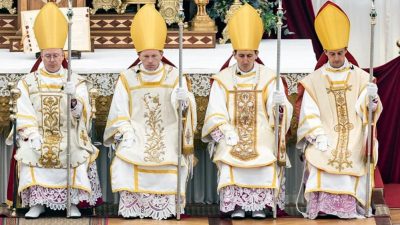
Constantvpn.com – In the picturesque Alpine village of Écône, four priests from three different countries were recently consecrated as bishops, marking a significant moment in the Catholic Church. The ceremony, which drew thousands of spectators, occurred despite a last-minute appeal from Pope Leo XIV to halt the process. The new bishops, including one from the United States and two from France, are affiliated with the Society of Saint Pius X (SSPX), a group that has long been at odds with Vatican reforms. Their ordination has sparked debate over the Church’s unity and the role of the Pope as its spiritual leader.
The SSPX, founded by French Archbishop Marcel Lefebvre in 1970, has consistently opposed modernisations introduced by the Vatican since the 1960s. These reforms, such as allowing Mass to be celebrated in vernacular languages rather than exclusively in Latin, are seen by the Society as diluting the sacred traditions of the faith. The group’s insistence on maintaining a medieval mystique—where priests and bishops are viewed as closer to God—has led to ongoing tensions with the Pope’s vision of a more accessible and egalitarian Church.
Pope Leo XIV had issued a final plea to SSPX leaders, urging them to reconsider the ordination. He described the act as a “schismatic move,” warning it could “split the seamless garment of Christ.” However, the Society proceeded with the ceremony, despite the Pope’s concerns. The event took place under grey skies, with over 15,000 people gathering in the village square to watch the process unfold. Hundreds of robed clergy, carrying candles and crosses, moved through the crowd as a large tent was set up in a nearby pasture.
The ordination ritual itself was steeped in tradition. The four candidates knelt before an altar, their heads resting on red velvet cushions, while ceremonial organ music echoed through the space. All vows were recited in Latin, a stark contrast to the Vatican’s current practice. Yet, for these men, their new roles may be short-lived. In 1988, the Society’s previous bishops were excommunicated by the Vatican, a status that was later lifted by Pope Benedict XVI in 2009, though it failed to fully mend relations.
Now, Pope Leo XIV faces the prospect of further excluding these bishops from the Church. While the Vatican’s objection may seem strong to some, the act of consecrating bishops without papal approval is considered a major breach of unity. This is especially significant given the Pope’s relatively recent tenure. The SSPX, though smaller in numbers than the global Catholic Church—which boasts over 1.4 billion members—has a presence in dozens of countries, including the United States, where it has a notable following in Kansas.
The Society’s defiance also extends to other Vatican policies. It has resisted efforts to foster dialogue with other religions, embrace religious freedom, and engage in social and political debates. Even the decision to have priests face the congregation during Mass—a change that began in the 1960s—was met with opposition. Instead, the SSPX prefers the traditional practice of priests turning their backs to the faithful, maintaining a sense of separation and reverence.
During the event, the Society’s Superior General, Davide Pagliarani, addressed the crowd, defending the ordination. He stated,
“This consecration is happening precisely because we love the Pope as the vicar of Christ, as the head of the Church… we don’t want to see the Pope humiliated any more, on the side of false shepherds representing false religions.”
The message was clear: the SSPX seeks to preserve its vision of the Church, even if it means challenging the Pope’s authority.
The ceremony was not only a religious event but also a cultural spectacle. Attendees were given baseball caps featuring the logo “Écône2026” and novelty gift packages containing Swiss wine priced at $92 each. The bottles were adorned with images of a mitre, symbolising the bishop’s role. These gestures underscored the Society’s desire to create a memorable and symbolic moment, even as it sparked controversy.
Pope Leo XIV’s stance on the matter is firm. He has declared the new bishops illegitimate, viewing their ordination as an attack on the Church’s cohesion. However, he may be cautious about escalating the situation further, fearing it could worsen the schism. The Vatican’s concerns are not unfounded; the SSPX’s approach has been a thorn in the side of modern Catholic leadership for decades.
The Pope’s warning highlights a broader issue within the Church: the balance between tradition and reform. While the SSPX champions a return to pre-Vatican II practices, others argue that such rigidity risks alienating younger generations and creating divisions. The ordination in Écône serves as a stark reminder of the enduring tensions between different factions of Catholicism.
For the followers of the SSPX, the event represents a victory. Despite their smaller size—600,000 global members—their movement has shown resilience. The Pope’s challenge is not just about maintaining authority but also about ensuring the Church remains a unified body. As the new bishops take their seats, the question lingers: will their ordination mark a turning point, or will it deepen the rift between traditionalists and reformers?
The controversy surrounding this ordination also reflects the Pope’s strategic approach. By emphasizing the potential for schism, he aims to rally support for his position while avoiding outright conflict. The SSPX’s actions, however, have already ignited a firestorm. Their defiance underscores the importance of papal approval in the ordination process, a cornerstone of Catholic ecclesiology. Yet, the Society’s commitment to their beliefs remains unshaken, even in the face of Vatican opposition.
As the Church navigates this moment, the events in Écône are likely to be remembered as a pivotal episode. The gathering of thousands, the traditional rituals, and the symbolic gifts all highlight the Society’s determination to assert its vision. Meanwhile, Pope Leo XIV’s warnings serve as a call to preserve the Church’s spiritual harmony. The outcome of this standoff will shape the future of Catholic unity, testing the strength of the Pope’s authority and the loyalty of the faithful.
