China’s import of custard apples is sparking fears in Taiwan
China’s Custard Apple Imports Spark Fears in Taiwan
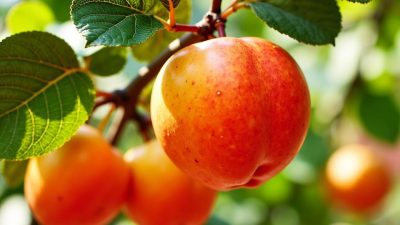
Constantvpn.com – Taiwan’s agricultural sector is facing growing concerns over China’s increasing imports of a peculiar fruit known as atemoya. This hybrid of custard apple species, with its distinctive heart-shaped form and scaly exterior, has become a focal point in the ongoing tensions between the two regions. The fruit, which is a specialty of Taiwan’s Taitung County, has long been a key export, but recent shifts in China’s trade policies have raised alarms among local farmers and policymakers.
A Fruit with Strategic Importance
Atemoya, often referred to as the “custard apple” due to its creamy white flesh, is more than just a tropical delicacy for Taiwan. It represents a unique agricultural product that has gained international recognition for its flavor and quality. However, its value is now under threat as China, a major buyer of Taiwanese atemoyas, has begun to alter the terms of its imports. The Ministry of Agriculture in Taiwan has warned that this change could expose local producers to economic instability, similar to the challenges faced in the past with other crops.
The fruit’s significance lies not only in its taste but also in its economic impact. Taitung County, where atemoya cultivation is concentrated, has relied heavily on cross-border trade to sustain its farming communities. For years, China’s steady demand for the fruit helped stabilize prices and ensure profitability. But this balance is now being disrupted, prompting fears of a broader strategy to control Taiwan’s agricultural exports.
China’s “Raise, Trap, Kill” Approach
Taiwan’s agriculture ministry described China’s actions as part of a “classic example of the ‘raise, trap, kill’ process,” a term used to highlight Beijing’s method of creating dependence before imposing restrictions. This strategy has been observed in the past, most notably with the 2021 ban on Taiwanese pineapples, which caused severe financial strain on farmers. The current atemoya situation is seen by some as a repeat of that pattern.
According to the ministry’s press release, China initially boosted its purchases of atemoyas to foster goodwill and encourage production. However, this support was short-lived. In 2021, the country suspended imports of the fruit, citing pest-related concerns. After a partial resumption in 2023, China introduced new tariffs in 2024, further complicating the market. These moves, the ministry argues, have created a volatile environment where farmers are forced to take on greater risks.
Beijing’s claim of territorial sovereignty over Taiwan adds another layer to this economic maneuvering. While the island operates as a self-governed region, China has not hesitated to use trade as a tool for pressure. This includes military exercises and diplomatic actions, but the atemoya import policy exemplifies a more subtle form of influence. Analysts suggest that such tactics aim to weaken Taiwan’s economic autonomy by leveraging its reliance on Chinese markets.
Political and Economic Repercussions
The controversy escalated earlier this month after a forum in Xiamen, a coastal city on the Taiwan Strait, saw Chinese companies commit to purchasing more atemoyas. The event, attended by business leaders and opposition politicians from Taiwan, was notable for its inclusion of officials who had been barred from participating by the central government. This sparked accusations of political bias, with Taiwan’s Mainland Affairs Council spokesperson warning that attendees could face scrutiny for their involvement.
Meanwhile, Taiwan’s agriculture ministry emphasized its focus on “sustainable agricultural development” and “stable income for farmers.” It proposed diversifying the atemoya industry through processing methods such as frozen fruit products, puree, and wines. However, opposition lawmakers from the Kuomintang party criticized these efforts as an attempt to politicize the issue. They argued that the ministry’s statements could inadvertently harm the farmers who depend on the crop for their livelihoods.
Taipei Mayor Chiang Wan-an took a more direct stance, accusing the Mainland Affairs Council of using the atemoya issue to “bully and oppress” local producers. He likened the fruit to Taiwan’s semiconductor giant, TSMC, stating, “There is not a country in the world that can produce a fruit as delicious and special as Taiwan’s atemoya.” His remarks underscored the pride local stakeholders feel toward the crop, even as they grapple with Beijing’s growing economic influence.
Broader Implications for Taiwan’s Economy
The atemoya dispute is part of a larger pattern of economic coercion that has characterized China’s relationship with Taiwan in recent years. By alternately supporting and restricting imports, Beijing appears to be testing the resilience of the island’s agricultural sector. This approach has already had consequences, with the pineapple ban in 2021 leading to a domestic consumption campaign that sought to offset losses. Now, the atemoya situation is being viewed as a potential repeat of that scenario.
China’s expansion of its own atemoya cultivation has further compounded the issue. As local production in Taiwan faces uncertainty, Beijing’s ability to supply the fruit domestically threatens to reduce the island’s market share. This could force Taiwanese farmers to compete with their own northern neighbors, a situation that raises questions about the long-term viability of the industry.
The debate over atemoyas has also highlighted the tension between economic interdependence and political rivalry. While the fruit is a symbol of Taiwan’s agricultural prowess, its export trajectory now depends on China’s decisions. This dynamic has left farmers in a precarious position, caught between the promise of stability and the threat of sudden market shifts. As the discussions continue, the outcome could shape not only the fate of atemoyas but also the broader economic relationship between the two regions.
Global Significance of Taiwan’s Crop
Atemoyas are not just a local product—they hold global appeal. Their sweet, creamy texture and unique flavor have made them a sought-after item in international markets, including the United States and Europe. However, China’s dominance in the trade could limit Taiwan’s ability to reach these markets, especially if the country continues to prioritize its own production.
Analysts warn that the current strategy could be a prelude to more comprehensive measures targeting other Taiwanese exports. The 2021 pineapple crisis set a precedent, demonstrating how China can disrupt supply chains with minimal notice. The atemoya situation, they argue, is a warning sign of a broader effort to exert control over Taiwan’s economy. This includes not only agricultural goods but also sectors like fish and tea, which are also subject to Chinese import policies.
As the debate over atemoyas intensifies, it has become a microcosm of the larger struggle between China and Taiwan. The fruit’s journey from a local specialty to a symbol of economic vulnerability illustrates the challenges of maintaining autonomy in a region that is geographically and economically intertwined with its northern neighbor. The coming months will determine whether the atemoya industry can adapt to these changes or if it will become the next casualty of China’s strategic trade maneuvers.
“First, China makes large purchases to show goodwill and encourage farmers to grow atemoyas. Next it unilaterally imposes export restrictions without warning,” the Taiwanese agriculture ministry said in its press release.
Taiwan’s government is now under pressure to respond swiftly to the situation. While some officials advocate for diversification and local processing to reduce reliance on China, others fear that these measures may not be enough. The atemoya crisis has also reignited discussions about the need for stronger trade agreements and international partnerships to safeguard Taiwan’s economic interests.
In the end, the atemoya may serve as a powerful reminder of the delicate balance between economic collaboration and political conflict. As the island’s farmers prepare for potential disruptions, the fruit’s fate could shape the future of cross-strait relations and Taiwan’s ability to navigate its role in the global economy.
