
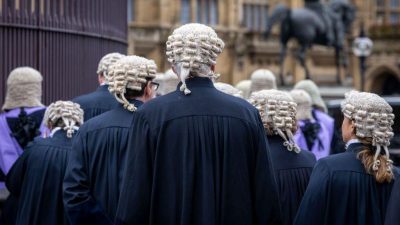
Government abandons wider use of judge-only Crown Court trials
Constantvpn.com – Plans to reduce the role of juries in a range of criminal cases have been withdrawn after strong opposition from across the justice system. Prime Minister Andy Burnham has abandoned proposals that would have allowed Crown Court judges to decide some cases alone where any likely prison sentence was under three years.
The proposed changes formed part of a broader attempt to tackle long waiting lists in the courts of England and Wales. Ministers had argued that reshaping the route taken by less serious cases could help reduce delays for victims and defendants, while easing pressure on prisons.
Justice Secretary Alex Norris said the government had reconsidered after listening to the reaction generated by the judge-alone trial proposal. Jury trials will therefore remain central to Crown Court proceedings, except for complex fraud and financial cases identified by the Ministry of Justice.
“I have heard the strength of feeling on the proposals for increasing the number of judge-alone trials in the Crown Court and have made the decision to change course.”
Norris said the decision would allow work on reducing court delays to begin sooner. He maintained that the government still intends to make the justice system faster, using efficiencies alongside increased investment.
“Justice delayed is justice denied, and I am committed to maximising efficiencies in our system alongside record investment. I remain committed to structural reform which is crucial if we are to bring down the backlog.”
Why the proposals proved contentious
The original reforms were announced in December by former Justice Secretary David Lammy after a major review of the court system. They sought to reserve jury trials primarily for the most serious indictable offences, such as murder and rape, which must be dealt with in the Crown Court.
Under that approach, cases carrying sentences of up to three years could have been heard by a Crown Court judge sitting without a jury. Lower-level cases would have remained with magistrates, but defendants would no longer have been able to seek a Crown Court jury trial where they believed it offered their best prospect of acquittal.
Critics viewed that as a major erosion of a long-established safeguard. Trial by jury has been part of the legal tradition for roughly 800 years, and opponents argued that reducing its use would not address the deeper causes of the court backlog.
Criminal lawyers welcomed the reversal, while Conservatives described it as an important success for those who had campaigned to protect jury trials. The decision also reflects the weight placed on public confidence in criminal verdicts, particularly where allegations are serious, disputed or emotionally sensitive.
Backlog remains the central challenge
Despite the policy change, the pressure on the courts remains substantial. The backlog has reached almost 81,000 cases, creating lengthy waits for people accused of offences as well as victims seeking resolution. Earlier reductions in court capacity and closures during national lockdowns contributed to the sharp rise in outstanding cases.
Official estimates had suggested that the figure could exceed 100,000 before the next general election. In the most severe projection, it could eventually rise to twice that level by 2035.
There are signs that the position may now be becoming more stable. The government has committed unlimited funding so that more judges can sit in courtrooms that otherwise would not have been in use. Increasing the number of available hearings is intended to move cases through the system more quickly without changing the role of juries in ordinary Crown Court trials.
The Ministry of Justice has indicated that judge-only hearings would be confined to complex fraud and financial matters. Thousands of mid-level cases, meanwhile, are still expected to be considered within magistrates’ courts, where volunteer magistrates sit without juries.
Concerns over shifting cases to magistrates
Andrew Thomas KC, chair of the Criminal Bar Association, said barristers were pleased by the decision to retain jury trials. He argued that juries provide a distinctive form of legitimacy because verdicts are reached by members of the public rather than by legal professionals alone.
“Justice needs juries,” he said. “Nothing inspires more public trust than 12 ordinary citizens from all walks of life deciding the facts of a case together.”
Thomas also supported separate measures intended to improve protection for victims and witnesses during trials. These include powers designed to prevent unfair questioning about a complainant’s conduct and measures aimed at helping witnesses give their strongest possible evidence.
However, he warned that another element of the reforms could still create serious difficulties. The government’s plan to keep more medium-level cases before magistrates, alongside increasing magistrates’ sentencing powers to two years, could move 25,000 cases a year out of the Crown Court. That figure includes 5,500 jury trials.
Thomas said the cases affected would not necessarily be minor. They could include assaults, sexual assaults, child abuse and grievous bodily harm. While praising magistrates’ work, he raised concerns about whether volunteers have sufficient capacity to manage complex hearings that run over several days, particularly when there is already a shortage of magistrates.
“These are not minor offences,” he said. “Our volunteer magistrates do an excellent job but they are completely unequipped to try complex, multi-day trials.”
The withdrawal of the judge-only proposal settles one major dispute, but it does not remove the wider problem of how to deliver quicker criminal justice. Ministers now face the task of reducing delays while retaining public confidence, ensuring adequate court capacity and avoiding simply transferring pressure from the Crown Court to magistrates’ courts.
Related Reading
Frequently Asked Questions
What is Burnham scraps controversial plans to curb?
Burnham scraps controversial plans to curb is the main topic of this guide. The article explains the context, practical details, and next steps readers should understand.
Why does Burnham scraps controversial plans to curb matter?
Burnham scraps controversial plans to curb matters because readers are looking for a useful answer, not just a short summary. Good content should match search intent and help them decide what to do next.