Bison rams grandfather in Yellowstone Park, knocking him metres into the air
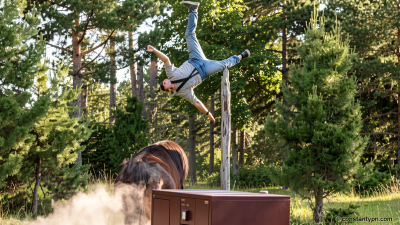
Yellowstone Visitor Flipped into Air After Bison Charge
A Close Encounter Turns Dangerous
Constantvpn.com – Video that quickly went viral captures a dramatic moment when a massive bison charged at a 65-year-old man in Wyoming’s Yellowstone National Park. The bull, estimated to weigh around 2,000 pounds or 900 kilograms, sprinted toward Carl Isom-McDaniel and struck him with its head, sending the elderly visitor flying several meters into the air. The footage shows the grandfather and his grandson initially photographing the resting animal before it suddenly rises and pursues them.
The encounter took place on Friday evening at Bridge Bay Campground, situated close to Yellowstone Lake during the last hour before sunset. Isom-McDaniel and his grandson appeared to be at a reasonable distance from the bison when they paused their walk and lifted their cameras for a photograph. The bison, which had been lying in the grass, suddenly became agitated, flopping onto its side repeatedly before springing to its feet.
Victim Injured but in Good Spirits
According to US media reports, Isom-McDaniel suffered multiple injuries during the attack. Mike Macleod, who captured the incident on video, provided details to the Cowboy State Daily, a local newspaper.
“The bison hooked him with his left horn on his hip and tossed him in the air,” Macleod explained. “He made a perfect flip and landed on his side.”
Despite the severity of the encounter, the victim remained conscious throughout. Macleod noted that Isom-McDaniel was clearly experiencing significant discomfort, particularly in his leg, yet maintained a positive attitude.
“He was in a lot of pain with his leg, and otherwise he was conscious the whole time, in good spirits, joking,”
the witness recounted. The injured man was subsequently transported to a hospital for treatment, as reported by the New York Times.
Witnesses Describe the Chaos
As the bison continued its pursuit, a white truck slowly made its way toward the scene. However, once the animal charged at the vehicle, the driver quickly accelerated away. The bison pressed forward, kicking up a cloud of dust as it barreled toward the grandfather and grandson. The pair attempted to escape by running through a dense thicket of trees, but the bison eventually caught up with Isom-McDaniel.
While the National Park Service has not yet issued an official statement regarding the attack, the BBC has requested a comment from park officials. The incident serves as another reminder of the potential dangers posed by wildlife in the park, even during seemingly peaceful moments.
Official Safety Guidelines
The National Park Service maintains clear guidelines for visitors interacting with bison. According to the organization’s website,
“Bison may appear tranquil, but these large animals have injured more people in Yellowstone than any other animal.”
The NPS emphasizes that these creatures can move at speeds three times faster than humans, making it essential for visitors to maintain adequate distance.
“They can run 3x faster than humans, making it very important to give them plenty of space.”
Visitors are advised to stay at least 25 yards, or 23 meters, away from bison at all times. Additionally, the park service strongly recommends that people
“never approach a bison to take a photo”
regardless of how close the animal may appear to be.
Seasonal Factors Increase Risk
Summer represents the peak period for Yellowstone tourism. The National Park Service reports that nearly 60 percent of annual visitors arrive during the months of June, July, and August alone. This timing coincides with an important biological factor that increases the likelihood of unexpected animal behavior.
July specifically overlaps with the bison’s mating season, which experts describe as the “peak breeding” period. Jennifer Barfield, who serves as the scientific lead at Colorado’s Laramie Foothills Bison Conservation Herd and is a professor at Colorado State University, explained the significance of this period.
“That’s really going to drive their behaviour, and they’re going to be potentially more unpredictable than at other times of the year,”
she stated.
During mating season, testosterone levels among male bison rise significantly, which can make the animals more territorial and less predictable. Barfield’s team typically avoids close contact with bison during this period, preferring to conduct observations from within vehicles. For visitors who remain on foot, she offered practical advice.
“It’s always good to keep in mind that 25 yards is a minimum distance for safety.”
The incident involving Isom-McDaniel highlights the importance of respecting wildlife boundaries, particularly during seasons when animals may be more active and less tolerant of human presence. While bison generally appear calm and docile, their size and speed make them capable of causing serious injury when provoked or when visitors come too close.
